Storydoc vs. Proposify

Proposify is built to help sales teams send proposals and get signatures over the line.

But modern B2B sales rarely move in a straight line. You need to win attention earlier, build belief over time, and turn interest into action.

You need a platform that supports the entire funnel - from outreach to close - with interactive storytelling, conversion tools, and automation at scale.

You need…

Storydoc.

Storydoc vs. Proposify

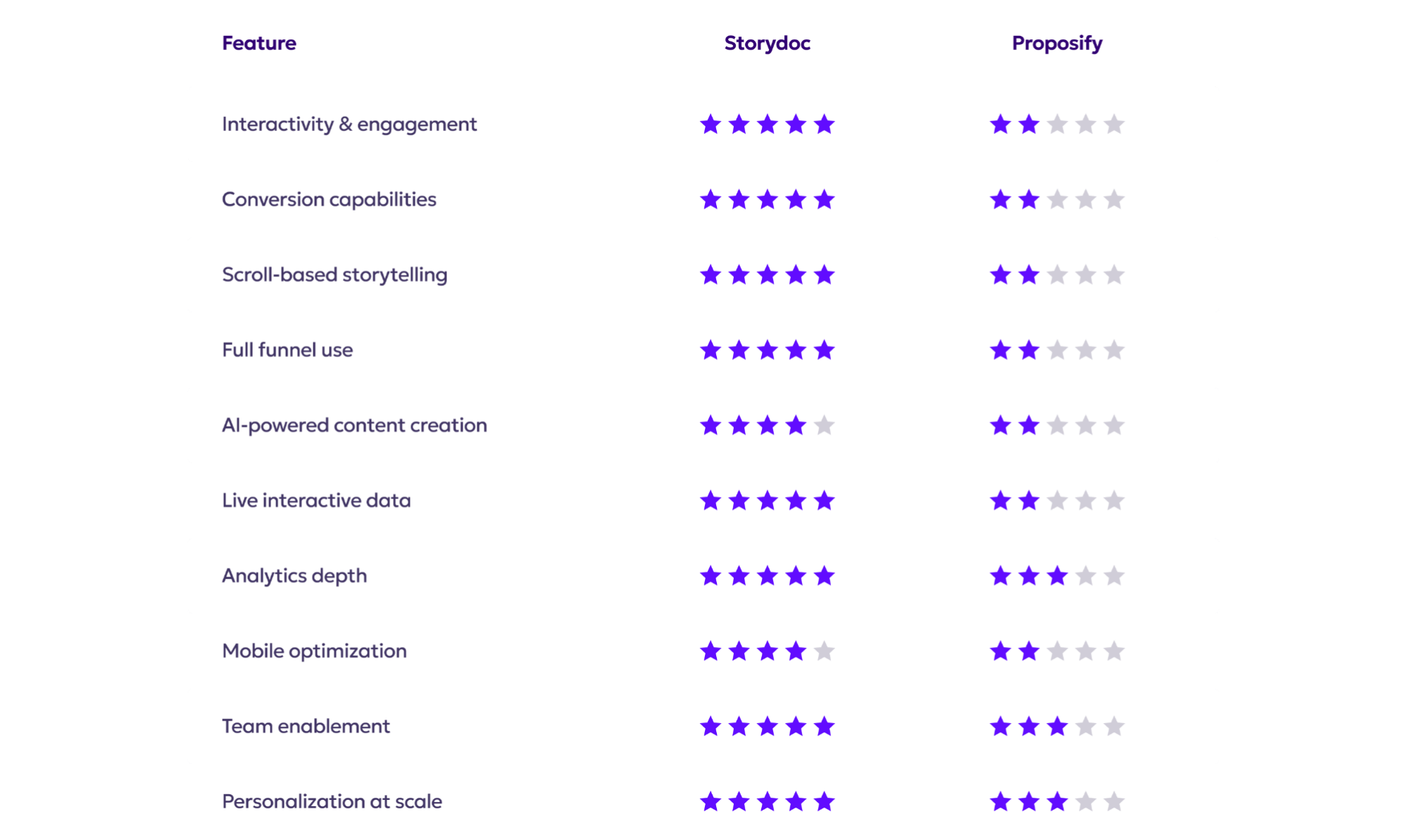
Quick comparison guide

Storydoc vs. Proposify

Interactivity & engagement

Storydoc vs. Proposify

Built for genuinely interactive experiences, with components like clickable tabs, embedded content, and guided layouts that keep attention moving

Turns passive reading into participation, using interactive blocks that feel closer to a microsite

Proven to boost average reading time by 41% and engagement by 21% compared to static decks

Storydoc vs. Proposify

Interactivity is mostly limited to functional proposal elements like videos, pricing tables, and e-signature flows

Templates still behave like static documents delivered online, with little room for exploration or guided engagement

Beyond a few interactive blocks, the experience feels closer to a dressed-up PDF than a truly interactive sales asset

Storydoc vs. Proposify

Conversion capabilities

Storydoc vs. Proposify

Built with conversion in mind: CTAs, embedded calendars, forms, and sign-offs can live directly inside the deck

Helps convert leads across the journey - from booking a meeting to taking action inside the deck, not just approving a final doc

Built for async selling, where the content does the persuading even when you’re not in the room

Storydoc vs. Proposify

Very effective at proposal-stage conversion, with a clear acceptance path, signatures, and structured pricing built for closing

Smart pricing tables reduce friction during negotiation and remove the need for back-and-forth spreadsheets

Designed for closing ready buyers, but offers little support for nurturing interest or influencing decisions earlier in the sales journey

Storydoc vs. Proposify

Scroll-based storytelling

Storydoc vs. Proposify

Uses scroll-based storytelling with elements like narrator slides to reveal detail gradually, instead of overwhelming the reader all at once

Feels more like a guided web page, which makes longer sales stories much easier to follow

Designed around narrative flow for async sales and marketing, not just stacking proposal sections on a page

Storydoc vs. Proposify

Proposals are web-based and scrollable, but still structured like traditional proposal sections

Lacks built-in storytelling mechanics that actively guide attention through the content

Can feel like a dressed-up static document, especially when templates are more text-heavy

Storydoc vs. Proposify

Full stack vs. only proposals

Storydoc vs. Proposify

Built to create and reuse content across the funnel: sales decks, proposals, reports, one-pagers, and more

Keeps your narrative consistent by reusing blocks and structure across different stages and assets

Proven to boost conversions at every funnel stage

Storydoc vs. Proposify

Purpose-built for proposals, quotes, contracts, and signatures

You’ll still need other tools for top-of-funnel and discovery content, which makes consistency harder to maintain

Creates blind spots between early-stage engagement and closing-stage content

Storydoc vs. Proposify

AI-powered content creation

Lets you feed in existing materials - documents, decks, websites, brand voice files, and more - and turns them into a structured, on-brand deck

You can start with a simple prompt, then adjust individual slides or sections using the built-in assistant, all without breaking your flow

AI is tightly integrated with business-ready templates and interactive components, so the output is immediately usable

Storydoc vs. Proposify

Their AI proposal generator is marked as currently being reworked, so you can’t rely on it as a stable in-product capability right now

Even when available, it’s scoped to proposals/templates - not a system for generating full-funnel interactive sales content

In practice, teams still need to do the heavy lifting on structure, narrative, and layout inside the editor

Storydoc vs. Proposify

Live interactive data

Storydoc vs. Proposify

Lets buyers interact with data directly, with hover-over descriptions, instead of viewing static charts or screenshots

Helps you explain value and impact throughout the deck, not just in the pricing section

Uses interactive elements to break down dense stats so they’re easier to understand in context

Storydoc vs. Proposify

Smart pricing tables let buyers edit packages and immediately see how totals change, which works well during negotiation

Interactive elements are centred around quoting, not explaining data or impact through visuals

Effective for comparing pricing options, but limited when it comes to presenting or exploring data beyond the quote itself

Storydoc vs. Proposify

Engagement analytics depth

Storydoc vs. Proposify

Shows exactly who viewed each slide, how they interacted with it, and where interest dropped off

Real-time alerts notify reps the moment a prospect engages, so follow-ups happen while intent is high

Engagement data feeds into your CRM and analytics stack, making it easy to trigger the right next step automatically

Storydoc vs. Proposify

Tracks key proposal engagement signals like views, time spent, viewing order, and activity timelines to support timely follow-up

Provides clear visibility into proposal-stage behavior, including when a document is opened, revisited, or shared

Still centered on proposal engagement, not full-funnel content optimization

Storydoc vs. Proposify

Mobile reading experience

Storydoc vs. Proposify

Fully responsive templates keep the experience clean on any device, which matters when decision-makers view on mobile

Interactive layouts (like tabs) reduce scrolling fatigue and make long content easier to consume on phones

Built and optimized for modern mobile-first consumption

Storydoc vs. Proposify

Proposify has historically needed zooming and pinching for smaller screens, which is frustrating for mobile users

The option to import PDFs into decks creates static image sections, which can feel especially clunky on mobile

Works for reviewing and signing, but doesn’t feel built for mobile-first outreach and interactive storytelling

Storydoc vs. Proposify

Team enablement

Storydoc vs. Proposify

Enterprise-grade security with ISO 27001 certification and SSO/SAML supports org-wide rollout and compliance needs

Team-ready system for reusable templates, real-time collaboration, and consistent brand execution at scale

Integrations and automation reduce manual work for reps, so adoption is easier in real sales workflows

Storydoc vs. Proposify

Provides collaborator seats and shared content libraries so multiple people can work on proposals and reuse approved sections

Security is strong for SMB needs (data encryption, basic access controls), but does not present enterprise-grade certifications or governance

Collaboration is limited to proposal ops - teams still rely on other tools for discovery materials and early-stage content, which can fragment workflows

Storydoc vs. Proposify

Personalization at scale

Storydoc vs. Proposify

Native CRM integrations let you auto-personalize decks directly from CRM data in a single click

Supports bulk send with no recipient limits, which is a huge time-saver for mass outreach

Adding personalization results in 68% more full reads, 41% boost in reading time, and makes decks 2.3x more likely to be shared internally

Storydoc vs. Proposify

Integrates via Zapier and offers a range of native integrations

The ecosystem is strong for proposal ops, but less geared to full-funnel personalization as a single system

You’ll still need other tools for top-of-funnel content, which makes it harder to keep personalization consistent across the entire journey

Storydoc vs. Proposify

So, what’s it going to be?

Do you want to send standard proposals and get signatures over the line?

Or do you want a solution your sales team can use to win attention earlier and turn engagement into momentum long before the proposal stage?

Proposify helps you finish the deal.

Storydoc helps you create the conditions to win it.

It’s time to turn sales content into an experience that actually moves deals forward.

Storydoc vs. Proposify