This is a preview of your story

Powered by

Storydoc

How Sutton Public Schools Engaged Budget Stakeholders with Storydoc

See how Sutton Schools replaced a static 400-page ledger with a living Storydoc presentation - reaching hundreds of residents and modernizing transparency.

  • Interactive public reporting
  • Transparent stakeholder communication
  • Community engagement at scale
Sutton Public Schools case study - Storydoc

About Sutton Public Schools

suttonschools.net | LinkedIn

analytics_default

Sutton Public Schools is a public school district located in Sutton, Massachusetts, serving students from pre-kindergarten through twelfth grade.

The district employs more than 350 teachers and staff across 4 schools, all situated on a single campus.

As part of a Massachusetts municipality, Sutton Schools operates within a public governance structure that requires budget proposals to move through multiple layers of review — including the School Committee, Finance Committee, and ultimately an open town meeting where residents vote on the town’s overall budget.

Key outcomes

  • 100% open rate across tracked sessions from distributed links

  • 36% of readers completed the full presentation

  • Average reading time: 9 minutes 45 seconds per session

  • Engagement expanded from 5–10 meeting attendees to 1000s of residents accessing the budget online

The challenge - Selling a budget in a tax-sensitive climate

When Harrison McKinlay took on the role of Business Manager and Chief Procurement Officer for Sutton Schools, he stepped into a complex municipal process.

Like many public school districts in Massachusetts, Sutton presents its annual budget to multiple governing bodies before it ever reaches a town-wide vote.

The School Committee reviews it, the Finance Committee weighs in, and ultimately, residents gather at an open town meeting to decide whether the budget passes.

And preparing for future years, Sutton was preparing to ask residents to raise their taxes.

Asking taxpayers to contribute more is never an easy sell.

In many communities, even the suggestion of a tax override can trigger skepticism. Residents want to know why it’s necessary, whether the district is spending responsibly, and what they’ll see in return.

“No one wants to raise their taxes,” Harrison said. “So you have to make sure they understand why you’re proposing it — and what they’re going to get from it.”

Sutton Public Schools' amazing results from using Storydoc

At the same time, Sutton had a brand-new School Committee and new district leadership.

It was a rare opportunity to reset expectations and establish a new standard for how the budget was communicated.


Traditionally, the district relied on two core tools:

  • A 400-page, line-by-line budget ledger in PDF format

  • A standard PowerPoint presentation delivered at public meetings


The ledger met compliance requirements, while the PowerPoint summarized key points. But neither was built for stakeholder engagement.

Sutton Public Schools' amazing results from using Storydoc

For finance professionals, the data made sense. But for the general public, it could feel overwhelming or inaccessible.

Understanding the formulas the state and federal government use to calculate school funding — and the operational intricacies behind every line item — can feel dense and technical, even for engaged residents.

Plus, only a handful of residents attended the meeting in person. Most public meetings drew 5 to 10 attendees.

The rest of the town relied on static documents posted online — documents that were difficult to navigate, especially on mobile devices.

And in a climate where school funding is increasingly politicized, clarity matters.


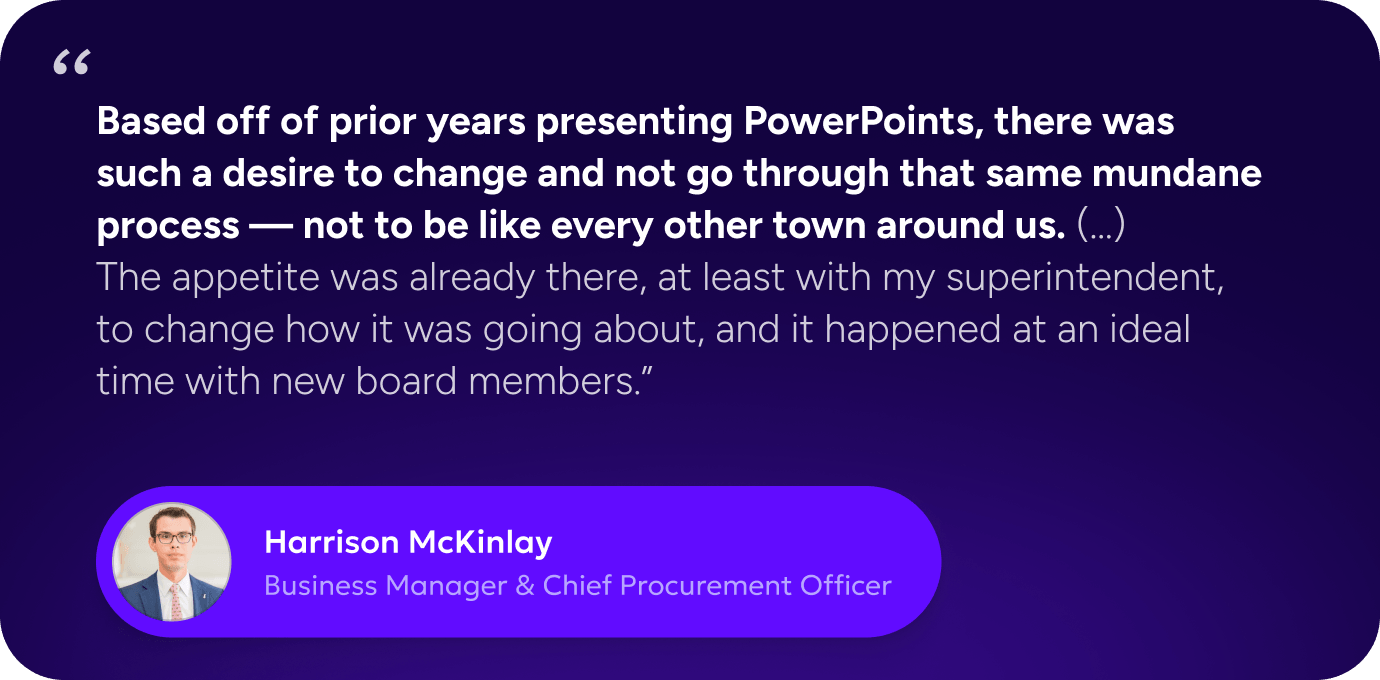
Here's what their old budget overview deck looked like:

Harrison also wanted something more than just a cleaner presentation. He wanted building-level principals to have space to tell their own stories — to explain how their individual school budgets connected to student experience.

And to do that, the format itself had to change.

The turning point - Living, interactive content

Moving away from traditional formats isn’t common in public school budgeting. The process is familiar, predictable — and, in many ways, mundane. Most districts stick to what they’ve always used.

Harrison came into the role with a slightly different mindset.

Having worked in the private sector, he was used to exploring newer tools and formats and was comfortable questioning whether the standard PowerPoint-and-PDF approach was still the best option.

He started by looking at what other districts were doing.

Most followed the same pattern Sutton had relied on for years: long PDFs, static slide decks, and lengthy documents uploaded to a website. Technically complete, but not especially inviting.

Then he came across a presentation from another Massachusetts district that felt different.

Instead of a 400-page ledger and a separate slide deck, the district had published a web-based, interactive budget presentation.

It combined narrative, charts, updates, and visuals in a single place — something residents could bookmark, revisit, and navigate on their phones.

It was way easier to read and it felt transparent.

For Harrison, that example landed at exactly the right time. With a new School Committee in place and a critical vote ahead, there was space to rethink the format before the old habits set in again.
Sutton Public Schools' amazing results from using Storydoc

He said:

Sutton Public Schools x Storydoc case study

Rather than refining the existing PowerPoint or reorganizing the ledger, he decided to build something new — a single, accessible document that could evolve alongside the budget process.

When he learned that the district had built its budget presentation using Storydoc, he decided to try the same approach in Sutton.

The solution - A living, continuously updated budget document

Once Harrison saw what was possible, he wanted to change how the district communicated throughout the entire budget cycle.

The goal wasn’t to publish a final document at the end of the process. It was to create something that could evolve alongside it.

With support from the Storydoc team, Sutton built a web-based budget presentation designed to stay live across multiple meetings.

Instead of uploading a new PDF after every revision, the district could update the same Storydoc link.

Stakeholders didn’t need a new file each time. They could bookmark the page and return to it, knowing it reflected the most current version.

That approach matched what stakeholders actually needed. Budget approval wasn’t a single event — it was a sequence of meetings across different boards, plus public hearings along the way.

Sutton Public Schools' amazing results from using Storydoc

A running timeline inside the Storydoc helped people see where they were in the process and what was coming next.

“Having a running timeline with all of those dates where you can just scroll down and see what meetings are upcoming really was beneficial,” Harrison explained.

The presentation itself was designed to work for very different audiences — committee members with higher financial fluency, and residents who just wanted to understand the story behind the numbers.

Interactive graphs made that easier. Viewers could hover over data and see additional detail, including percentiles and supporting context, without getting lost in tables.

And then there were the details that made the whole thing feel more human.

One of Harrison’s favorite moments was seeing Sutton’s organizational chart animated in a way that clearly showed reporting lines — something he rarely sees done well in public-sector materials.

The result was a single, evolving source of truth that stayed consistent from meeting to meeting — without forcing the district to resend documents or ask the community to hunt for updates.


Here’s what their budget presentation looks like after switching to Storydoc:

The impact – Reaching beyond the meeting room

For years, budget presentations were largely confined to the room they were delivered in.

5 to 10 residents might attend a public meeting in person. The rest of the town would have to seek out static documents on the district website and explore them on their own.

That meant working through lengthy, technical documents without context or guidance. For a complex municipal budget, that wasn’t an easy task.

With the Storydoc presentation, that dynamic changed.

Analytics showed that hundreds of residents accessed the budget online — and they weren’t just opening it briefly. Many spent 10 to 15 minutes engaging with the content, navigating sections, and reviewing the data.

Sutton Public Schools' amazing results from using Storydoc

Instead of relying on a small in-person audience to absorb and relay information, the district could see that the broader community was actually engaging with the material directly.

The Storydoc also became the primary reference point throughout the process.

Rather than sending out revised files or re-explaining updates, Harrison could direct stakeholders back to the same link, confident it reflected the most current information.

Beyond Sutton, the impact extended further.

After seeing the format, neighboring municipalities reached out to learn more.

Sutton’s superintendent shared the Storydoc with other districts in Massachusetts, and several ultimately adopted the platform themselves.

In Harrison’s words, “That says something when you're just presenting a software and you have buy-in from multiple other communities just by looking at a presentation.”

The vote on Sutton’s budget is still ahead, but the change in engagement is already visible.

More residents are reviewing the material and the process feels clearer. The conversation is now grounded in a shared, accessible document rather than scattered files and second-hand summaries.


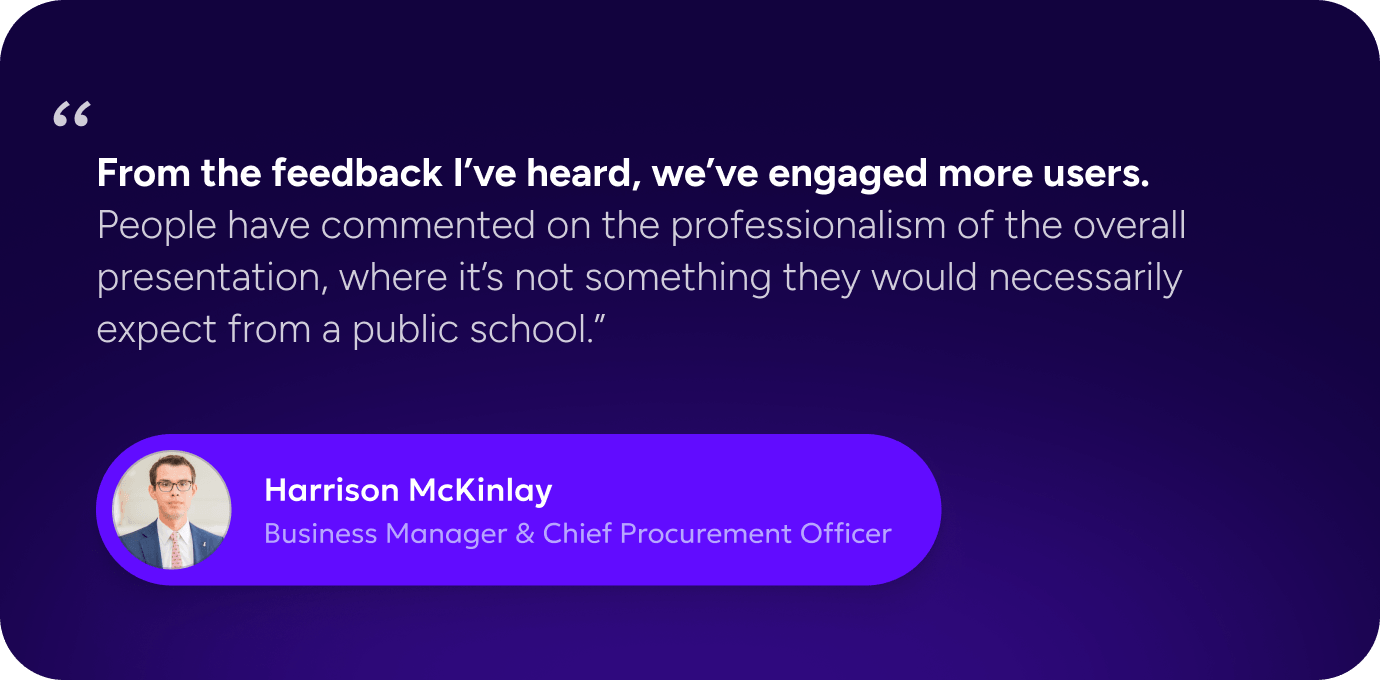
As Harrison said:

Sutton Public Schools x Storydoc case study
Sutton Public Schools' amazing results from using Storydoc

1000s

of engaged residents accessing the budget online

9:45

average reading time

100%

open rate across tracked sessions from distributed links

36%

completion rate

Want to see for yourself?

Looking ahead - From transparency to real-time interaction

For Sutton, moving the budget online was the first step.

The next phase Harrison envisions goes further — turning the document from a one-way presentation into something even more interactive during the decision-making process itself.

Town and committee meetings often involve spontaneous “what if” questions. What would happen if this line item changed? What if funding shifted between departments?

Today, those conversations require separate spreadsheets or follow-up analysis after the meeting.

Harrison would like to see a future where budget scenarios could be modeled directly within the presentation — adjusting figures live and immediately showing how those changes ripple through the overall plan.

Another opportunity lies in real-time community feedback.

Hundreds of residents are already viewing the Storydoc online. Integrating simple survey functionality — with results displayed directly in the document — could allow the district to gather structured input instead of relying just on public comment periods.

There’s also interest in capturing committee votes directly within the presentation.

Instead of someone having to attend the meeting or search through minutes later, the result could simply appear in the document itself — clearly showing how the vote landed and who supported it.

That way, residents following along from home could see decisions unfold in context, and the district would build a clearer year-over-year record of how budget approvals evolve.

What's next - Applying the format to academic reporting and onboarding

For Harrison, the budget presentation proved something simple: the format works.

But the budget isn’t the only moment when the district has to explain complex information to the public.

Throughout the year, the superintendent, special education director, and building principals present academic performance data — including MCAS testing results — to the School Committee and the community.

These presentations often involve detailed charts, trend analysis, and explanations of how curriculum adjustments connect to student outcomes and score improvement.

Harrison sees an opportunity to bring the same interactive, structured format to those academic updates so the information is easier to follow — and so the story behind the numbers is clearer.

Not just what the scores are, but why they changed, what influenced them, and what the district is doing in response.

He also pointed to teacher orientation as another area ready for improvement. Each year, new staff go through onboarding sessions that are currently delivered through standard PowerPoint decks.

Harrison believes there’s room to make that experience more organized and more engaging — something new teachers could return to rather than viewing once and filing away.

For Sutton, the budget may have been the catalyst, but the larger shift is about raising the standard for how the district communicates with its community.

If you’re like Sutton Public Schools, here’s how you can get similar results

  • Replace static PDFs with a single, web-based document that can evolve throughout your review and approval process — without changing the link or resending files.

  • Present complex information as a structured narrative, not just a collection of spreadsheets or slides. Help stakeholders understand context, not just data.

  • Build for multiple audiences at once without creating separate versions for each.

  • Include a clear timeline of milestones so viewers can see where the process stands and what happens next.

  • Use interactive visuals that allow people to explore detail at their own pace, rather than overwhelming them with dense tables.

  • Make your documents mobile-friendly.

  • Treat important reports as living resources. Update them as decisions evolve and make it easy for people to return to the same source of truth.

Think we can help you?