This is a preview of your story

Powered by

Storydoc

How Winchester Public Schools Tells Its Budget Story with Storydoc

See how Winchester Public Schools discovered a new, innovative approach to static budget reports with an interactive Storydoc - improving stakeholder engagement and building community trust.

  • Interactive budget reporting
  • Public sector communication
  • Stakeholder engagement & trust-building
Winchester Public Schools case study - Storydoc

About Winchester Public Schools

winchesterps.org | LinkedIn

Winchester Public Schools

Winchester Public Schools (WPS) is a public school district located just outside Boston, serving approximately 4,300 students.

The district operates under a representative Town Meeting form of government, in which major financial decisions are discussed publicly and voted on by the community.

Budget proposals move through layers of review, including the School Committee, the Finance Committee, and ultimately Town Meeting members.

As a public institution, WPS regularly publishes budget reports, strategic plans, and financial updates for review by elected committees and residents.

Key outcomes

  • 100% open rate across distributed links

  • 26% of readers viewed the entire presentation

  • Average reading time: 6 minutes 25 seconds per session

  • 28.5% of visitors actively engaged with the presentation

The challenge - Explaining complex budgets to diverse public audiences

For Andrew Marron, Director of Finance & Operations at Winchester Public Schools, the numbers are part of the job.

He oversees Finance, Information Technology, Human Resources, Transportation, Facilities, Food Services, and Registration for the district.

In close partnership and collaboration with the Superintendent, Andrew holds a public-facing role, presenting financial updates and budget proposals to the School Committee, the Town's Finance Committee, and ultimately to Town Meeting members.

Winchester's town meeting system means budget decisions move through stages of public review prior to being voted on by the community.


Each stage involves different audiences, with a variety of expectations:

  • Finance Committee members seek technical detail and line-by-line clarity.

  • School Committee members prioritize alignment with long-term strategic goals.

  • Residents are curious how funding decisions affect classrooms, staffing, and student experience.


As Andrew puts it:

“We want to ensure each group knows our story and the reasoning behind any changes in our budget.”


That structure demands communication that is accurate and accessible.

Financial updates, strategic plans, and funding requests must serve people who approach the same information from very different perspectives.

In this environment, reporting is more than a compliance exercise. It plays an essential role in building trust and enabling informed decision-making across the community.

Larger districts produce 400- to 500-page budget books each year, supported by dedicated teams or external consultants.

Winchester runs leaner. The core narrative, charts, formatting, dashboards - come together through a small internal team working closely across departments.


Andrew explained:

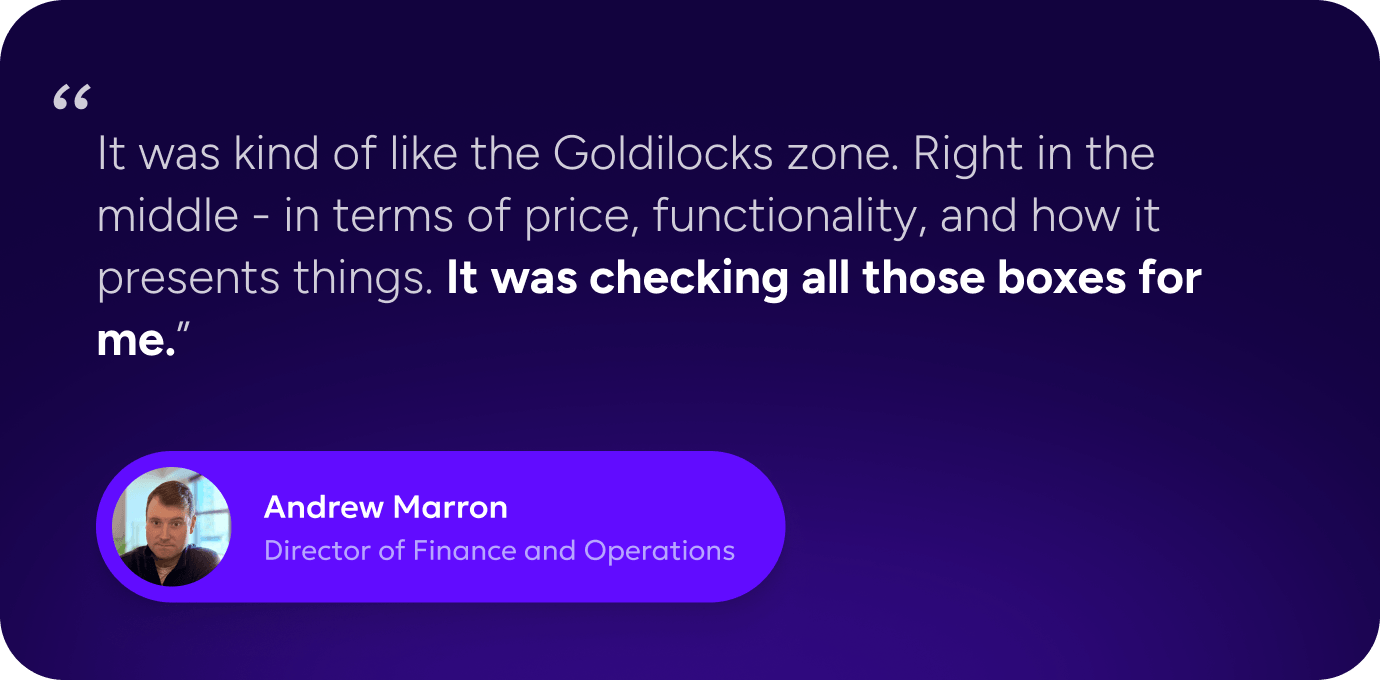
“We’re always trying to strike a balance of covering budget approval requirements and telling a story that authentically conveys the mission and work of the district - doing it in a way that's easily accessible and engaging.”

Evolving the approach over time

This progress is the result of years of iteration.

In the early days, the district used to produce Word-based budget reports that were printed into binders, scanned, and posted online.

The result was technically compliant - yet difficult to navigate and visually uninviting.

A move to Google Docs improved accessibility, but introduced a fresh challenge.

Long-form documents with embedded charts still lacked an engaging reading experience. Interactivity was limited, and visual control was basic.

As a next step in working toward making this content more engaging and easier to digest, Andrew tried out Looker Studio to create complementary interactive dashboards.

This view allowed users to drill into data by school or category. Still, they functioned independently from the narrative document.

Andrew was encouraged by the progress the interactive dashboards were providing, but he was curious about the potential for a more narrative format with clean visuals and built-in interactivity.

And then there was mobile.

Analytics showed that roughly 40% of viewers were accessing materials on mobile devices or tablets. Dashboards that looked fine on desktop became harder to use on smaller screens.


One annual budget cycle could involve:

  • A narrative document

  • An interactive dashboard

  • A presentation deck

  • A printable packet


Here's what an old budget book by Winchester Public Schools used to look like:

And here's an old budget request letter:

Andrew was on the hunt for a single format that could combine narrative and data, work online, function cleanly on mobile, and still produce a printable PDF.

He tested several tools. Some were powerful but priced and structured for enterprise sales teams. Others felt overly complex for a small public-sector team without dedicated designers.

“There's a lot of great applications out there, yet most of them assume a private-sector budget and a private-sector team," Andrew said. "I'm always looking for tools that close the gap.”

He needed something structured, interactive, flexible, yet practical.

When he came across Storydoc, he knew it was a promising solution.

Winchester Public Schools x Storydoc case study

The solution - One unified, web-first budget report

Instead of rebuilding the same story across multiple formats, Andrew was able to consolidate everything into a single, web-based report.

With Storydoc, the budget book became a key, go-to asset.


It functioned as:

  • The public-facing report

  • The live presentation at Town Meeting

  • The mobile-friendly version

  • The source for a printable PDF


This reduced duplicate work and brought the narrative under one roof.

It also gave Andrew greater control over the structure, flow, and presentation. He could design the experience intentionally - section by section.

Andrew found Storydoc to be intuitive from the start.

“Out of the box, I found it easy to set up and navigate,” he said.

He noted that the expanding library of templates has made it even easier to structure new projects over time.


Here's what Winchester’s interactive budget book looks like now:

To support the new format, WPS included professional photography taken by a local parent. Bright, candid images of students and classrooms help bring the financial data to life in tangible, meaningful ways.

The format allowed supplemental material to live inside the same document.

When the district partnered with a university on a detailed enrollment study, the output was substantial: a 50-page report and a lengthy accompanying presentation.

Instead, Andrew generated a concise, AI-based podcast summary and embedded it directly into the Storydoc.

Stakeholders now had a choice.

They could spend hours working through dense material - or they could scroll to the relevant section and listen to a clear summary within the same report.

Winchester Public Schools x Storydoc case study

For the first time, the narrative, the data, the visuals, and the additional material lived in one place - accessible on desktop, tablet, and mobile.

Optimizing the narrative with real engagement data

For the first time, Andrew could see how his community interacted with the budget report.

With previous Word documents or PDFs, this was not possible. Once a file was uploaded, it was impossible to know how many people opened it - or how far they read.

Even with Looker Studio dashboards, insights were limited to basic metrics such as opens and devices. There wasn’t a clear view into how community members moved through the content or which sections held their attention.

Storydoc changed that.

The analytics showed how many people viewed the report, how long they spent on it, and where engagement dropped off.

Those insights provided the case for adjustments.

Critical sections were moved earlier in the report, and less essential material was shifted later. FAQs and extra content were strategically placed.

Andrew and the team were able to design a report that was evidence-informed and deliberate, rather than driven by intuition.

The impact - A clear, trusted source of truth

This new format was put to work during a demanding budget cycle.

The need was greater than ever before for the district to clearly communicate its financial position while also explaining the implications of different funding scenarios.

The report needed to help both committee members review line items and residents understand what the numbers meant for classrooms and staffing. It soon became the district's central reference point.

“It became the source of truth for us,” Andrew said. “People could read it on their own, share it, and reference it.”

The improvements to the report immediately received positive feedback from stakeholders across the community.

They commented on the report's readability and accessibility. At Town Meeting, members were observed scrolling through the live version rather than flipping through static slides.

This shift to a web-based format made it easier for people to engage on their own terms - particularly on their mobile devices.

More than any single outcome, the move to Storydoc changed how Winchester Public Schools tells its story.

The narrative, data, and visuals come together in one place.

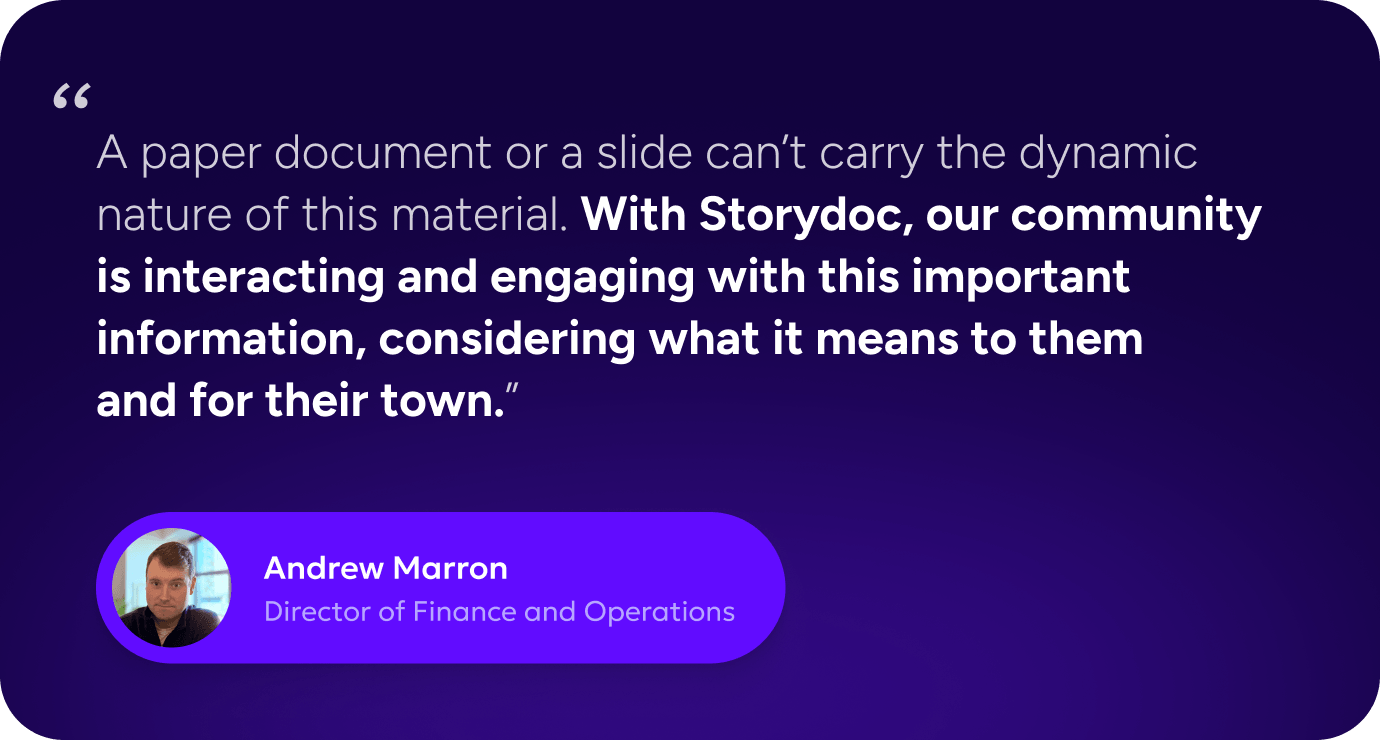
Each audience can find what it needs while exploring the reasoning behind the budget, thanks to the report's interactive experience.


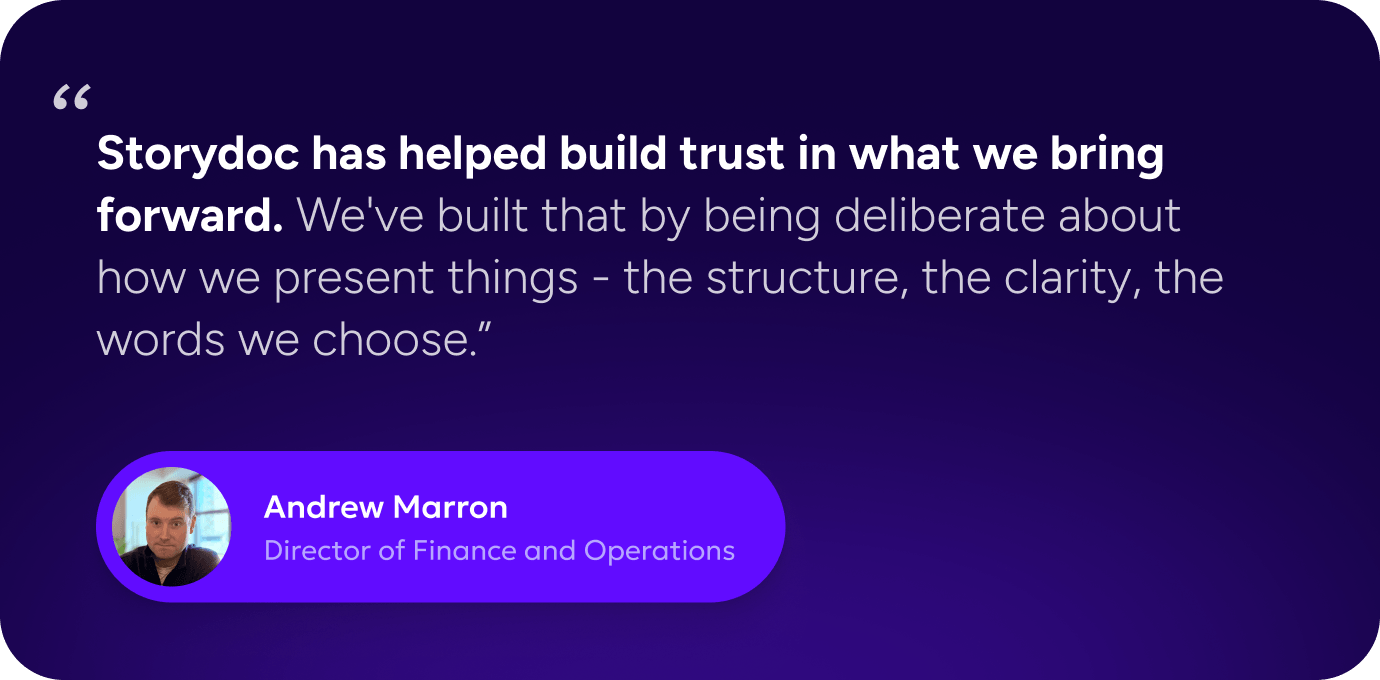
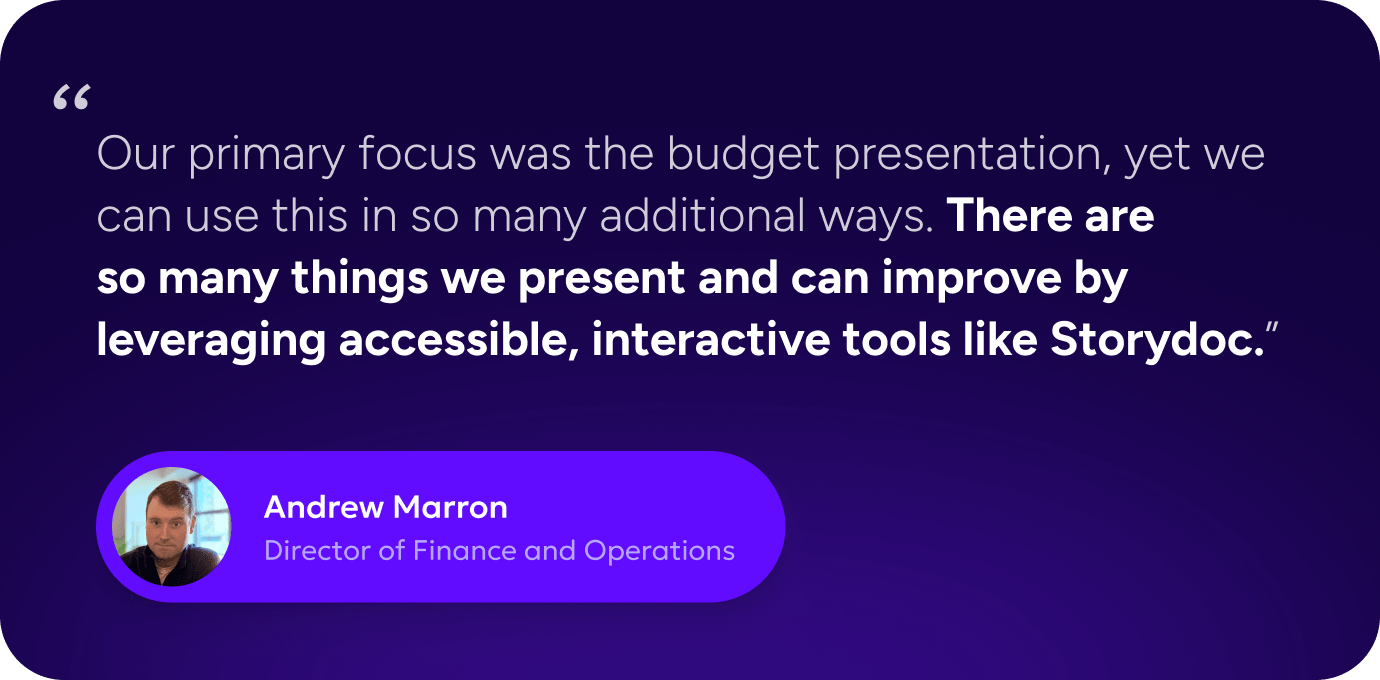
In Andrew's own words:

Winchester Public Schools x Storydoc case study

The approach also resonated beyond Town Meeting.

The district's FY26 budget presentation earned an NSPRA National School Communication Award of Merit.

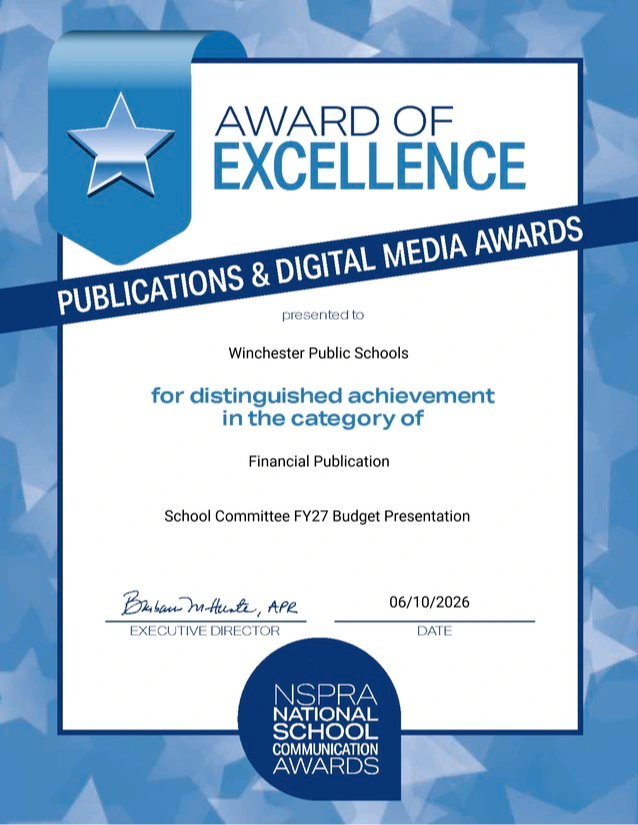
Most recently, its FY27 presentation earned a Financial Publication - Award of Excellence in the 2026 NSPRA National School Communication Awards (Publications and Digital Media category), presented by the National School Public Relations Association - recognition of how Winchester has modernized its public communication.

For Andrew, it confirmed that continuing to refine the district's approach to this key report had been worth the effort.

Winchester Public Schools case study

What's next - Extending this format beyond the budget

While the annual budget presentation was the original use case, it won't be the last.

WPS is now using Storydoc to support new employee onboarding, providing a structured, welcoming experience for staff on their first day.

Instead of distributing static PDFs or lengthy email instructions, the district can now guide new hires through benefits, policies, and key information in an easier-to-navigate, easier-to-reference format.

The team is also preparing to use Storydoc again for its upcoming budget cycle - this time with refinements informed by the prior year's analytics.

Rather than recreating the same information across multiple platforms each year, WPS now has an approach that scales across different types of communication - from public reporting to internal processes.

Winchester Public Schools x Storydoc case study

Looking ahead - Experimenting with personalization and data integration

Andrew approaches reporting the same way he approaches technology more broadly - testing, iterating, and improving.

Now that the core format is working for the district's budget presentation and new hire onboarding materials, he and the team are thinking about how to push it further.

Andrew’s currently exploring opportunities to personalize documents using dynamic variables, providing individual stakeholders with tailored versions of the same core report.

This same approach could extend to new students.

For example, a few weeks before the first day of school, families could receive personalized welcome resources, built using Storydoc. The structure would remain consistent, but key details could be dynamically inserted.

Andrew is also interested in exploring more of Storydoc’s AI features.

One idea is to educate the system using past district narratives to help it better understand the district's voice, structure, and recurring use cases - making future drafts faster to create without starting from scratch.

On the data side, Andrew wants to use historical district data to better identify ways to reduce friction during super busy budget cycles.

They’re interested in deeper integrations with Google Sheets, streamlining the flow of financial data into the report.

Currently, data is uploaded via CSV. Direct linking to specific sheets or ranges would shorten update times and reduce version mismatch risks.

For WPS, moving to a web-first reporting model wasn't just about modernizing the budget cycle.

It marked the start of more flexible, data-informed ways of communicating with the community.

Now the focus is on refining the system to continue to evolve with the district's needs.

100%

open rate across distributed links

26%

deck completion rate

6:25

average reading time

28.5%

of readers actively engaged with the content

Want to see for yourself?

If you have similar goals, here’s how to get the results you're seeking:

  • Consolidate reporting into one web-first document rather than rebuilding the same narrative across PDFs, dashboards, and slide decks

  • Design for mobile consumption from the start, especially if a significant portion of your audience accesses information on phones or tablets

  • Combine narrative, data, and extra material into one structured experience, reducing friction, preventing context switching, and increasing engagement

  • Offer alternative ways to consume complex information - such as embedded summaries or multimedia

  • Use engagement analytics to refine the structure and position critical sections where they're most likely to be seen

Think we can help you?