How to reduce approval cycle times without cutting corners
The most common objection to tighter compliance processes is that they slow everything down.
Sales teams feel the friction, marketing teams miss deadlines, and leadership starts questioning whether the process is worth the effort.
Here's the honest answer: slow approval cycles aren't a compliance problem. They're a process problem.
The friction tends to come from missing context and unclear approval workflows.
1. Build a compliant slide request intake process
The reason most approval requests take too long is that reviewers don't have the context they need upfront.
A rep submits a new claim for the deck. Legal gets the request, doesn't know what supporting evidence exists, spends two days asking follow-up questions, and the rep is frustrated by the delay.
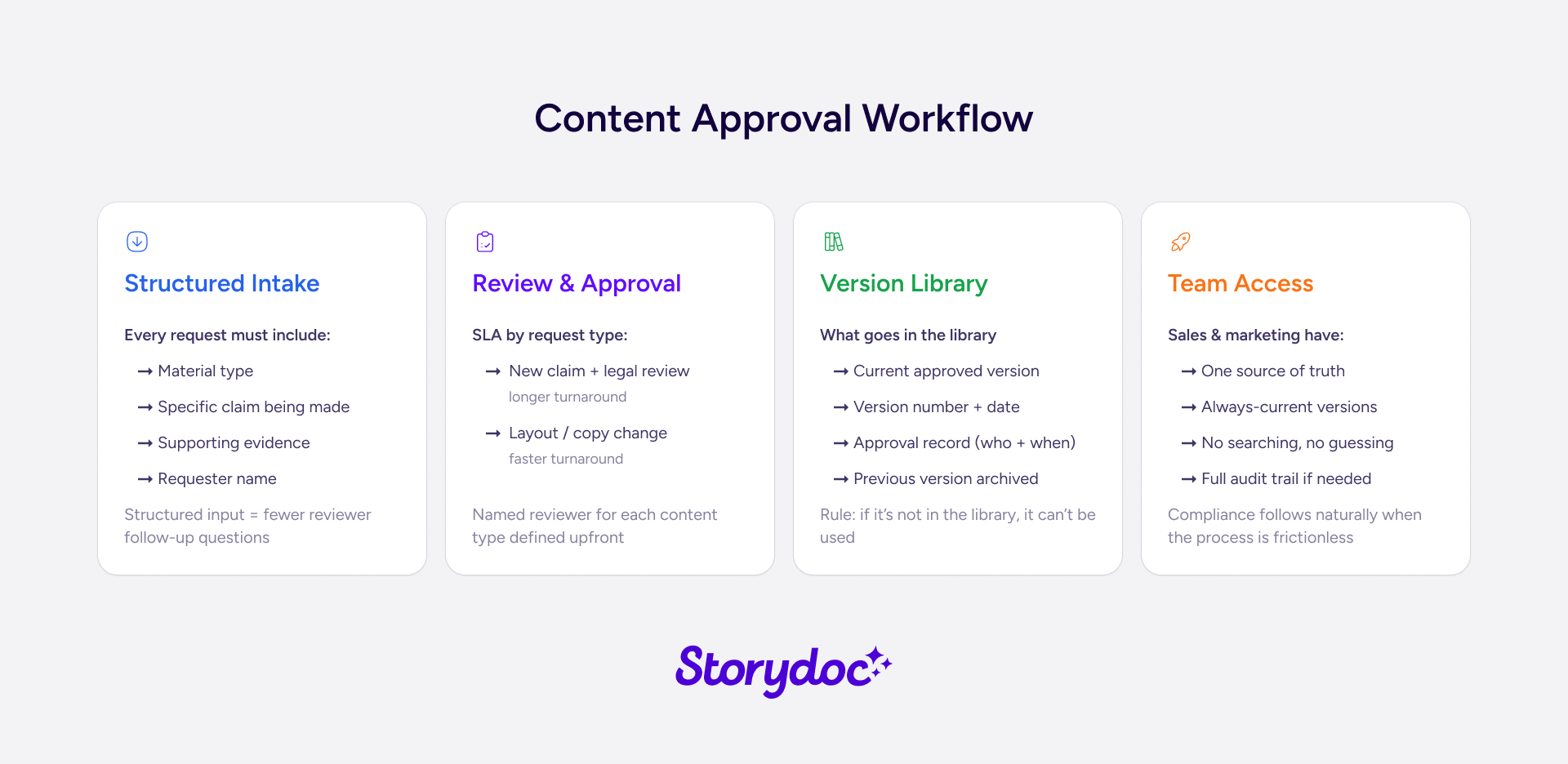
A structured intake format solves this. Every request should include: the type of material, the specific claim being made, what the supporting evidence is, and who is requesting it.
When reviewers get that context upfront, much of the unnecessary back-and-forth disappears. Turnaround times improve because reviewers can focus on making a decision rather than gathering missing information.
2. Set clear SLAs and version control rules
Approval timelines should match the complexity of the request. A new performance claim that needs supporting data and legal review takes longer than a layout change that doesn't touch the copy.
When teams understand those distinctions, they stop treating all requests the same - and stop being surprised by turnaround times.
Version control is just as important. Publish a version log that everyone in sales and marketing can access.
The rule is simple: if a version isn't in the approved library, it can't be used. That rule eliminates the "I didn't know it was updated" scenario entirely, but only if someone owns the library and keeps it current.
Mature AI tools for sales enforce that rule automatically. Reps can only send approved versions because older drafts are no longer available in the library.
 Catalina Verdea