20 Best Sales Enablement Tools Every Sales Rep Needs in 2026
Learn about the top sales enablement tools for this year, the main types, and how to choose the right sales enablement tool to elevate your sales strategy.
Are you using the right tools to win the sales game?
Heading into the sales world without the right tools? That’s like showing up to a battle with just a slingshot when everyone else has precision rifles. You’re going to feel out of your depth.
If you don’t discover the right solutions, you’re at risk of falling behind, struggling to connect with customers, and missing crucial deals.
But don’t worry, I’m here to guide you through this. This post will give you a list of all the sales enablement tools you need to know and help you understand how to choose the best ones for your unique sales journey.
Let’s get started!
What are sales enablement tools?
Sales enablement tools are used to streamline the entire sales process, from lead generation to closing deals. They enhance communication, provide actionable insights, and facilitate effective customer interactions.
Additionally, these tools incorporate data analysis and automation capabilities, crucial for driving sales success and efficiency.
Types of sales enablement tools
Navigating the world of sales enablement tools can feel like exploring a vast galaxy of tech wonders.
Each type of tool plays a crucial role in creating a well-oiled sales machine, ensuring your team is equipped to tackle the challenges of the modern sales landscape with confidence and efficiency.
Here’s a breakdown of the main types, making it easier for you to find your perfect sales sidekick.
7 critical types of sales enablement tools:
CRM software: The backbone of sales enablement, CRM (Customer Relationship Management) tools help manage customer data, track interactions, and nurture leads through the sales pipeline.
Content management systems: These startup tools ensure that your sales team has quick access to the right marketing materials, presentations, and documents, all tailored to meet customer needs effectively.
Sales analytics platforms: By analyzing sales data, these platforms offer insights into trends, performance metrics, and forecasting, helping you make data-driven decisions.
Sales training and coaching tools: These are designed to enhance the skills of your sales team through training modules, performance tracking, and feedback mechanisms.
Communication tools: Essential for internal team collaboration and external communication with clients, these tools streamline interactions and ensure clear, consistent messaging.
Sales automation tools: They automate repetitive tasks like email campaigns and scheduling, freeing up your team to focus on more strategic activities.
Sales intelligence software: These tools provide crucial market and customer insights, helping sales reps understand and anticipate customer needs and behaviors.
What are the best sales enablement tools?
As we leap into the new year, the digital landscape is buzzing with tools designed to give your sales strategy that extra edge. From CRM giants to innovative training platforms, we’ve got the scoop on the best sales enablement solutions out there. Let’s dive in!
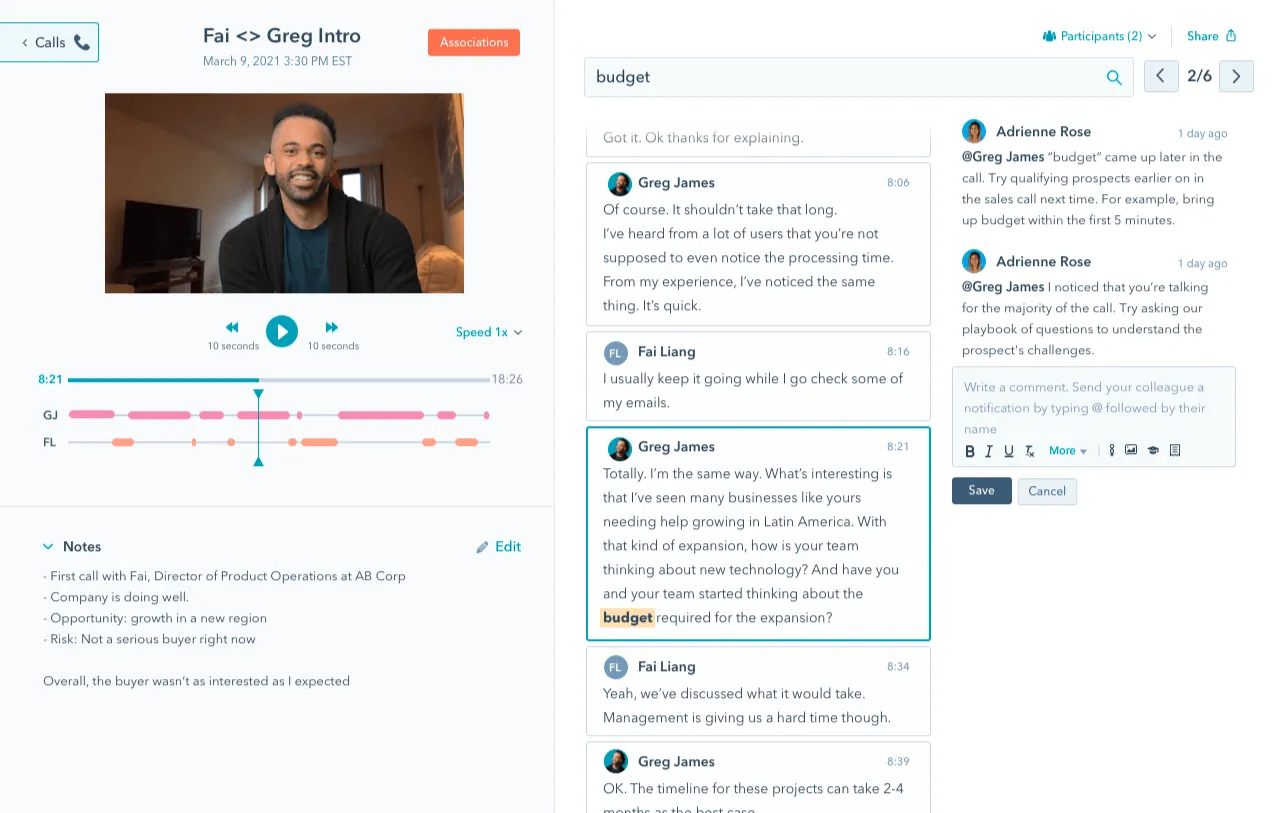
HubSpot Sales Hub is a comprehensive sales software that streamlines the entire sales process on a single platform. It’s designed to supercharge your sales activities, from prospecting to closing deals.
With features like lead management, email tracking, sales automation, and AI tools, HubSpot ensures that your sales team is always a step ahead. Various available integrations allow your team to connect Hubspot to Power BI, Looker Studio, and other business intelligence tools to set up flawless reporting and sales analytics.
Its intuitive design and powerful tools help in managing leads, automating sales processes, and gaining valuable insights, making deal-making a breeze.
Who it’s best for:
HubSpot is perfect for businesses of all sizes seeking an all-in-one sales solution. It’s particularly beneficial for teams that require a seamless integration of sales, marketing, and customer service activities.
Pros
Cons
Pros:
Comprehensive CRM with integrated sales, marketing, and service tools
Cons:
With its wide array of features, it may take some time to get fully comfortable using it
Pros:
Advanced lead management and prospecting features
Cons:
The jump in cost from the Starter plan to higher tiers can be quite noticeable, especially as there’s no free CRM plan
Pros:
Automated and personalized email sequences
Pros:
Efficient call tracking and meeting scheduling
Pros:
Powerful AI tools for drafting emails and creating CTAs
Pros:
Detailed sales analytics and reporting for effective forecasting
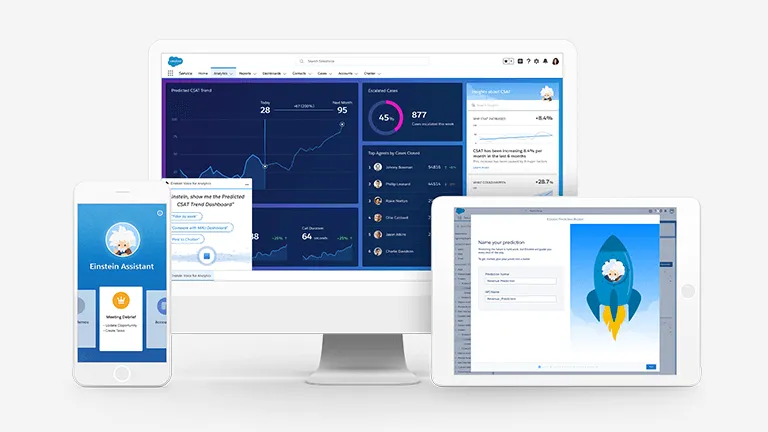
Salesforce CRM, a leader in the CRM space, is renowned for its AI-powered sales solutions. It’s a comprehensive sales enablement platform that enhances sales efficiency by providing a wealth of data and intelligent tools.
Built on the Einstein AI platform, Salesforce CRM equips sales teams with advanced analytics, streamlined lead and opportunity management, and a suite of intelligent features.
This platform is designed to engage buyers effectively, boost seller productivity, close deals faster, and ultimately grow revenue. It’s a robust solution for managing the entire sales cycle, from lead generation to deal closure.
Who it’s best for:
Salesforce is the go-to for businesses seeking a powerful, data-savvy sales platform.
It’s like having a smart assistant that ties together sales, marketing, and customer service into one neat package. Ideal for teams that love diving into data to find those golden sales opportunities.
Pros
Cons
Pros:
AI-driven insights and analytics for smarter selling
Cons:
New users may find the wide array of features a bit challenging at first
Pros:
Comprehensive lead and opportunity management
Cons:
Advanced features are mainly available in the higher-tier, more expensive plans
Pros:
Customizable to fit various business needs
Pros:
Extensive integration capabilities with other tools and platforms
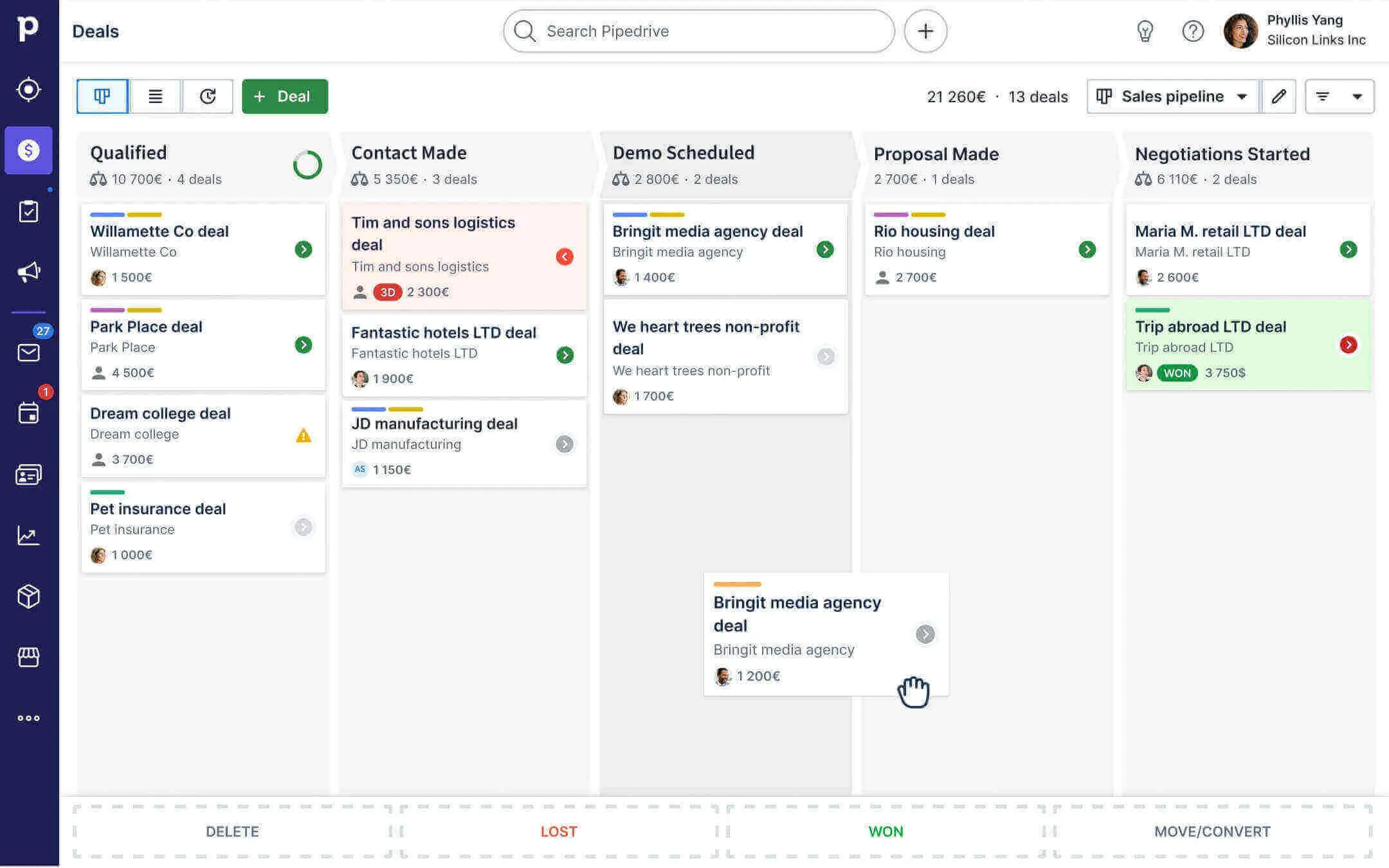
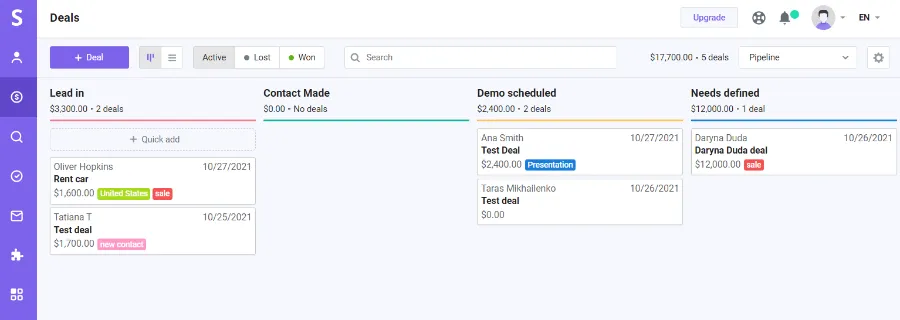
Pipedrive is a CRM that’s all about simplicity and effectiveness, especially when it comes to closing deals. It’s designed to keep your sales pipeline crystal clear and manage leads with ease.
With Pipedrive, you’re not just tracking sales; you’re automating the entire process to focus more on selling and less on the admin work. It’s a tool that brings together all your sales activities in one place, offering a streamlined, user-friendly experience.
Whether you’re a CRM veteran or new to the game, Pipedrive makes managing your sales process a breeze.
Who it’s best for:
Pipedrive is best for small to medium businesses looking for a simple yet effective CRM. It keeps sales processes clear and straightforward, making it a breeze for teams to manage their sales pipeline.
Pros
Cons
Pros:
User-friendly interface with easy navigation
Cons:
Reporting and analytics features could be more robust
Pros:
Effective lead management and sales automation
Cons:
The mobile app needs more functionality
Pros:
Customizable pipelines to match your sales process
Cons:
Setting up integrations can be tricky, and finding the right one might take some effort
Pros:
Real-time sales reporting and forecasting
Pros:
Integrates seamlessly with a variety of apps and tools
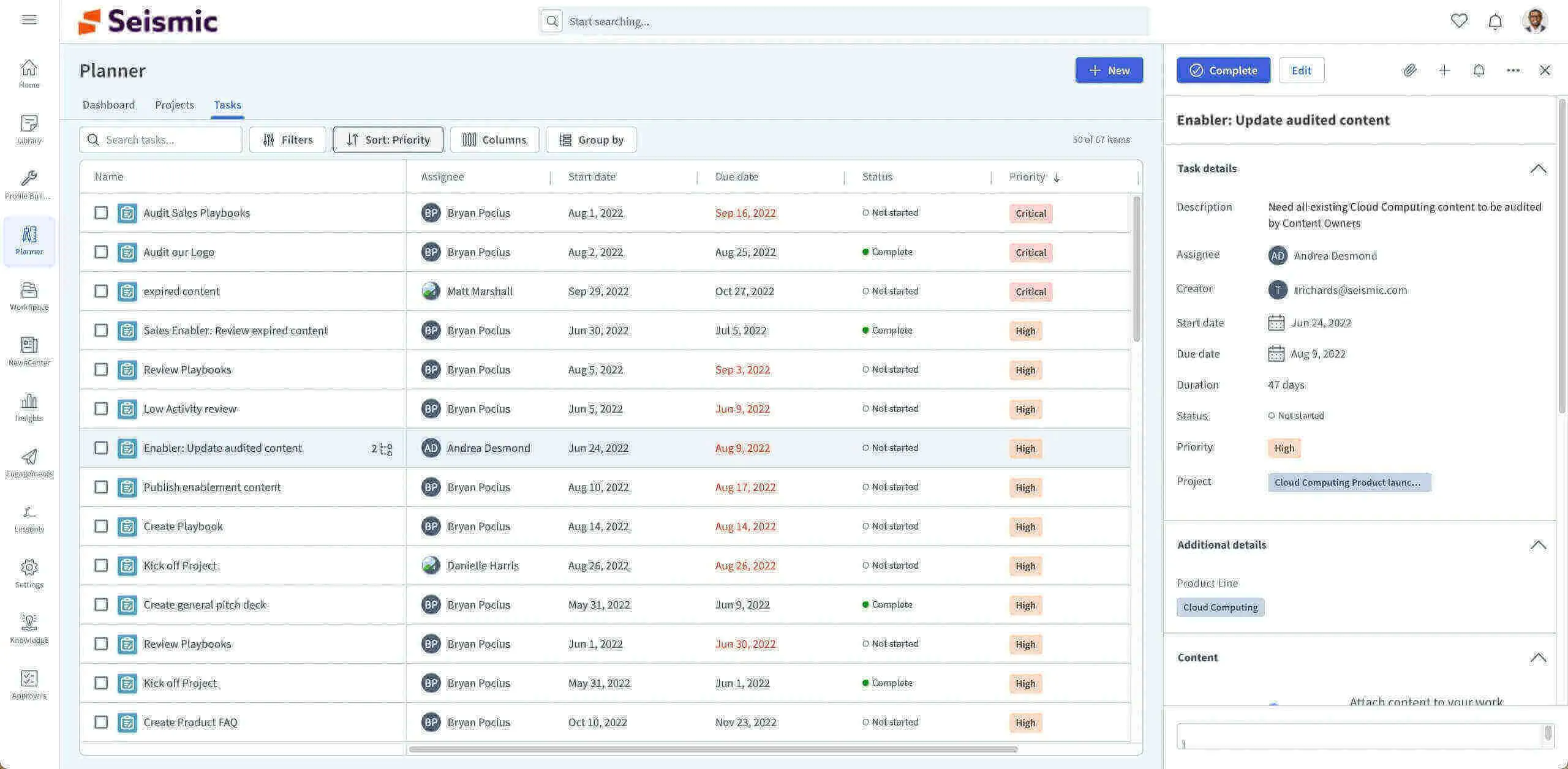
Seismic is not just a sales enablement platform; it’s a complete ecosystem that empowers your customer-facing teams with the right mix of skills, content, tools, and insights.
This AI-powered solution is all about enhancing buyer engagement and driving revenue growth.
Seismic offers a unique blend of sales training, coaching, and content management, all integrated into a single platform. It’s designed to ready your reps with everything they need to close deals effectively and efficiently.
With Seismic, you’re not just selling; you’re delivering a customer experience that’s both memorable and impactful.
Who it’s best for:
Seismic is perfect for teams that need a bit of everything – sales, marketing, and customer service, all rolled into one. It’s like having a toolbox full of the latest gadgets to enhance customer engagement and make selling smarter, thanks to its AI-driven approach.
Pros
Cons
Pros:
Comprehensive sales training and coaching tools
Cons:
The user experience (UX) could be smoother and more user-friendly
Pros:
AI-powered content management for personalized buyer engagement
Cons:
Constantly adding new features means there’s a need for ongoing training to keep sellers up-to-date
Pros:
Detailed analytics and insights to drive sales strategies
Pros:
Integrates with major platforms like Microsoft, Google, and Salesforce
Pros:
Proven track record of increasing content use and revenue
Spekit is the only enablement platform that centralizes and automatically surfaces the answers, content, and training sales reps need to thrive – right when and where they need it.
Unite your playbooks, resources, training, and sales content within Spekit, and they become instantly accessible, shareable, and trackable from any tool or workflow. If your sales reps are there, now your enablement is, too.
It’s the enablement experience that sales reps adopt instantly, use constantly, and love deeply.
Who it’s best for:
Fast-moving sales teams seeking to accelerate growth by ensuring every rep is empowered with the knowledge, training, coaching, and content they need to thrive, exactly when and where they need it.
Pros
Cons
Pros:
Centralize your sales content and training, and it becomes instantly accessible anywhere your reps work – no additional integrations required.
Cons:
If you’re looking for a platform with 100+ features and unlimited customization options, this isn’t the one. Spekit’s focus is on a simple, seamless user-experience offering everything you need to enable your team and nothing you don’t.
Pros:
Sales playbooks, guidance, and coaching are embedded contextually, eliminating the need for reps to dig for answers.
Pros:
Lightweight, agile, no-code setup. Create, iterate, surface, and share content in seconds.
Pros:
AI-powered content assistant and out-of-the-box templates so you can move 10x faster
Pros:
In-app notifications to alert reps of crucial changes, updates, and announcements
Pros:
Content usage and engagement analytics quickly reveal training gaps and content opportunities.
Pricing:
Completely customizable based on your organization’s needs and use case
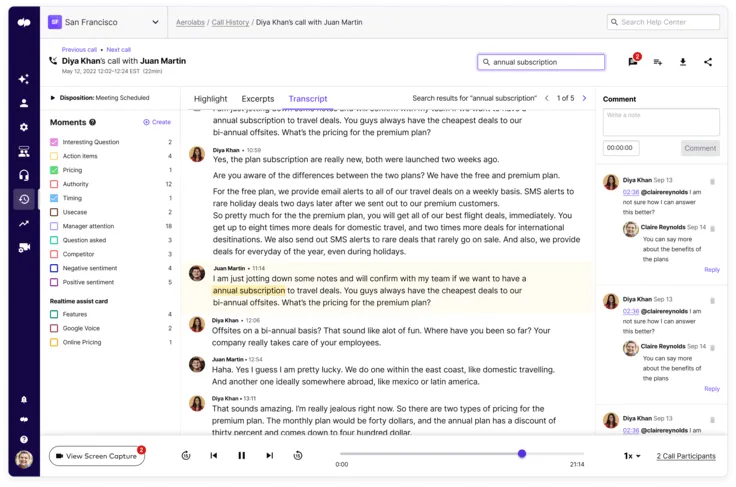
Gong.io is a game-changer in the world of revenue intelligence, transforming customer interactions into valuable insights and data-driven decisions.
This AI-fueled platform is all about maximizing team productivity, revenue predictability, and business growth.
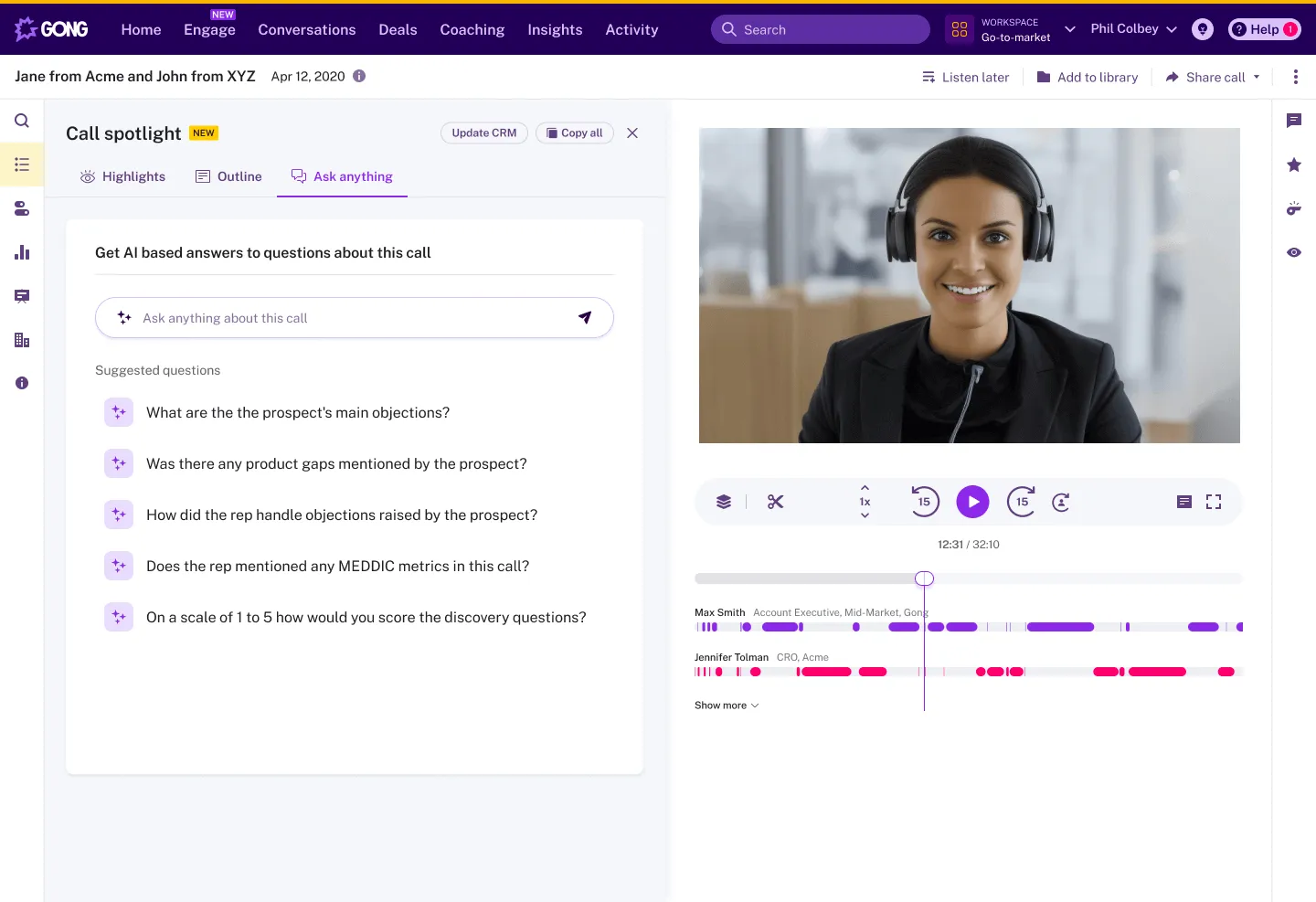
Gong captures and analyzes sales conversations, providing intelligent summaries and actionable insights.
It’s not just about tracking what’s said; it’s about understanding the nuances of each interaction and leveraging that knowledge to enhance sales strategies.
With Gong, you’re not just listening to your customers; you’re learning from them.
Who it’s best for:
Gong.io is perfect for sales teams of any size that want to dive deep into customer interactions. Gong helps in understanding the nuances of each conversation, turning them into actionable insights.
Pros
Cons
Pros:
Advanced AI analysis of sales conversations
Cons:
New users might need some time to get used to the AI-driven aspects of the platform
Pros:
Intelligent summaries save time on call reviews
Cons:
The pricing model, based on the number of recorded users, may not fit every business’s needs, especially with so many Gong alternatives
Pros:
Insights that improve deal predictability and win rates
Pros:
Helps in coaching and developing high-performing sales teams
Pricing:
The pricing for Gong.io varies based on the number of users and the type of license selected. Additionally, there’s a platform fee that is determined by the number of users.
To get a more accurate understanding of the costs, check out Gong.io’s pricing page and reach out to them directly.
Storydoc focuses on one of the most overlooked parts of the sales process: what actually happens when buyers engage with your sales materials.
While pipeline activity is carefully tracked inside the CRM, the closing stage often happens in static decks and PDFs that provide little visibility into how prospects interact with them.
Storydoc fills that gap by turning traditional sales collateral into interactive, trackable experiences.
Instead of sending a static slide deck, Storydoc generates scroll-based pitch decks, proposals, and QBRs that are personalized using real CRM data.
Reps can automatically create tailored sales materials for each opportunity, helping them deliver more relevant messages at every stage of the sales cycle.
This personalization goes beyond simple name variables. Storydoc can pull data from CRM records, call transcripts, and other tools to generate highly tailored sales content at scale.
The platform also brings buyer engagement data back into the CRM. Once a presentation is shared, reps can see how long prospects spend reading it, what sections attract the most attention, and when engagement signals indicate it’s time to follow up.
By combining AI-assisted content generation, automation, and engagement analytics, Storydoc helps teams turn business data into deal-winning sales collateral – improving targeting, strengthening follow-ups, and ultimately increasing conversion rates.
Who it’s best for:
Storydoc is particularly useful for sales and revenue teams that want more visibility into how buyers interact with their materials during the later stages of the sales process.
It works well for organizations looking to personalize sales collateral at scale while gaining engagement insights that help reps prioritize follow-ups and close deals faster.
Pros
Cons
Pros:
Interactive, scroll-based sales collateral designed for engagement
Cons:
There’s a bit of a learning curve for those used to traditional presentation tools
Pros:
AI-assisted creation of decks, proposals, and QBRs
Cons:
Printed presentations lose their interactive charm
Pros:
Deep personalization using CRM data and other sources
Pros:
Real-time engagement analytics that reveal buyer intent signals
Pros:
CRM integrations that bring engagement data back into the pipeline
Pros:
Mobile-optimized experience for modern buyers
Pricing:
14-day free trial
Starter plan: $19.80/month per user (billed annually)
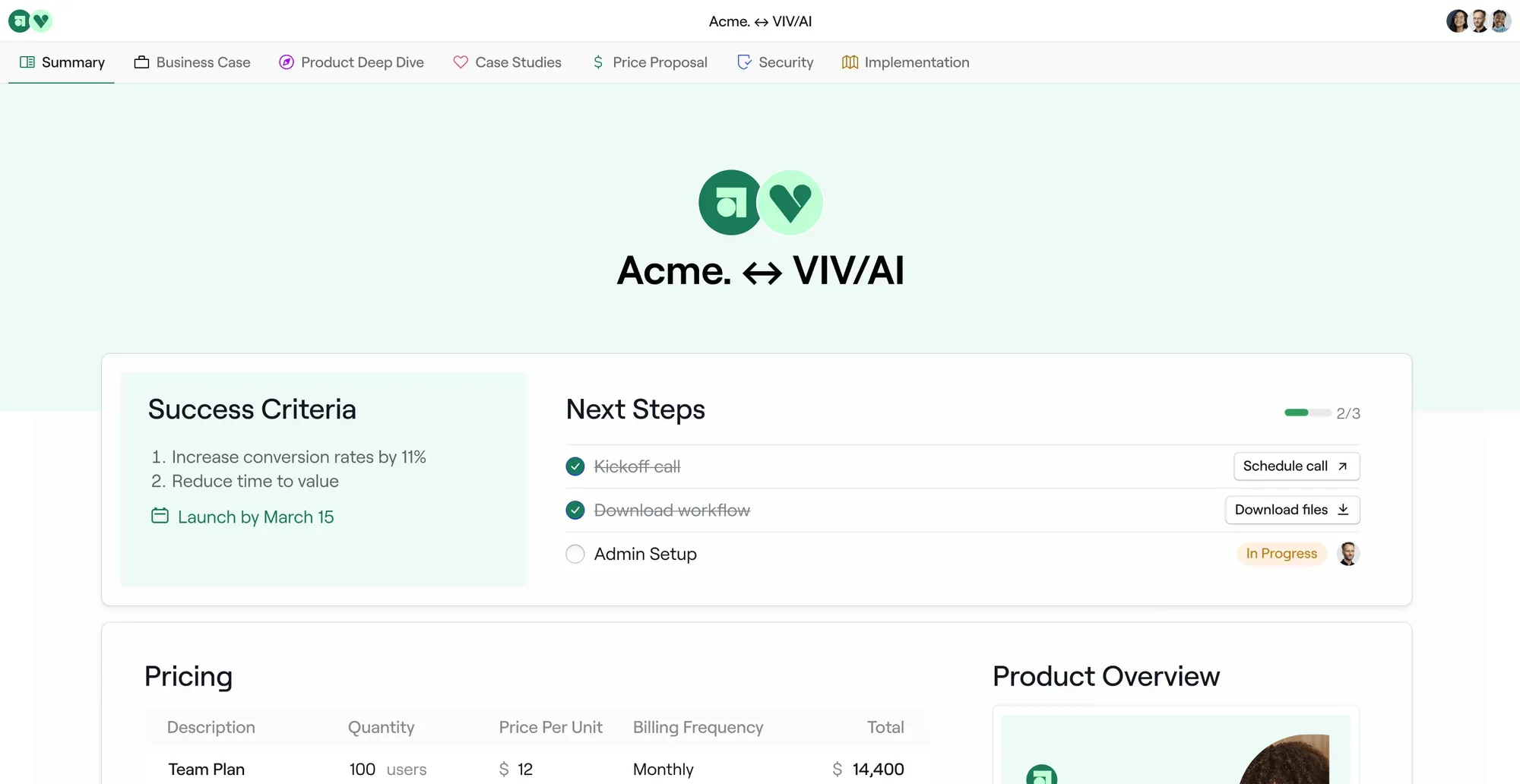
Dock is an AI revenue enablement platform that gives go-to-market teams real-time guidance across the entire customer lifecycle—from first outreach through onboarding and renewal.
Sales reps use Dock’s digital sales rooms to organize follow-up, share content, generate AI-powered business cases and mutual action plans, and give buyers a single destination to manage the evaluation.
Enablement teams use Dock to manage content, deliver structured training, and provide reps with an AI agent that answers questions in real time from your playbooks and deal context. Customer success teams run onboarding and account management in the same connected workspace, eliminating handoff friction between Sales and CS.
The result: shorter sales cycles, higher win rates, and onboarding that actually sticks.
Who it’s best for:
Dock is a strong fit for mid-market B2B companies with 5-100 sellers who need real enablement infrastructure, like digital sales rooms, content management, rep training, and post-sale workspaces, without the implementation overhead and pricing of legacy enterprise platforms.
Pros
Cons
Pros:
AI-powered digital sales rooms let reps create personalized, on-brand workspaces in minutes using CRM data and call transcripts
Cons:
Best suited for mid-market teams; very large enterprise deployments with complex governance requirements may find legacy platforms a better fit
Pros:
Full-lifecycle platform covers deal rooms, customer onboarding, client portals, and renewals in one connected workspace
Cons:
No native call recording or conversation intelligence (but it integrates with Gong, Chorus, and others)
Pros:
Built-in LMS with courses, learning playbooks, and an AI enablement agent that guides reps during live deals
Pros:
Native order forms with e-signatures, approval rules, and deal desk visibility—no separate CPQ or DocuSign required
Pros:
Workspace analytics surface buyer engagement signals and onboarding progress in real time
Highspot takes sales enablement to the next level, offering a platform that truly empowers your sales team. It’s all about driving the right behaviors and operational rigor to clinch more deals in less time.
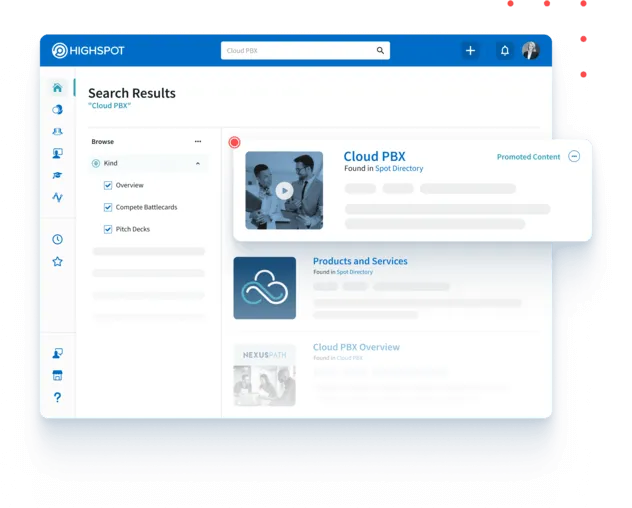
Highspot excels in managing sales content, ensuring that your reps have the right materials at their fingertips to engage and convert buyers effectively.
With features like sales content management, playbooks, buyer engagement, and comprehensive training and coaching tools, Highspot is a one-stop shop for optimizing sales team performance.
Who it’s best for:
Highspot is great for sales teams needing a comprehensive platform for content management and performance analytics. It helps in increasing win rates and reducing ramp-up time for new reps.
Pros
Cons
Pros:
Increases win rates and pipeline generation
Cons:
Better suited for larger teams; might be overkill for small businesses
Pros:
Reduces sales rep ramp time significantly
Cons:
Initially, the interface can be a bit challenging to navigate and understand
Pros:
Offers comprehensive sales content management and playbooks
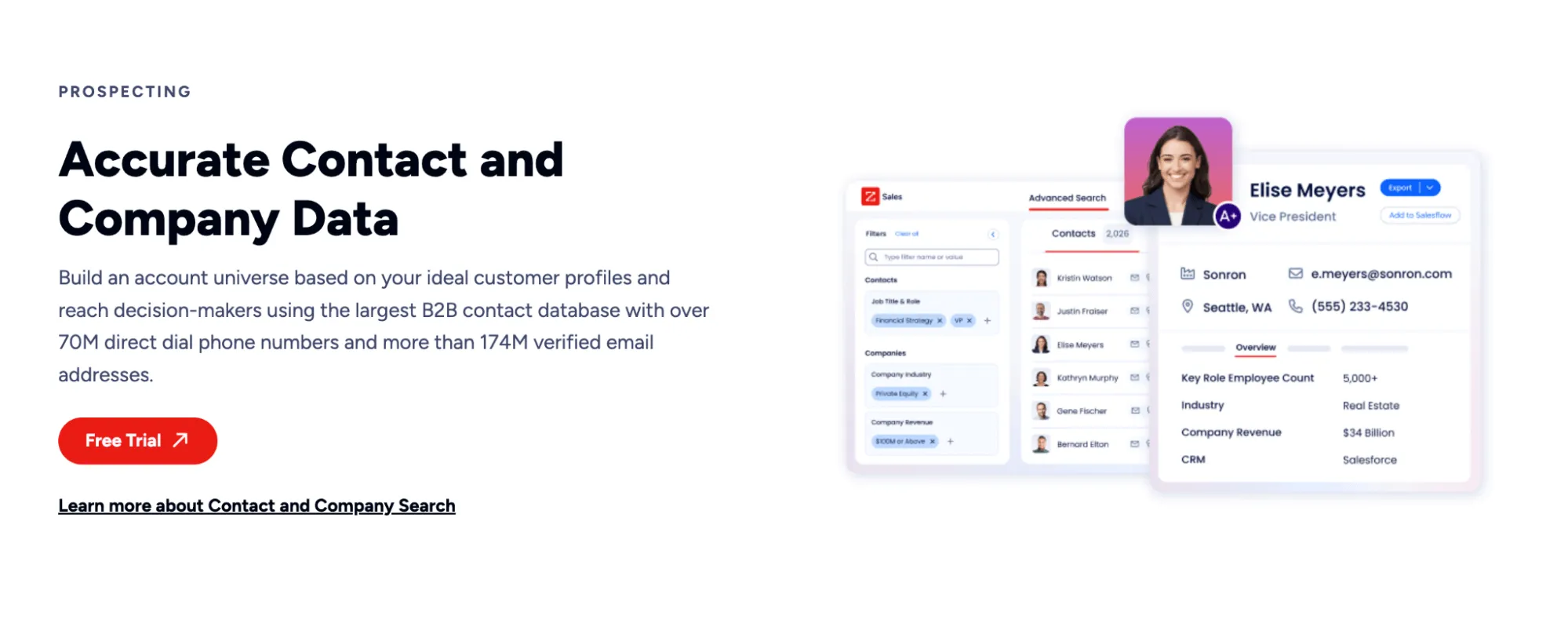
ZoomInfo Sales combines an impressive catalog of B2B data with a robust platform of sales enablement features to help revenue teams — from leaders to ops to AEs — boost productivity and accelerate revenue growth.
For help with prospecting, ZoomInfo Sales excels in providing fresh contact and company data.
AEs can use it to quickly build detailed account lists based on ideal customer profiles. And, even connect with actual decision-makers using the tools massive B2B contact databases.
Once top prospects are identified, ZoomInfo Sales helps teams initiate meaningful conversations that convert.
Not sure you’re nailing it when it comes to building relationships? Easily evaluate interaction analytics across multiple communication channels, including sales calls, emails, and website traffic.
As a bonus, ZoomInfo has an AI-powered Copilot tool that provides a competitive edge by enabling rapid engagement with accounts that have been identified as ready to engage — and convert.
It enhances any messaging you were already working on with interactive chat summaries and AI-scripted emails, leading to higher win rates!
Who it’s best for:
As you can see, ZoomInfo Sales is a versatile tool that delivers on various business needs. While that makes it a valuable asset for sales teams, it’s probably best for larger organizations who can both afford and make use of all the powerful features.
Pros
Cons
Pros:
Smooth integrations with a variety of other platforms.
Cons:
Customer support has received mixed reviews.
Pros:
AI features deliver quick, up-to-date insights on prospects and buyer intent.
Cons:
High and complicated pricing, particularly for small businesses.
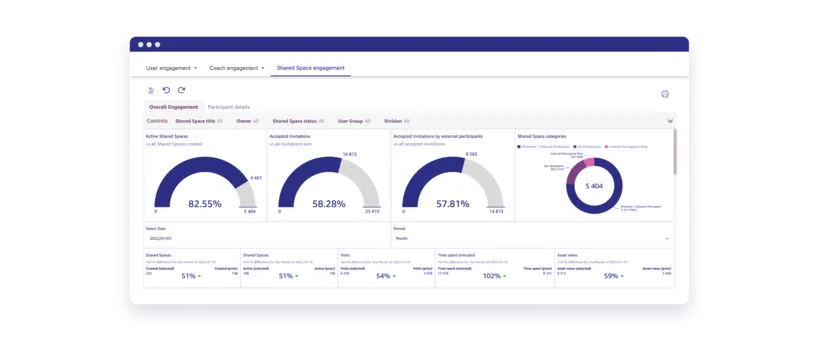
Showpad is a sales enablement operating system that bridges the gap between marketing and revenue teams, providing a unique space where sellers are equipped with the right content and training to captivate buyers.
Showpad stands out with its ability to bring physical products to life through digital experiences, like 3D models and immersive showrooms, enhancing in-person conversations.
It also offers a Shared Space feature for collaboration, speeding up the sales cycle. Plus, with Showpad Coach, you’re not just training your team; you’re sculpting top performers, ready to exceed targets and transform buyer interactions.
Who it’s best for:
Showpad is perfect for teams that require an all-in-one solution for content management, buyer engagement, and seller effectiveness. It’s especially good for creating dynamic, engaging experiences for buyers.
Pros
Cons
Pros:
Streamlines content management, making life easier for sellers
Cons:
Reporting capabilities could use enhancement for deeper insights and easier data navigation
Pros:
Transforms buyer interactions with captivating digital experiences
Cons:
Options for customization are somewhat limited
Pros:
Elevates seller training and coaching to a whole new level
Pros:
Delivers insightful analytics for smarter revenue decisions
Pros:
Integrates smoothly with your existing tech stack and workflows
Pricing:
Showpad doesn’t openly share its pricing details on the website. To get the full picture, check out Showpad’s pricing page to compare different options and reach out for a personalized demo and a quote tailored to your needs.
Outreach is a dynamic Sales Execution Platform that’s all about boosting seller productivity and ensuring more predictable revenue streams.
It’s a comprehensive tool that supports the entire sales team, from individual reps to managers and operations staff.
With Outreach, you’re getting more than just a sales tool; you’re getting a partner that helps increase deal speed and win rates.
It’s tailored for the modern B2B sales landscape, offering the right mix of tools and insights to navigate through changing economic conditions and achieve sales excellence.
Who it’s best for:
Outreach is a great fit for teams aiming to boost productivity and win rates. It’s tailored for modern B2B sales, helping teams navigate through changing market conditions.
Pros
Cons
Pros:
Boosts productivity throughout the sales cycle
Cons:
Setting up the platform can be a bit of a hassle, and training the team to use it effectively can be challenging
Pros:
Helps in increasing win rates and generating more pipeline
Cons:
Some aspects of the reporting functionality have room for improvement
Pros:
Ensures data security with robust protection standards
Pros:
Offers customizable roles for better team management
Pros:
Integrates seamlessly with a variety of sales tools
Pricing:
Outreach offers both individual and enterprise packages, but the pricing depends on the number of users. Check out Outreach’s pricing page to get in touch with the sales team.
Dialpad is an AI-powered customer intelligence platform that’s redefining how businesses communicate with customers and drive sales.
It’s a versatile app that supports customer support, sales activities, and team collaboration, all in one sleek, AI-enhanced interface.
Dialpad stands out with its real-time transcription, sentiment analysis, live coaching, and predictive CSAT features, making it a valuable tool for maximizing team efficiency and customer engagement.
Who it’s best for:
Dialpad is an excellent choice for businesses of all sizes that need a comprehensive communication solution. It’s particularly beneficial for teams looking for an AI-enhanced system to support sales, customer service, and internal collaboration.
Pros
Cons
Pros:
AI-driven features enhance customer interaction and sales processes
Cons:
For those new to AI-powered communication tools, there’s a bit of a learning curve
Pros:
Offers real-time transcription and sentiment analysis
Cons:
With its variety of features, it’s important to explore them thoroughly to fully benefit from the platform
Pros:
Provides live coaching and predictive customer satisfaction tools
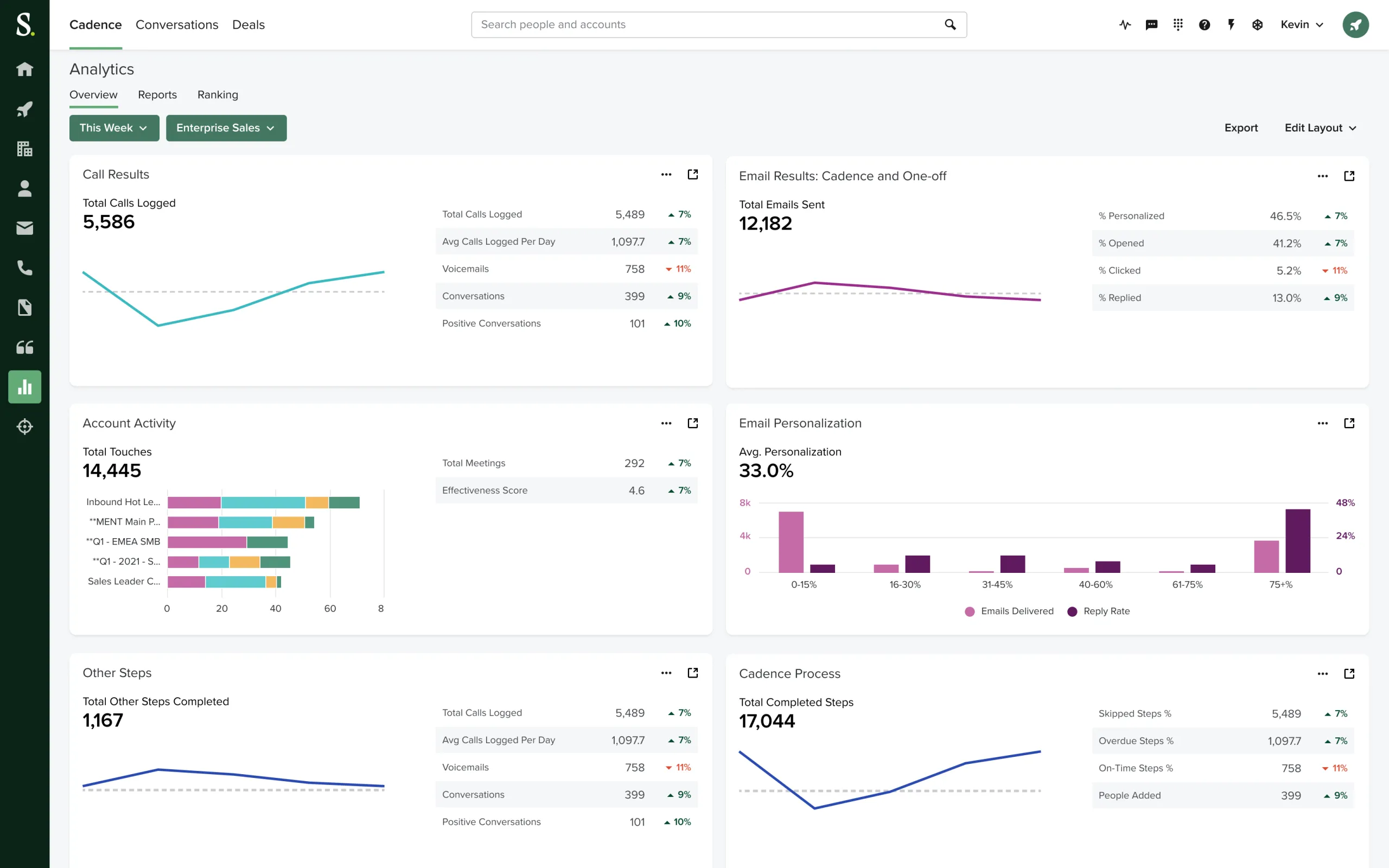
Salesloft offers a unique AI-powered revenue workflow platform, designed to guide sales teams towards effective actions and optimal outcomes.
It’s a comprehensive tool that enhances the entire customer lifecycle, from initial contact to ongoing engagement.
Salesloft’s platform includes features like Cadence for pipeline building, Deals for management and forecasting, and Conversations for coaching and insights.
It’s tailored to help sales teams build reliable revenue streams, close more deals, and reduce churn.
Who it’s best for:
Salesloft is well-suited for teams that need a robust, AI-driven platform to streamline their sales process and enhance productivity.
It’s especially useful for organizations aiming to increase revenue, drive predictability, and reduce operational costs.
Pros
Cons
Pros:
AI-driven platform that enhances sales workflows
Cons:
The cost can be a bit steep, particularly for smaller businesses or startups
Pros:
Features for effective pipeline management and deal forecasting
Cons:
For teams with simpler sales processes, some of Salesloft’s features might seem too complex
Pros:
Tools for coaching and gaining insights into sales conversations
Cons:
While highly customizable, there can be some constraints in tailoring the platform to specific needs
Pros:
Helps in building reliable revenue streams and reducing churn
Pros:
Recognized as a leader in Sales Engagement Platforms
Pricing:
Check out Salesloft’s pricing page to compare packages and reach out to sales for a specific quote.
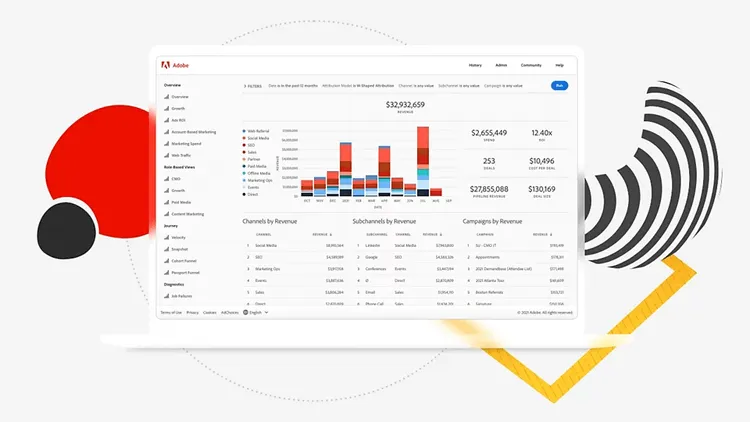
Marketo Engage, now a standout feature of Adobe’s toolkit, is where B2B marketing gets smart and strategic. This platform isn’t just about handling leads; it’s about creating marketing strategies that really speak to your business audience.
With a strong focus on both demand-based and account-based marketing, Marketo Engage turns every step of the buyer’s journey into a chance to connect and impress.
It’s like having a control center for all your marketing moves, where data, personalization, and multichannel outreach work together to make your marketing efforts effective and cohesive.
Whether it’s automating your day-to-day marketing tasks or crafting eye-catching digital ads and emails, Marketo gives you the tools to keep your marketing sharp and engaging.
Who it’s best for:
Marketo Engage is a great fit for businesses that are deep into B2B marketing and need a platform that can handle the complexity of their strategies across various channels.
It’s ideal for companies that prioritize data-driven marketing and want to make every customer interaction count.
Pros
Cons
Pros:
Centralizes sales and marketing data for better control and real-time insights
Snov.io is a versatile sales automation and CRM platform designed to scale your business and engage leads more effectively.
It’s a comprehensive toolbox that addresses specific sales challenges, making it a game-changer when used in combination.
Key features include an Email Finder for collecting pre-verified leads, Drip Campaigns for personalized email outreach, an Email Verifier for maintaining a clean database, and an Email Warm-up tool to improve deliverability.
Additionally, Snov.io offers a simple yet powerful Sales CRM to optimize your sales team’s workflow, complete with Google Calendar sync, multiple pipelines, and deal loss analytics.
Who it’s best for:
Snov.io is ideal for businesses looking to streamline their sales process and enhance lead engagement. It’s perfect for teams that require a range of tools for prospecting, email outreach, and sales CRM in one integrated platform.
Pros
Cons
Pros:
Offers a comprehensive set of tools for sales automation and CRM
Cons:
Missing a key integration with Salesforce, which could be a dealbreaker for some
Pros:
Features like Email Finder and Drip Campaigns streamline lead engagement
Cons:
If you’re eyeing their Managed Service, be prepared for a steep price jump, likely too steep for smaller businesses
Pros:
Email Verifier and Warm-up tools improve email deliverability and database quality
Cons:
The interface might take some getting used to, especially if you prefer more straightforward tools
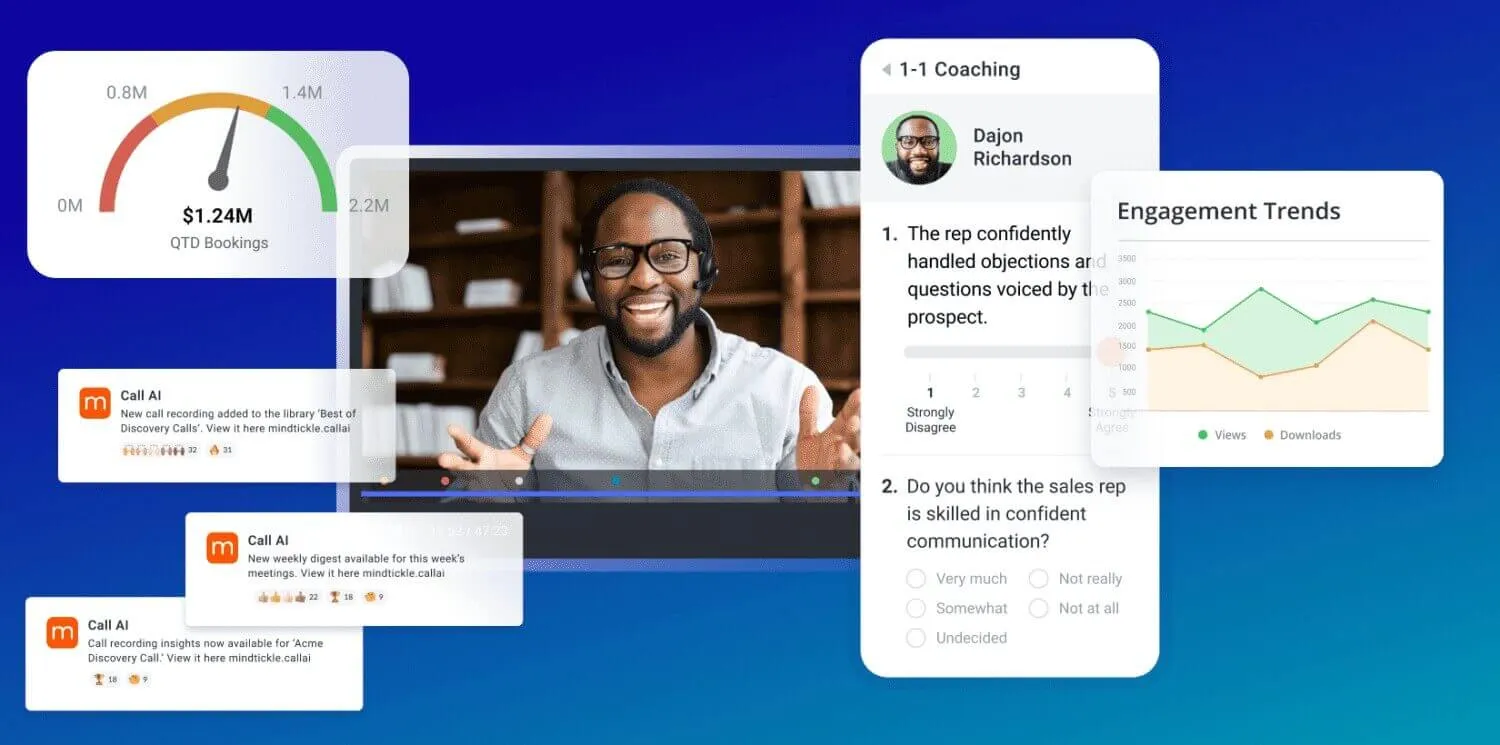
Mindtickle is a comprehensive Revenue Productivity Platform that’s all about elevating your sales team’s performance.
It’s a one-stop solution for sales training, enablement, and call insights, designed to help your team achieve more sales quotas and drive revenue.
Mindtickle stands out with its ability to reduce ramp time, increase revenue productivity per rep, and significantly lower rep attrition.
It’s like having a personal coach for your sales team, offering tailored training and coaching to boost year-over-year revenue productivity.
Who it’s best for:
Mindtickle is perfect for teams looking to enhance their performance and effectiveness. It’s particularly useful for organizations seeking to reduce ramp time, improve revenue productivity, and lower attrition rates.
Pros
Cons
Pros:
Offers a complete platform for sales training and enablement
Cons:
The mobile app isn’t as user-friendly as you might hope, which can be a bit of a letdown for on-the-go access
Pros:
Provides valuable call insights to refine sales strategies
Cons:
Navigating the platform can feel overly complex at times, particularly when delving into the various sections for sales and managerial training
Pros:
Proven to reduce ramp time and increase revenue productivity
Pros:
Helps in significantly lowering rep attrition rates
Pros:
Suitable for a wide range of industries and business sizes
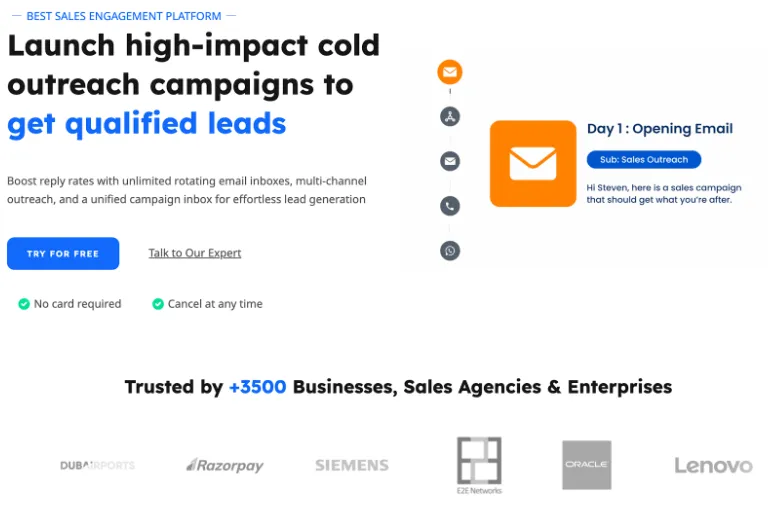
SmartReach.io is a powerful AI-enabled sales engagement platform designed to automate sales outreach campaigns across multiple channels such as Email, LinkedIn, Calling, WhatsApp and Text messages.
SmartReach.io provides features such as unlimited sending email integration, unlimited email verification, in-built lead finder, AI email sequence generators and follow-up capabilities to ensure the best engagement and conversion from the outreach campaigns.
its comprehensive analytics and detailed reports provide valuable insights to refine outreach strategies and improve conversion rates.
Who it’s best for:
SmartReach.io is ideally suited for B2B sales teams, marketers, and recruiters who need to manage large-scale outreach campaigns efficiently.
It’s particularly beneficial for organizations looking to scale their outbound efforts without compromising on personalization and compliance.
Small to medium-sized businesses aiming to generate outbound leads and companies with complex, multi-touch sales cycles will find SmartReach.io especially valuable.
Pros
Cons
Pros:
Multi-channel outreach capabilities (email, LinkedIn, phone, Whatsapp & text messages)
Cons:
Learning curve may be steep for those using a sales engagement platform for the first time
Pros:
Advanced AI-based personalization features for tailored messaging
Cons:
Dependency on third-party integrations for certain functionalities
Pros:
Intelligent scheduling and automated follow-ups
Pros:
Comprehensive analytics and reporting
Pros:
Integration with popular CRM systems
Pros:
A/B testing functionality for campaign optimization
Pros:
Team collaboration features for streamlined workflows
Pricing:
Starter: $33/month (billed annually)
Professional: $66/month (billed annually)
Expert: $108/month (billed annually)
Free: SmartReach.io offers a 14-day Free trial with all features
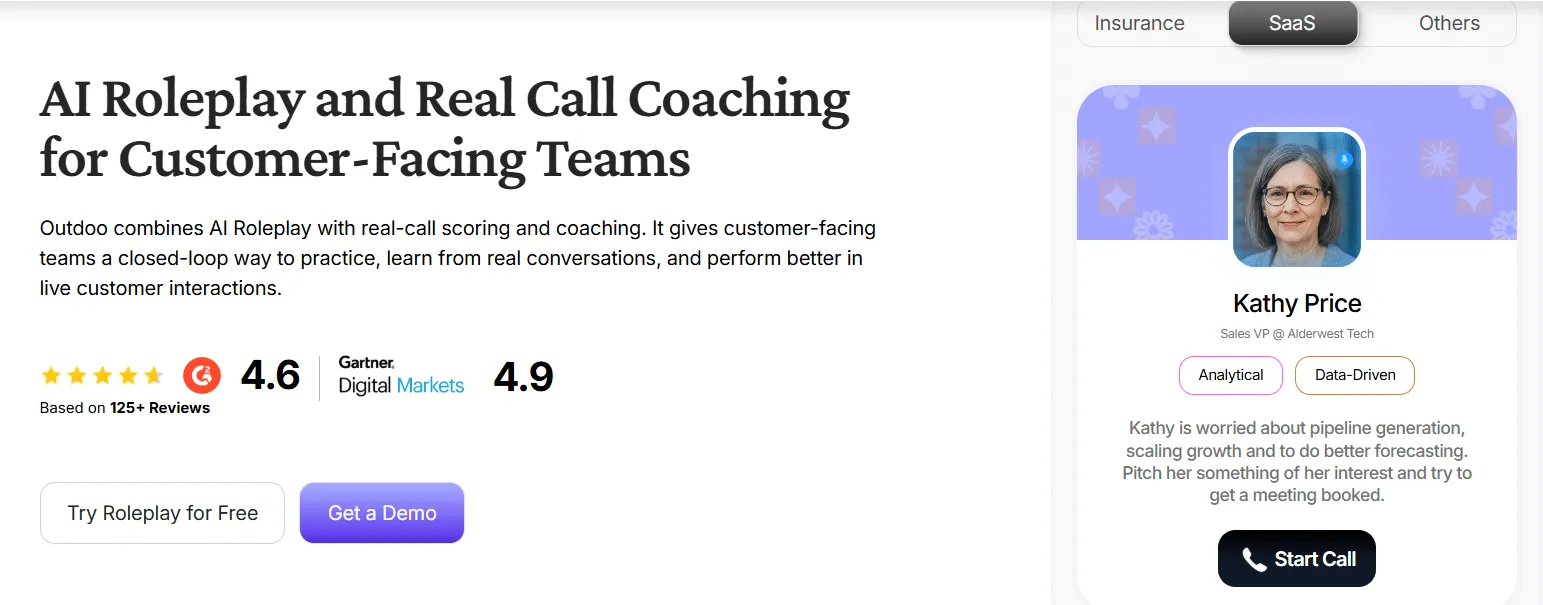
OutdooI is an enterprise AI roleplay and coaching platform that empowers customer-facing teams with realistic practice, structured reinforcement, and unified performance scoring.
It goes beyond standalone training by letting teams create customized AI roleplay agents from real calls, transcripts, playbooks, and pipeline context, so scenarios reflect actual objections and deal situations.
Outdoo AI helps teams improve every stage of customer conversations, from preparation before critical calls to reinforcement after live interactions. With Outdoo, team can go beyond roleplay completion by validating whether practiced skills show up in real conversations using consistent AI scoring across practice and live calls.
With an enterprise-ready experience and 125+integrations, it’s a go-to solution for enablement and sales leaders looking to drive consistent execution and measurable skill adoption at scale.
Who it’s best for:
Enterprise and global organizations with customer-facing teams that need coaching to translate into real conversation performance, especially in complex or high-stakes environments.
Pros
Cons
Pros:
Seamlessly connects AI roleplay practice with live conversation performance validation
Cons:
Not designed for individual users looking for quick, lightweight practice
Pros:
Create customized AI roleplay agents from real calls, transcripts, and pipeline context
Pros:
Unified AI scoring across roleplays and real conversations to measure skill adoption
Pros:
Structured reinforcement with personalized micro-learning to drive continuous improvement
Pros:
Supports 120+ integrations across CRM, LMS/LXP, dialers, and conversation intelligence tools, including SCORM and xAPI
Pricing:
Custom pricing based on deployment scope and individual requirements.
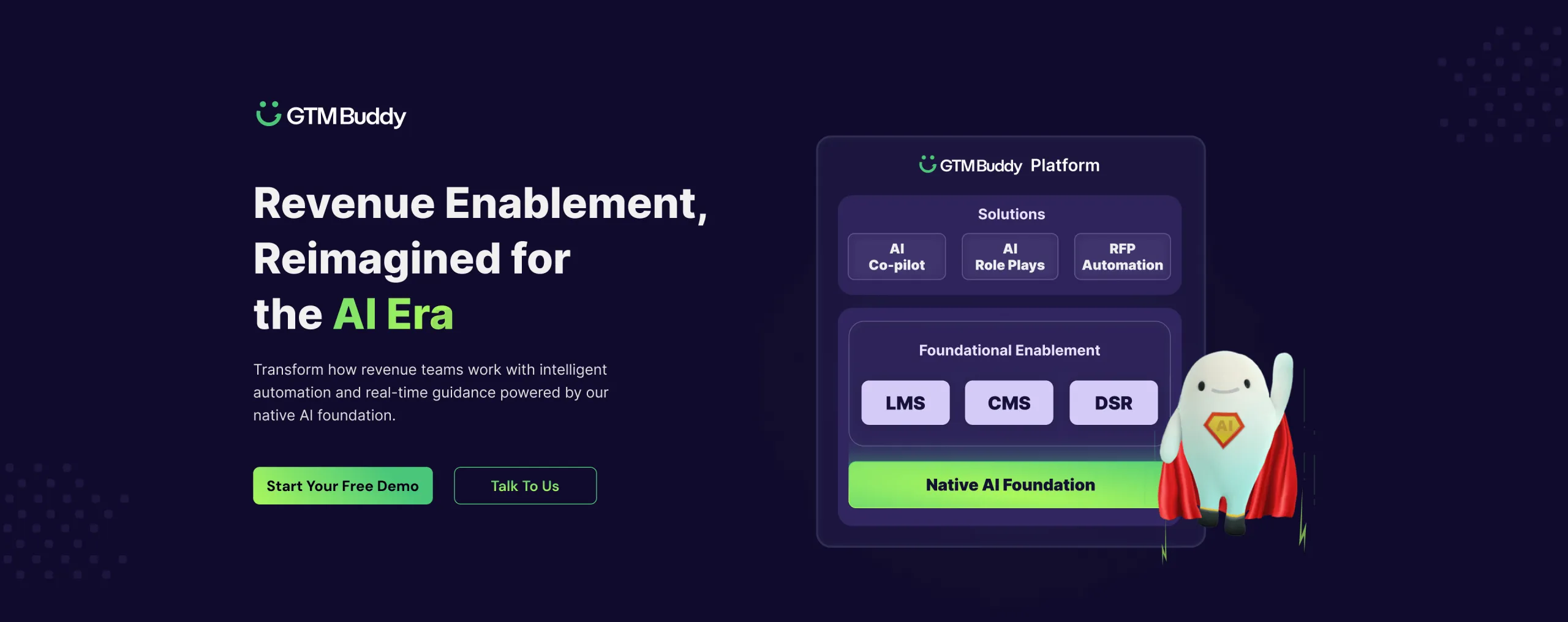
GTM Buddy is an AI-powered enablement platform designed to transform how go-to-market teams operate and deliver results.
By uniting training, content management, and buyer engagement into a single, intelligent solution, it equips customer-facing teams with the right insights and resources at the right time.
Built for the AI era, GTM Buddy seamlessly integrates into your existing workflows, delivering real-time support and personalized content recommendations within tools like CRM platforms, email, and calendar apps.
This, along with innovations such as AI role play, ensures that sales reps and customer-facing teams are always prepared to deliver high-impact conversations and achieve better results, faster.
Who it’s best for:
GTM Buddy helps revenue teams hit their goals faster with AI-powered tools that make work smarter and buyer engagement easier.
Whether you’re in sales, marketing, or customer success, it’s built to boost agility and drive growth.
Pros
Cons
Pros:
Runs on AI from the ground up, so it’s smart, adaptable, and integrates easily.
Cons:
The user interface could be slicker compared to others out there.
Pros:
Makes your content the star, tying all insights directly to what you’ve got.
Cons:
Takes a bit of effort to get the hang of all the advanced AI features.
Pros:
Keeps buyers hooked with tools like Digital Sales Rooms and an AI copilot.
Pros:
Gets up and running fast—under two weeks, and fits right into your workflow.
Pros:
RFP automation saves time so your team can focus on building relationships.
Pricing:
Custom pricing tailored to each organization’s specific needs is available.
What to consider when choosing the best sales enablement tools?
Choosing the right sales enablement solution is about finding a balance between functionality, ease of use, and alignment with your sales strategy.
You need to take the time to understand your team’s needs and evaluate how different tools can meet those needs.
The right tool can be a game-changer, helping your sales team close more deals and drive revenue growth more efficiently. Here are some things you should consider.
10 key factors to consider when choosing a sales enablement tool:
Ease of use: A tool that’s hard to navigate can be more of a hindrance than a help. Look for an intuitive interface that your team can get on board with quickly. Remember, time spent struggling with software is time not spent selling.
Analytics and data: The right tool should provide insights that matter to you. Make sure the tool you choose can track and report on the metrics that align with your sales strategy.
Integration with your CRM: Your CRM is the backbone of your sales process. A sales enablement tool that integrates with your CRM can make life much easier, ensuring a smooth flow of information and reducing manual data entry.
Content creation and management: Content is king in sales enablement. The ideal tool should not only help you organize and access your content efficiently but also allow you to create fresh, engaging material that resonates with your audience.
Mobile-friendly: In today’s mobile-first world, having a tool that works well on the go is crucial. Your sales team should be able to access information, update data, and communicate with prospects anytime, anywhere.
Customization and personalization: Every sales team has its own way of working. A tool that offers customization options can adapt to your team’s specific needs, making it a more effective part of your sales process.
Security: With sensitive sales data at stake, security can’t be an afterthought. Opt for tools that prioritize data protection to keep your business safe and protect your customers’ digital footprints.
Cost vs. Value: While budget is always a consideration, it’s important to weigh the cost against the value the tool brings. Sometimes, investing a bit more can pay off in terms of features, support, and overall effectiveness.
Scalability: As your business grows, your sales enablement tools should be able to grow with you. Look for solutions that can scale up to meet your evolving needs.
Support and training: Good customer support and training resources can make a big difference in how quickly your team can leverage the tool to its full potential.
Interactive presentation templates
Let’s face it, getting your message across in sales is only half the battle; the real challenge is making it unforgettable.
This is where sales presentation templates come into the picture. They turn your audience from passive listeners into active participants, making your message not just heard, but felt.
Worried about the complexity of creating such presentations? Don’t be. Our carefully selected range of templates is here to help.
Each one is designed with impact in mind, transforming your standard presentation into an interactive story that captivates your audience.