










6 Consulting Pitch Deck Examples to Win Clients (+Templates)
Explore top consulting pitch deck examples and templates and learn how to create compelling consulting decks that captivate clients and close deals effectively.
Set as Preferred Source
As a consulting wizard, you can quickly understand and address client issues. But when it’s showtime, does your pitch truly reflect your expertise?
Too often, even skilled consultants often miss out on closing deals due to unimpressive presentations. This disconnect between your skills and how you showcase them can make or break client relationships.
An underwhelming pitch deck misses the mark in winning clients and can tarnish your professional image.
But don’t worry, I’ve got you covered! In this post, I’ll teach you how to create consulting pitch decks that tell the story of your business, complete with real-life examples and easy-to-use templates. No more deals slipping through your fingers!
Let’s get started!
What to include in a consulting pitch deck?
Creating a consulting pitch deck is more than just showcasing your services; it’s about mapping out a path to success for your clients.
A compelling pitch deck is key to gaining a client’s trust and securing their business. Here’s what you need to include to craft a pitch deck that truly makes an impact.
9 essential slides of a consulting pitch deck:
- Executive summary: Kick off with a brief yet powerful summary that pinpoints the client’s issues and your strategic solutions.
- Your Unique Value Proposition: Illustrate what sets you apart. Focus on your unique skills and how they benefit the client’s specific situation.
- Action plan: Outline the precise steps and methods you’ll employ to tackle the project’s objectives.
- Goals: Define the achievements and milestones you plan to hit with your consulting services.
- Expected results: Clarify what the client will gain, detailing the tangible outputs of the project.
- Project timeline: Map out a clear, achievable timeline for the project, setting realistic milestones.
- Pricing details: Clearly state your fees, including any flexible payment options or conditions.
- Terms and conditions: Lay out the terms of your service to ensure mutual understanding and agreement.
- Next steps: Conclude with a straightforward call to action, guiding the client on the next steps after the pitch.
What is the best consulting pitch deck format?
Finding the right format for your consulting pitch deck is like choosing the perfect outfit for a key meeting – it needs to impress.
Traditional formats like Word documents or PDFs, while great for detailed content and printing, often fall short in today’s fast-paced, digital world. They can be clunky and less user-friendly, especially for tech-savvy audiences.
Switching to a more interactive, visually engaging format can elevate your pitch deck from good to unforgettable.
Here’s a comparison of the most popular formats:
Format | Pros | Cons |
|---|---|---|
– Ideal for linear, text-focused content | – Lacks interactivity, not suitable for dynamic storytelling | |
PPT | – Versatile for combining text and basic visuals | – Limited scope for advanced interactivity |
Word | – Excellent for draft collaboration and text editing | – Struggles with integrating complex visuals or multimedia |
Storydoc | – Excels in creating immersive, interactive experiences | – Might need some learning for first-timers |
The key advantages of interactive formats:
- Engagement boosters: Interactive decks are all about making your audience part of the story. With features like clickable elements and embedded videos, they turn a passive viewing experience into an active exploration.
- Visual storytelling: These formats shine in presenting data in a visually engaging way. Complex information becomes easy to grasp and attractive, thanks to well-designed charts and infographics.
- Personalized experience: The beauty of interactive formats lies in their adaptability. You can tweak each deck to resonate with your client’s brand and needs, making every presentation feel tailor-made.
- On-the-go accessibility: In our mobile-centric world, being able to access and share your pitch on any device is a superpower. Interactive decks are perfect for this, offering convenience without compromising on quality.
You can see the difference between static and interactive below. Which deck would you rather read?
Static PPT
Interactive Storydoc
Consulting pitch deck examples that clinch deals
Creating a consulting pitch deck is like building a bridge between your expertise and the client’s needs. In this section, I’ve prepared the best examples of consulting pitch decks that successfully make this connection.
We’ll examine what elevates each example – from their clear articulation of value to their visually engaging and structured approach.
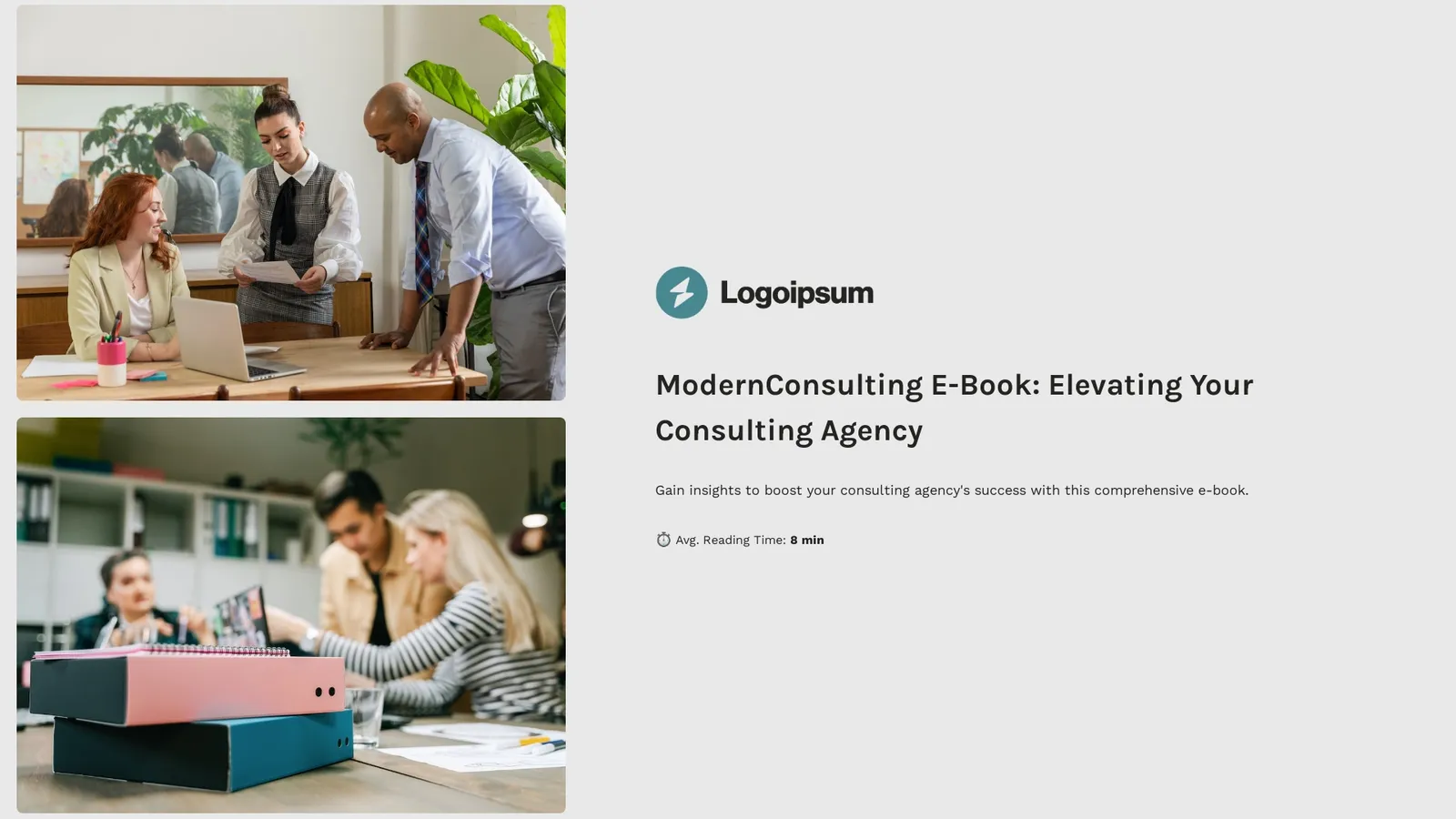
Consulting agency pitch deck
This pitch deck is a prime example of how to effectively communicate a consulting firm’s value proposition, focusing on strategic insights, operational efficiency, and custom solutions.

Scroll to preview
What makes this consulting pitch deck great:
- Embedded case studies: The deck includes detailed case studies, providing real-world evidence of their impact.
- Interactive data visualization: It utilizes running numbers to illustrate business efficiency improvements.
- Smart Call-to-Action (CTA): It concludes with a compelling CTA that lets clients book a meeting directly from the deck.
Consulting service pitch deck
This pitch deck stands out for its innovative approach to addressing modern business challenges, emphasizing custom solutions, data-driven insights, and change management.
Scroll to preview
What makes this consulting pitch deck great:
- Scroll-based design: The pitch deck offers an intuitive, easy-to-navigate format that enhances user experience.
- Running numbers: It uses visually appealing data representation to convey complex information.
- Customizable sections: The deck allows for easy adaptation to reflect specific client needs and branding.
Design consulting pitch deck
MirabiliX’s pitch deck highlights their design expertise through strategic branding, visual consistency, and innovative concepts, presented in a visually engaging format.

Scroll to preview
What makes this consulting pitch deck great:
- Visual storytelling: It employs compelling imagery and design elements to showcase branding expertise.
- Narrative flow: The deck’s structure tells a cohesive story, guiding clients through the proposed solutions.
- Interactive elements: It engages clients with clickable features for a more interactive experience.
Universal consulting pitch deck
This pitch deck showcases innovative consulting solutions with a blend of modern features, including multiple smart CTAs and easy-to-personalize content.

Scroll to preview
What makes this consulting pitch deck great:
- Logo placeholders: Easily customizable—just enter a website URL, and the logo updates automatically.
- Clear unique value proposition and benefits slides: The deck presents a compelling UVP and breaks down key benefits in a way that instantly resonates with potential clients.
- Social media links for further contact: Custom icons make it easy for clients to connect with you on social platforms, adding a sleek and professional touch.
Modern consulting pitch deck
This pitch deck addresses modern business challenges with a fresh, dynamic approach, utilizing cutting-edge design and interactive features.
Scroll to preview
What makes this consulting pitch deck great:
- Analytics panel access: It provides valuable insights into how the deck is being interacted with by clients.
- Responsive design: The deck ensures a seamless viewing experience across various devices and screen sizes.
- AI-assisted content and image generation: It utilizes AI tools to create compelling, relevant content and visuals, enhancing the overall impact of the presentation.
Light mode consulting proposal deck
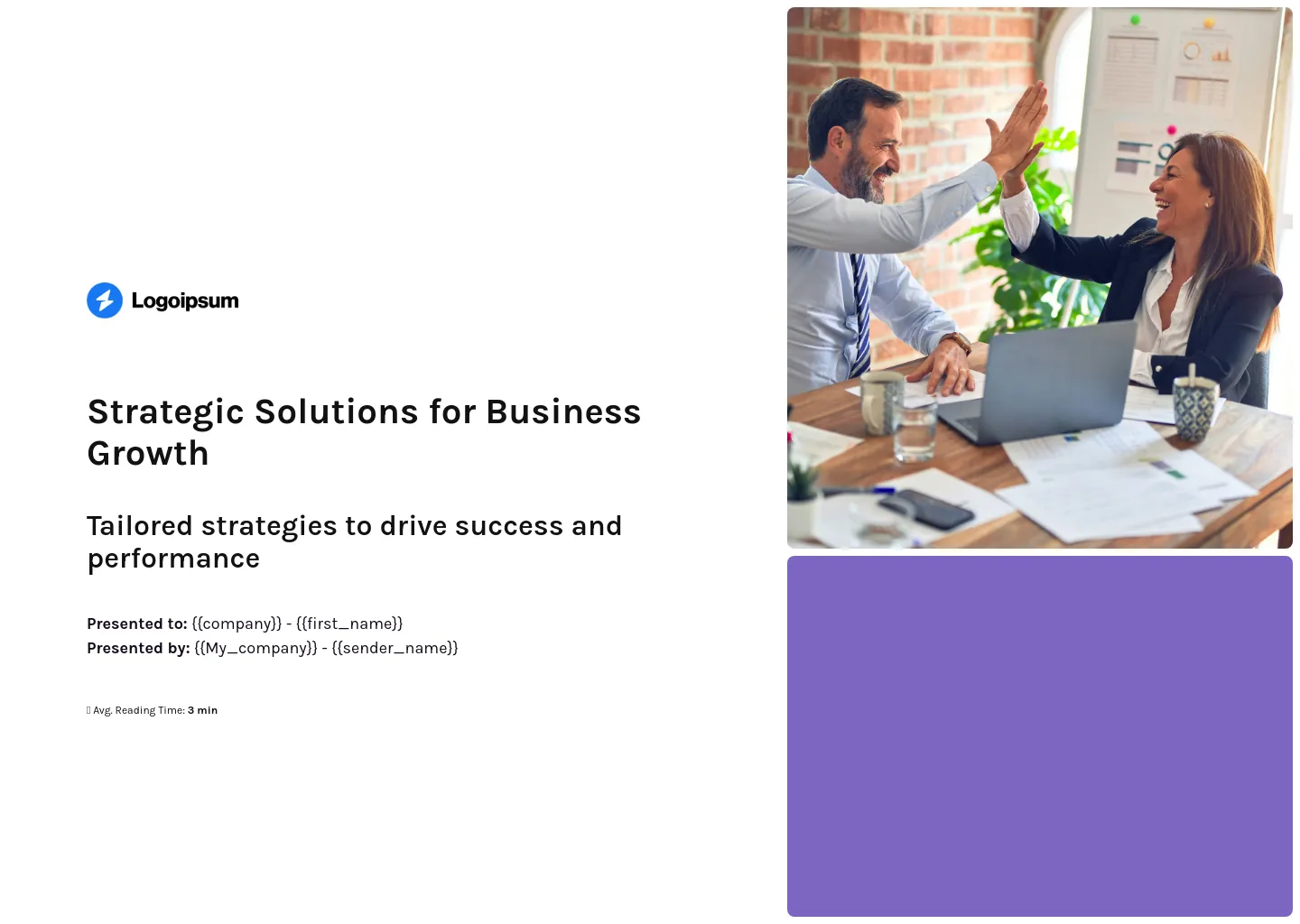
This consulting pitch deck template is your go-to resource for showcasing your consulting skills. It’s crafted to give a straightforward rundown of your services, project details, and how it benefits your client.
Scroll to preview
What makes this consulting pitch deck great:
- Clear project details: The deck comes with easy-to-follow sections for the project’s deliverables and timeline, making everything about the project clear and upfront.
- Dynamic variables for easy personalization: Connect the deck to your CRM and automatically pull in client-specific data, making each proposal feel tailored without extra effort.
- Smart control measures: Add an expiry date or password protection to control access, ensuring your deck stays secure and relevant.
How to write a consulting pitch deck?
A lot of people think that just slapping their details on a McKinsey-style consulting deck template is a golden ticket to winning clients. But it’s not just about the format; it’s about how you tell your story.
Your deck should be a narrative that showcases your unique solutions and how they align with your client’s needs. Let’s dive into the key elements that will transform your consulting pitch deck from a simple presentation to a powerful tool for landing deals.
1) Understand your audience
Start by thoroughly understanding your client’s industry, challenges, and goals. This knowledge allows you to tailor your pitch deck to address their specific needs, making your message resonate more effectively.
2) Ghost out the story
In his book “Strategic Storytelling: How to Create Persuasive Business Presentations”, Dave McKinsey recommends “ghosting out” your story on paper before jumping into creating slides on a computer.
This involves sketching a rough draft of your presentation, focusing on the narrative flow and key points. Sketch each slide’s main point, including any graphs or tables that support your argument.
Ghosting out your presentation before creating it digitally helps in maintaining focus on the story and the logical flow of information. It prevents getting sidetracked by design elements early on and ensures that the content drives the structure of the presentation.
3) Focus on clarity
Your pitch deck should communicate your ideas clearly and concisely. Avoid industry jargon and complex language. The aim is to make your message accessible and easily digestible for your audience.
4) Differentiate your services
Clearly articulate what sets your consulting services apart. This could be your unique methodology, your proven track record, or your specialized expertise. Ensure this unique value proposition is evident in your pitch deck.
Here’s a great example of a unique value proposition slide:
5) Maintain logical progression
Ensure your pitch deck has a logical flow. Start with an introduction, followed by the problem statement, your proposed solution, the benefits, and finally, a strong call to action.
This structured approach helps maintain the audience’s attention and guides them through your narrative.
6) Back your claims with data
Incorporate data and analytics to support your recommendations. Use data visualization tools to present complex data in an easily digestible format.
This not only adds credibility to your pitch but also helps in making a stronger case to your clients.
Here’s a great example of a data visualization slide:
7) Narrate a compelling story
Your pitch deck should tell a story. It should connect the dots between the client’s needs and your services. Use real-world examples, case studies, or hypothetical scenarios to illustrate how your services can solve their problems.
The SCR framework is a narrative structure often used to create persuasive presentations. Originally developed by Barbara Minto at McKinsey, it is an adaptation of the classic storytelling arc to the context of business communications.
Situation
This is where you set the stage. In the context of a consulting pitch, the situation describes the current environment or context in which your client operates.
It could include market dynamics, recent changes in the industry, or the client’s current position in the market.
The situation is the “once upon a time” of your story – it establishes the baseline from which everything else will deviate.
Complication
This element introduces a challenge or problem. In a business presentation, this could be an emerging competitive threat, a change in customer behavior, regulatory changes, internal inefficiencies, etc.
The complication disrupts the status quo and creates a sense of urgency or need for change. It’s the pivot point that moves the narrative from a simple description of the current state to a narrative about addressing a challenge or seizing an opportunity.
Resolution
The resolution offers a solution to the complication. In a consulting pitch, this would be your proposed strategy, solution, or action plan to address the identified challenges.
The resolution should be clear, actionable, and directly tied to the complication you’ve outlined. It’s the climax of your story, providing a satisfying conclusion to the narrative arc you’ve constructed.
8) Guide the next steps
Finish your pitch deck with a clear and straightforward call to action. This could be as simple as inviting them to schedule a follow-up meeting, requesting a detailed proposal, or even visiting your website for more information.
The key is to make this next step effortless and actionable, increasing the likelihood that your clients will engage further. An easy-to-follow call to action not only prompts immediate response but also keeps the momentum of your pitch going.
Here’s an example of a next step slide:
How to design a consulting pitch deck?
Crafting the design of a consulting pitch deck is like setting the stage for your story. It’s not just about filling slides with content; it’s about creating a visual journey that captures and holds your audience’s attention.
In a world where first impressions are crucial, your pitch deck design can be the deciding factor between capturing a client’s interest or losing it.
Let’s dive into the key design strategies that can transform your pitch deck into a compelling and visually engaging narrative.
1) Enhance user experience
Adopt a scroll-based design for a seamless and intuitive user experience. This approach allows your audience to easily navigate through your consulting pitch deck, much like scrolling through a webpage.
It’s particularly effective for digital presentations, ensuring that your content flows smoothly from one point to the next.
Here’s what scroll-based design looks like:
2) Adapt to all devices
Ensure your pitch deck is responsive and looks great on any device, whether it’s a laptop, tablet, or smartphone. In today’s mobile-first world, a responsive design is crucial for accessibility and convenience.
Here’s an example of a mobile-responsive deck:
3) Engage with interactivity
Incorporate interactive elements like clickable tabs, embedded videos, or expandable sections.
These features not only make your pitch deck more engaging but also allow clients to interact with the content, making the experience more memorable and personalized.
Here’s a great example of an interactive slide:
4) Tailor the content to your audience
Customize your pitch deck to reflect your client’s brand and specific needs. Use their brand colors, logos, or any relevant imagery.
Personalized content shows that you’ve put thought into understanding their brand, making your pitch deck more relatable and impactful.
Here’s a great example of a personalized deck:
5) Maintain a cohesive look
Ensure your pitch deck reflects your own brand identity consistently. Use your brand colors, fonts, and logos throughout the deck. Consistent branding not only looks professional but also helps in building your brand recognition.
Using an interactive pitch deck creator, you can automatically extract branding information from any website and apply it to your deck.
Here’s an example of a branded deck:
6) Focus on readability
Use a clean and organized layout with plenty of white space. Avoid cluttering your slides with too much text or too many visuals. A clean layout helps in keeping the focus on your key messages and makes the content easier to absorb.
Interactive consulting pitch deck templates
Starting from scratch to create a consulting pitch deck requires not only time and effort but also a keen eye for design and storytelling.
Interactive consulting pitch deck templates save you time on design and layout, letting you focus on customizing the content to your specific audience.
These templates are also designed with best practices in mind, ensuring that your pitch deck ticks all the boxes while standing out.
Grab one and see for yourself.