















How to Create a Product One-Pager That Drives Action
Learn to write a product one-pager for your sales pitch or internal proposal with step-by-step tips, examples, and interactive product one-pager templates.
Set as Preferred Source
No, a product one-pager is usually an external-facing document used for sales, marketing, and investors, but it can also serve internal teams like sales and customer support.
A product brief, on the other hand, is an internal document focused on product development, features, and technical details for engineering and design teams.
A product one-pager is for prospective customers, investors, internal sales teams, partners, and media professionals. It provides a quick, high-level overview of a product’s value, helping different audiences understand its benefits and take action.
A product one-pager aims to quickly communicate key product benefits, support sales conversations, attract investors, and differentiate the product from competitors.
It helps potential buyers understand its value, encourages action (e.g., booking a demo or contacting sales), and ensures clear, consistent messaging across teams.
Before you write a product one-pager, you need product details, competitive analysis, customer pain points, key differentiators, and a clear call to action.
Additional assets may include brand guidelines, sales decks, customer testimonials, and supporting data like a P&L analysis for investor-focused versions.
What does a product one-pager look like?
Most product one-pagers are still stuck in the past – static PDFs or PPT decks crammed with walls of text and dull specs.
The problem is that nearly half of outreach decks are opened on mobile, and pinching and zooming through a cluttered PDF is a fast track to frustration (and being mentally blacklisted).
That’s why teams are ditching static one-pagers for interactive ones. Unlike a rigid PDF, interactive product one-pagers let you layer in more content without overwhelming the reader, keeping things clean and easy to digest.
Plus, with embedded videos, collapsible sections, and even built-in calendars for quick meeting bookings, they make engagement effortless.
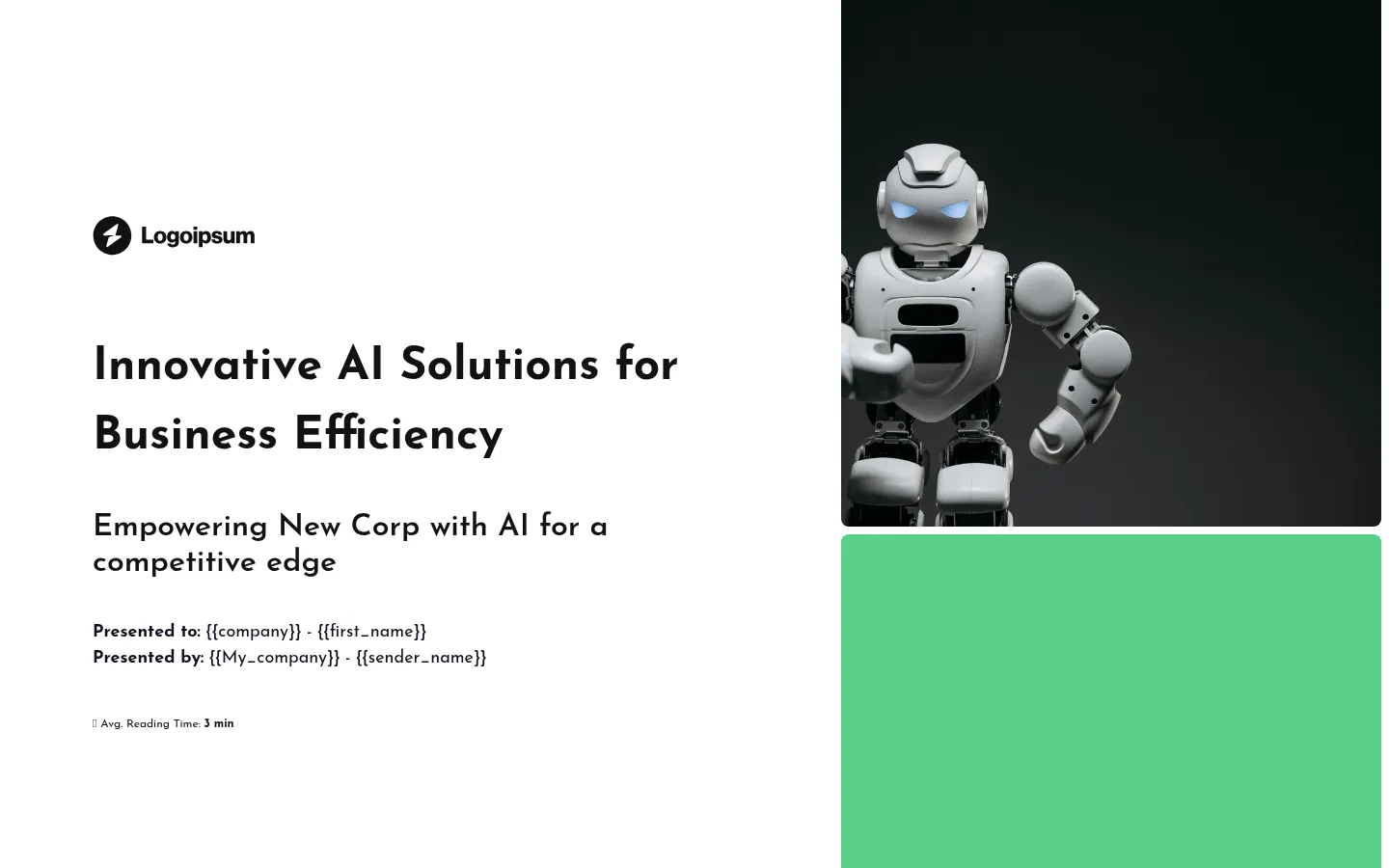
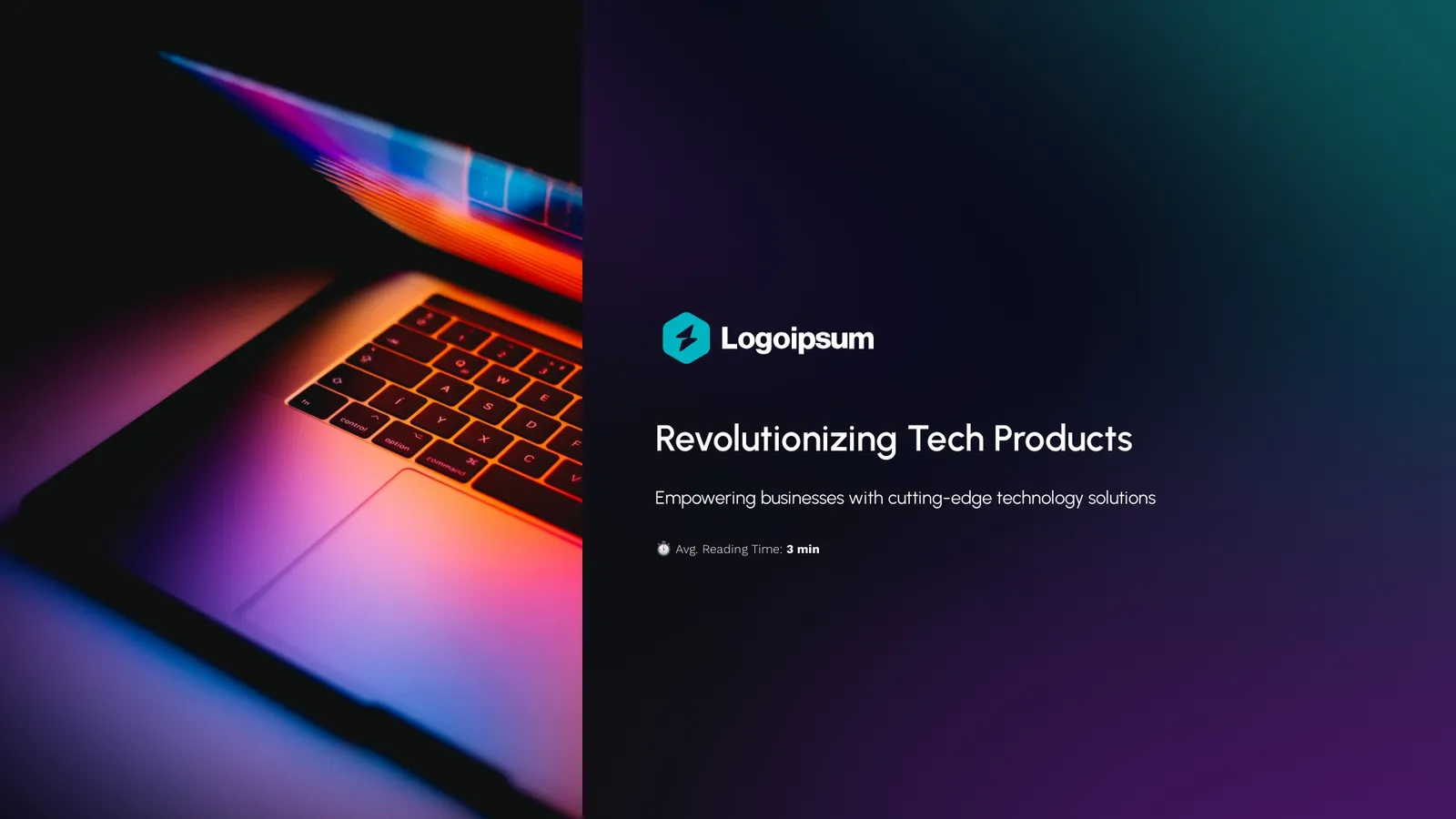
Here’s what an interactive product one-pager looks like:

Scroll to preview
How to write a product one-pager?
Whether you’re creating a product one-pager for a sales pitch, an investor meeting, or internal buy-in, the goal is the same: to communicate value quickly.
So, if you want to deliver a product one-pager that doesn’t put people to sleep, knowing what bits of information to skip is just as important as knowing what to include.
In this section, I’ll show you how to organize all the core content of your product one-pager to get people excited about whatever it is you’re offering.
What should a product one-pager include?
7 slides every product one-pager should include:
- Cover
- Introduction
- About us
- Problem
- Solution
- Details
- Next steps
Cover slide
It includes the title of your product one-pager, as well as your company logo and a catchy one-liner. It should grab your readers’ attention, for example by including a video or personalizing it to your readers.
Introduction slide
It sets the readers’ expectations by giving an overview of your product one-pager, especially who your product is for, what the main benefits are, and what sets you apart from the competition.
About us slide
The section where you establish trust with your prospects by sharing your goals, values, and expertise.
Problem slide
Name the key need or want underlying your target audience’s interest in your product.
Solution slide
Show you can solve the problems your ideal customers have better than your competition and back it up with compelling consumer stories and, if appropriate, some numbers.
Details slide
The section where you cover briefly the features and benefits of your product (that are especially relevant to the target audience).
Next steps
A simple, clear, and compelling action that your prospect can take after viewing your product one-pager (for example, signing up for a SaaS product demo).
For more info on what goes into each specific section, check out our guide handy on how to make an attention-grabbing one-pager.
1) Start with your audience in mind
Before you write a single word, think about who’s going to read your product one-pager. A busy exec? A technical buyer? A potential customer?
Each audience cares about different things, so your messaging needs to match. If you get this wrong, your product one-pager will either be ignored or fail to make the impact you need.
- For executives: Keep it high-level – focus on business impact, ROI, and competitive advantage. No deep dives into features.
- For technical buyers: They want the nitty-gritty, so highlight specs, integrations, and how your product solves their technical pain points.
- For consumers: Make it engaging and benefit-driven. Show how your product fits into their life and solves a real problem they care about.
- For mixed audiences: Use a layered approach – start with a compelling summary, then offer expandable sections or links for those who want more details.
2) Include a strong headline
Your product one-pager needs to hook people from the very first glance. The cover should instantly set expectations for what’s inside – so don’t waste the space.
A strong headline, your logo, and a sharp opening statement should work together to make it obvious why your product matters.
The heart of a great one-pager is a clear Unique Value Proposition – a one-liner that sums up why your product is amazing.
It takes most people 15 seconds to decide if they want to keep reading your deck, so the goal is to get the reader intrigued enough to keep going.
- Lead with impact. Your headline and tagline should quickly communicate your unique value proposition – what makes your product different and worth their time.
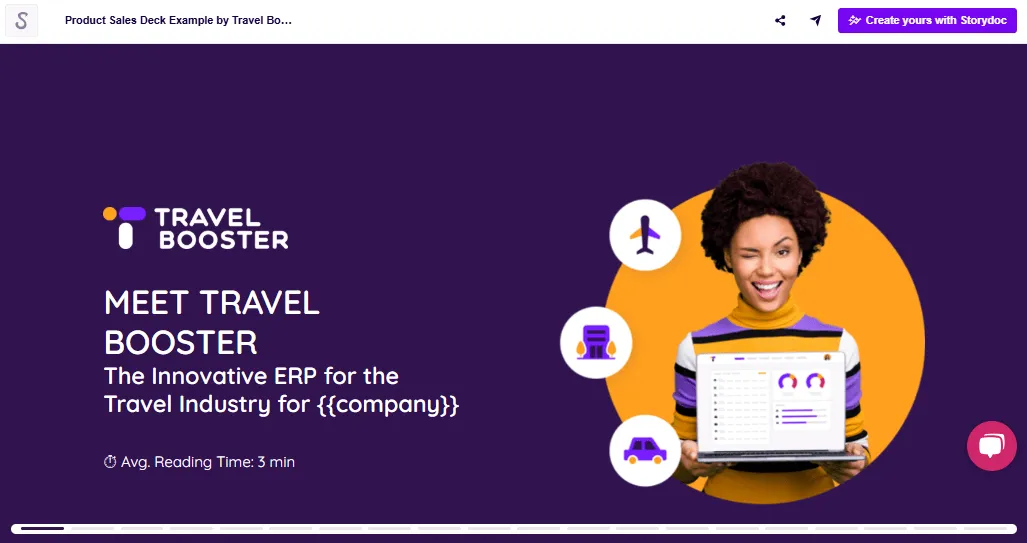
- Make it personal. If possible, include the prospective client’s company name, their logo beside yours, and even the recipient’s name to make it feel tailored.
- Use visuals wisely. Relevant imagery can reinforce your message, while subtle motion (like animations or a short video) can grab attention – just don’t overdo it.
- Set expectations. A quick note on the expected reading time (e.g., 2-minute read) can help busy decision-makers commit to skimming through.
3) Address the problem your product solves
Before you dive into features, set the stage by highlighting the problem your product solves. If your reader doesn’t feel the pain, they won’t care about the solution.
Keep it short and punchy – just enough to make them think, Yeah, that’s exactly the issue we’re dealing with.
- Get straight to the point. Describe the problem in a way that feels real and urgent. Skip vague statements – make it specific.
- Show why it matters. Connect the problem to real business or personal pain points – lost time, high costs, inefficiency, frustration, missed opportunities.
- Keep it short. This isn’t the place for a deep dive. A few sentences should be enough to make them nod along before you move into how your product fixes it.

4) Highlight benefits, not just features
Features tell, but benefits sell. A common mistake in product one-pagers is dumping a list of technical specs without explaining why they matter.
Your reader doesn’t just want to know what your product does – they want to know how it makes their life easier, their job simpler, or their business more successful.
- Turn “what” into “why.” Don’t just say your software integrates with 50+ tools – explain how that saves hours of manual work.
- Make it relatable. Show how your product solves an actual problem. Does it speed up workflows? Cut costs? Remove frustration? Make that clear.
- Use simple, direct language and avoid jargon. A benefit should be instantly understandable. If they have to think too hard about why it matters or decode technical lingo, you’ve lost them.
5) Make your one-pager customer-centric
Too many product one-pagers are all like: me, me, me. Look at me, my product is so great. While that will work for a selected few, it probably won’t work for you.
It may be a hard pill to swallow, but your prospective customers really don’t give a damn about you. They care about themselves, and what you can do for them.
You could have the greatest product since sliced bread, but if your target audience is gluten-free, they won’t bite.
To make a high-performing one-pager, shift the focus from your product to your customer’s needs.
- Frame everything around their pain points. Instead of listing what your product does, show how it solves their specific challenges.
- Use “you” more than “we.” Make the reader feel like you’re speaking to them, not just bragging about yourself.
- Show outcomes, not just features. Don’t just say your software has AI-powered automation – explain how it helps them save 10 hours a week.
- Make it feel tailored. If possible, include their industry, company name, or pain points so they instantly feel like this was made for them.
- Keep the focus on impact. What happens when they use your product? Faster processes? More revenue? Less stress? That’s what they really care about.
6) Personalize your product one-pager
At this stage of the funnel, prospects are swamped with dozens of similar-looking product one-pagers. They’re probably bored out of their minds with the same old generic stuff. Personalized cold outreach can give them context for why you’re reaching out and how the product relates to their needs.
A small personalization can make a world of difference. It will make them feel like you took time out of your busy day to address their needs, even if all you did was push the right buttons.
And, if you make prospects feel like they’re seen and understood, it’ll be way easier for them to buy from you.
Personalization is the single most important predictor of success, increasing the chances of someone reading your presentation in full by 68%.
- Address them by name. Just like you wouldn’t start a conversation without a greeting, don’t start your product one-pager without acknowledging your audience. A simple name mention makes it feel like a personal conversation rather than a generic pitch.
- Use their company logo (for B2B products). Dropping in their logo alongside yours is an easy way to show you’ve tailored the content specifically for them. It reinforces that your message is relevant to their business, not just another copy-paste sales pitch.
- Add a personal message (video or text). A short video or a custom note makes a massive difference. Whether it’s a quick “Hey [Name], excited to share this with you!” or a few lines about why this solution fits their needs, this touch builds connection and trust.
- Personalize your call to action. Swap out generic “Contact us” buttons for something that speaks directly to their pain points – “Let’s tackle [specific challenge] at [their company] together.” It makes the next step feel like a natural continuation, not a forced sales push.
7) Use social proof
Your product might sound amazing, but let’s be real – your prospects don’t just want to take your word for it. A little social proof can go a long way in building trust and credibility.
A short testimonial, a client logo bar, or a quick success story on your one-pager instantly reassures potential buyers that real people (or businesses) have already seen results.
- Drop in a testimonial. A single strong quote from a happy customer can make your product feel more legit and relatable. Keep it short and to the point.
- Show off client logos. If big names use your product, flaunt it. A simple logo bar makes an impact without taking up much space.
- Highlight a quick success story. A one-liner about how a customer saved time, increased revenue, or solved a major problem with your product can be more convincing than a paragraph of sales copy. And, with interactive one-pagers, you can easily add a link to the full case study.
8) Keep it short and scannable
Just because interactive one-pagers let you include more than a single PDF page doesn’t mean you should go overboard.
The key to a high-performing one-pager is keeping it short, sharp, and easy to scan. If it drags on, people won’t stick around to read it – no matter how good your product is.
- Use clickable tabs. Perfect for case studies, benefits, or features – let readers click through to the most relevant info instead of dumping everything at once.
- Leverage multimedia. Replace long-winded explanations with short videos, animations, or visuals to make your points faster and more engaging.
- Add collapsible “Read more” sections. Give readers the option to dive deeper without overwhelming them with too much text upfront.
- Guide readers with grayed-out content. Subtly fade out secondary information so key takeaways pop first, leading them through the content smoothly.
- Attach files, but only when necessary. If extra details are needed, add them as optional downloads – don’t clutter the one-pager with info better suited for later conversations.
9) Make the last slide actionable
It can feel natural to slap a “thank you” slide at the end of your product one-pager and pat yourself on the back for a job well done.
Only it may not be as well done as you think. Many of my marketing and sales friends still walk straight into this pitfall. Why not thank people? We’re polite people after all, right?
But a “thank you” slide has immense repercussions most people don’t realize.
It closes off communication with your prospects and makes it seem like the end goal is getting them to read your product one-pager, not actually buy the product.
I. Replace a “thank you” slide with a CTA with a small commitment on their part.
It can be anything to get them further along the path to buying your product, such as:
- Sign up
- Book a demo
- Book a meeting
- Download an ebook
- Listen to a podcast episode
- Read reviews
- Take a virtual tour (e.g. in real estate)
II. Embed the CTA directly in your product one-pager
You can include an external link or (if you’re using Storydoc) embed your calendar directly in your product one-pager.
Storydoc gives other capabilities that standard one-pager creators can’t. We have integrations with all your favorite marketing and sales software, and they keep on coming.
Best product one-pager examples to get you inspired
The best product one-pagers grab attention instantly, communicate value in seconds, and make it effortless for the reader to take action.
Below, I’ve handpicked some of the best product one-pager examples for you. Some come from real-life clients, while others are fully usable templates.
Take a look, see what makes them work, and borrow the best ideas for your own deck!
Digital product one-pager by Matics
Matics, one of our clients, put together this product one-pager to pitch their real-time production monitoring solution – and they absolutely nailed it.
Right from the start, they hit you with a strong Unique Value Proposition, then hook you even more by making it clear that getting started costs nothing.
I like that the whole thing is super easy to follow – you get just enough info to understand how it works, and then there’s a smooth nudge to request a demo.
But, my favourite part is easily the before-and-after comparison. Seeing the difference side by side makes their solution instantly click, and they back it up with real numbers, not just claims.

Scroll to preview
Personalized product one-pager by Galor
This has always been one of my favorite decks from a client – Galor really got everything right.
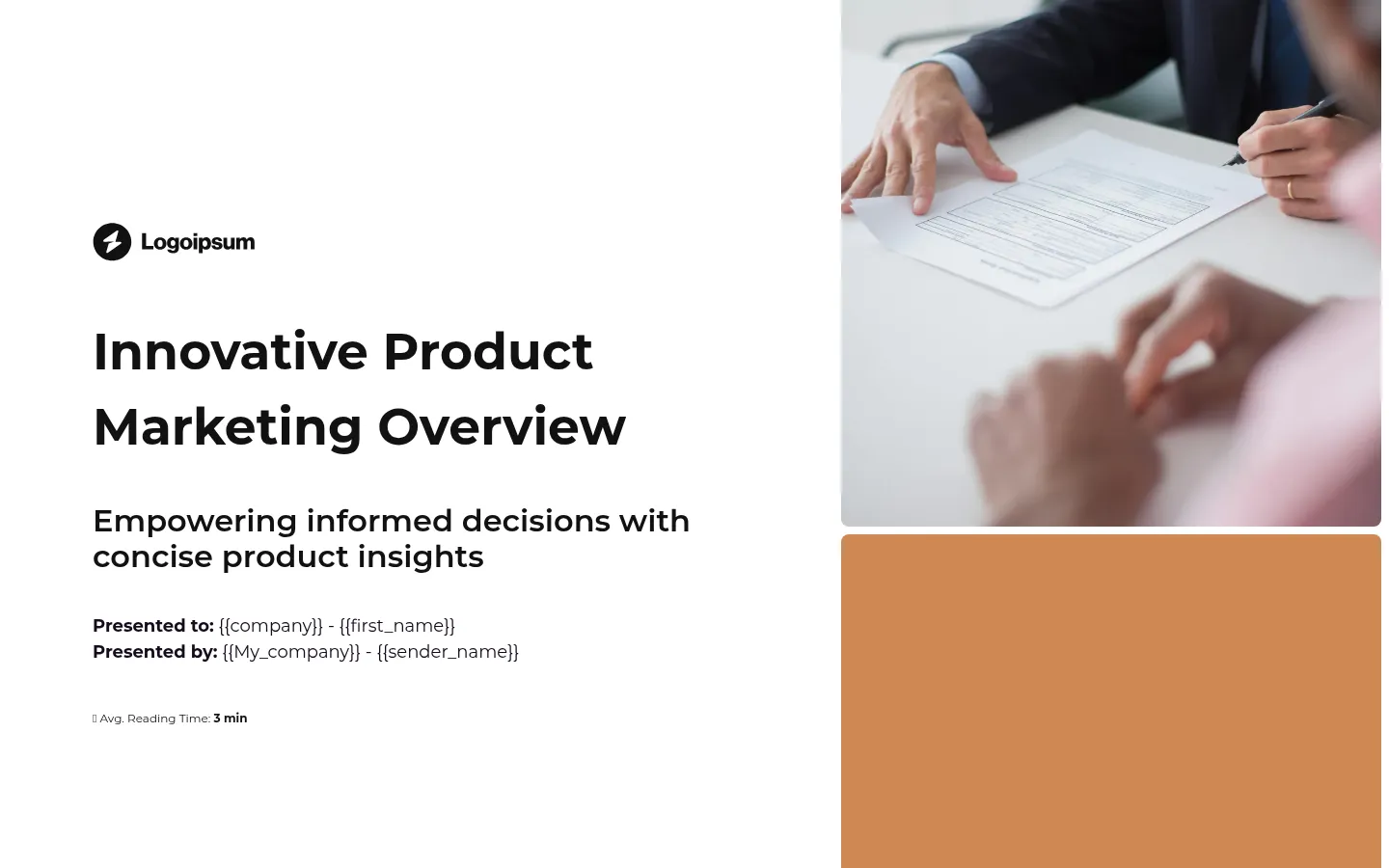
The first thing that stands out to me is how easy it is to personalize. They’ve got a {{company}} tag on the cover that pulls in client names from the CRM (or {{first_name}} if you’re B2C), which makes it feel instantly tailored.
Then there’s the before-and-after slider – such a smart way to show impact without dumping a ton of text.
I also love how they break down benefits into tabs, so different audiences can just click to what matters instead of scrolling through stuff they don’t need.
And the built-in live chat? Genius. This way, prospects can ask questions on the spot instead of bouncing.

Scroll to preview
Interactive SaaS product one-pager by Yotpo
This SaaS product one-pager from Yotpo is such a great example of keeping things engaging without overwhelming the reader.
Right after the cover, they kick things off with a video, so there’s no need for a long-winded intro – just press play and get the essentials.
Once that’s out of the way, the slides break down the product step by step, with interface screenshots to keep things visual and digestible.
I also love the social proof here – there’s a client logo strip for credibility, plus a testimonial with a link to a full case study. It’s a super smart way to build trust without taking up too much space.

Scroll to preview
Cybersecurity product one-pager by nSure
This deck from Nsure is a true one-pager, and it’s a perfect example of interactive storytelling done right.
Right after the cover, you’re guided through the product with a narrator slide – as you scroll, new content and diagrams pop into view, making it easy to absorb at your own pace.
Then, they back it all up with key numbers and current backers for credibility, followed by a super short, no-fluff breakdown of how it works.
And, once you’re hooked, there’s a calendar embedded right inside so you can book a meeting without leaving the page.
Scroll to preview
Product one-page sales proposal
This one-page product proposal is a great example of how to introduce your company before jumping into the product itself.
It starts with a short intro, followed by a few key numbers displayed as running stats – a smart way to prove credibility without overloading the reader.
Then, it gets straight into features and benefits, covering all bases without dragging things out.
I also love how they back it up with social proof for extra trust and then smoothly nudge you toward taking action.
And, the wordiest case study slide is segmented into tabs, so it’s easy to scan while still packing in all the important details.

Scroll to preview
SaaS product one-pager
This one is a fantastic example of a product one-pager designed for investors rather than clients.
It’s structured around a clear problem-solution framework, making it easy to see why the product matters. Then, it smartly lays out revenue streams, showing that there’s a solid plan for making money – not just a great idea.
But what really makes this deck stand out is the investment and use of funds slide. So many decks either skip this or just ask for money without context.
Here, they break down exactly how the funds will be used to grow the product, which gives investors real confidence in where their money is going.
Scroll to preview
Product sales one-pager
This is a super concise one-pager built for product sales, and it makes every bit of space count. Like the investor example, it follows a strong problem-solution structure, making it crystal clear why the product is needed.
I really like how they’ve used quadrants to arrange key features – it keeps things structured and easy to scan. The only thing that could make it even stronger would be more visuals to show the product in action instead of just describing it.
The client logo strip is another nice touch – you can easily update it in just a few clicks by inserting URLs, no design tweaks needed.
Scroll to preview
Physical product one-pager
This is a great example of a physical product one-pager that feels both personal and professional.
I love how the second slide is a personal note – you can easily customize it by connecting to your CRM, making it perfect for when you need to make a strong first impression.
Then, it flows through all the essentials – the problem your product solves, how it works, and the benefits it brings.
But one thing that’s worth noting is that if any of your product specs change or you need to tweak details, you can update them directly in the deck – no need to resend a new version every time. It will always stay up to date.
Scroll to preview
Real estate product one-pager
This one might follow the same structure as other product one-pagers, but it’s built with real estate in mind.
You’ve got a full library of slides at your disposal to bring properties to life.
Want to show off comps or key numbers? Just pull in a data visualization component. Need to showcase stunning property photos? Use a narrator slide to guide prospects through them.
Or, if you want to go even further, you can embed links to full 360° walkthroughs so buyers can explore remotely.
In a visual industry like real estate, these interactive elements can be the difference between a buyer or investor saying yes or moving on to the next deck.
Scroll to preview
Create your product one-pager from a template
At first, creating a product one-pager from scratch seems easy—it’s short, so how hard could it be? But that’s exactly what makes it tricky.
You have to know what to include and what to skip, and getting that balance right takes time. Even then, there’s no guarantee it’ll hit the mark.
Interactive product one-pager templates use a battle-tested structure, so all you have to do is plug in your content and know it’s built to work. No second-guessing, no wasted time.
Just grab a template and get started.