
Storydoc ChatGPT MCP Connector
Create on-brand Storydocs, personalize them for every customer, pull analytics, and integrate Storydoc with the rest of your AI workflows.

Create on-brand Storydocs, personalize them for every customer, pull analytics, and integrate Storydoc with the rest of your AI workflows.
Trusted by teams building AI-native document workflows


With Storydoc and ChatGPT, you generate Storydocs using your approved templates, messaging, branding, and StoryBrain knowledge - so everything stays consistent and on-brand.
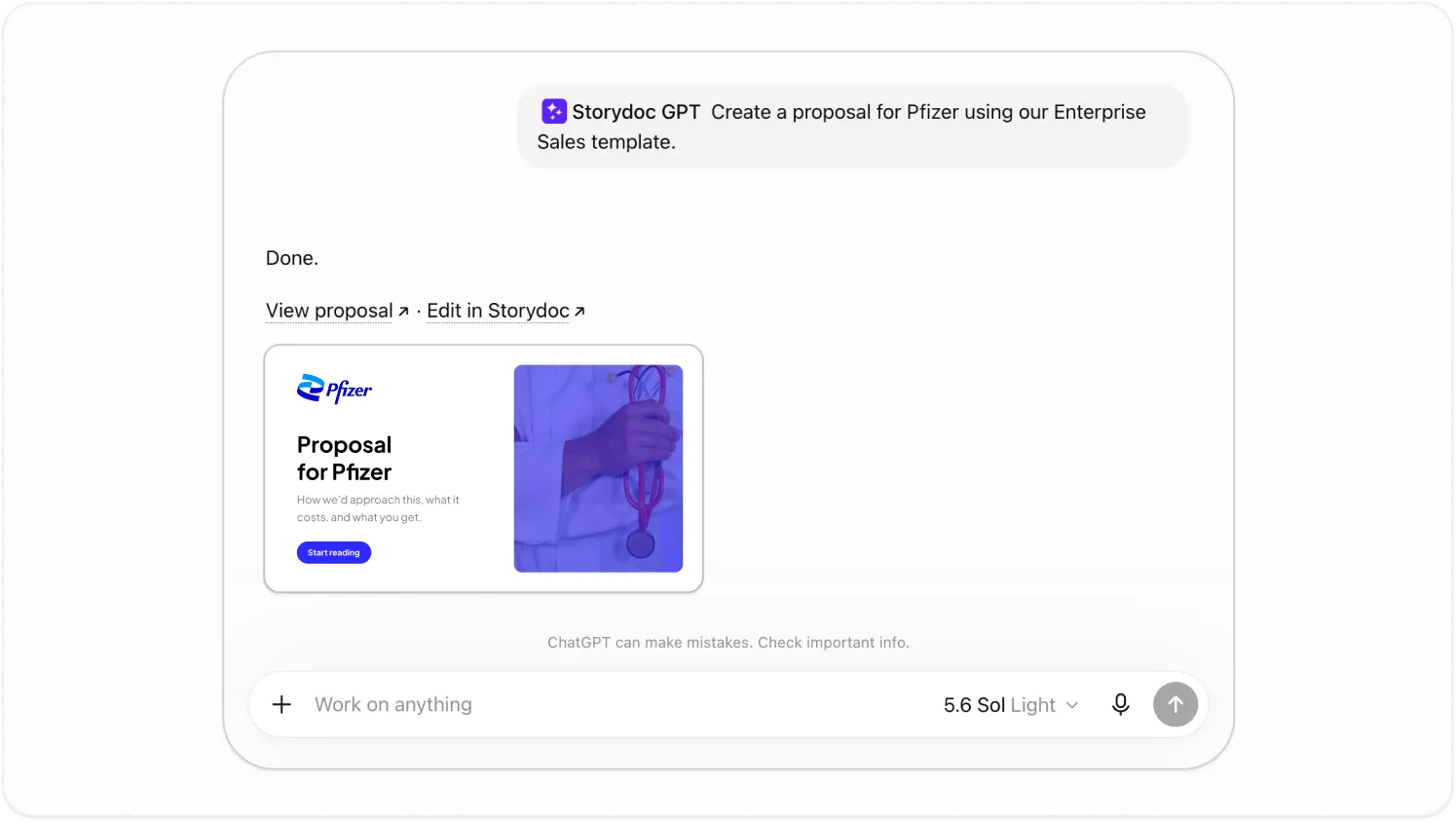
Instead of asking ChatGPT to create decks from scratch, connect it to your approved Storydoc templates – or let it reference your existing decks, brand books, product docs, and other materials.
For example:
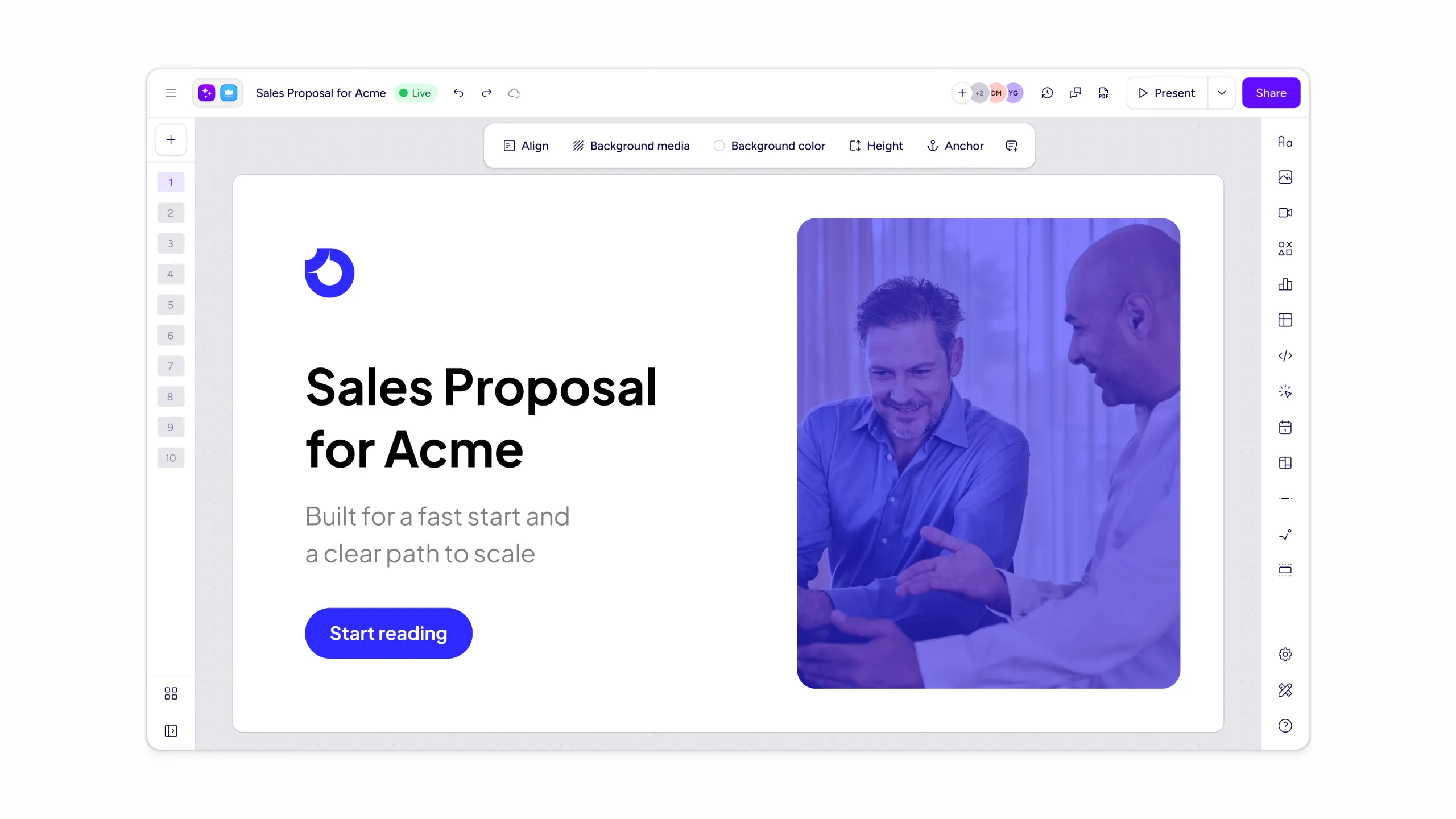
“Create a proposal for Pfizer using our Enterprise Sales template.”
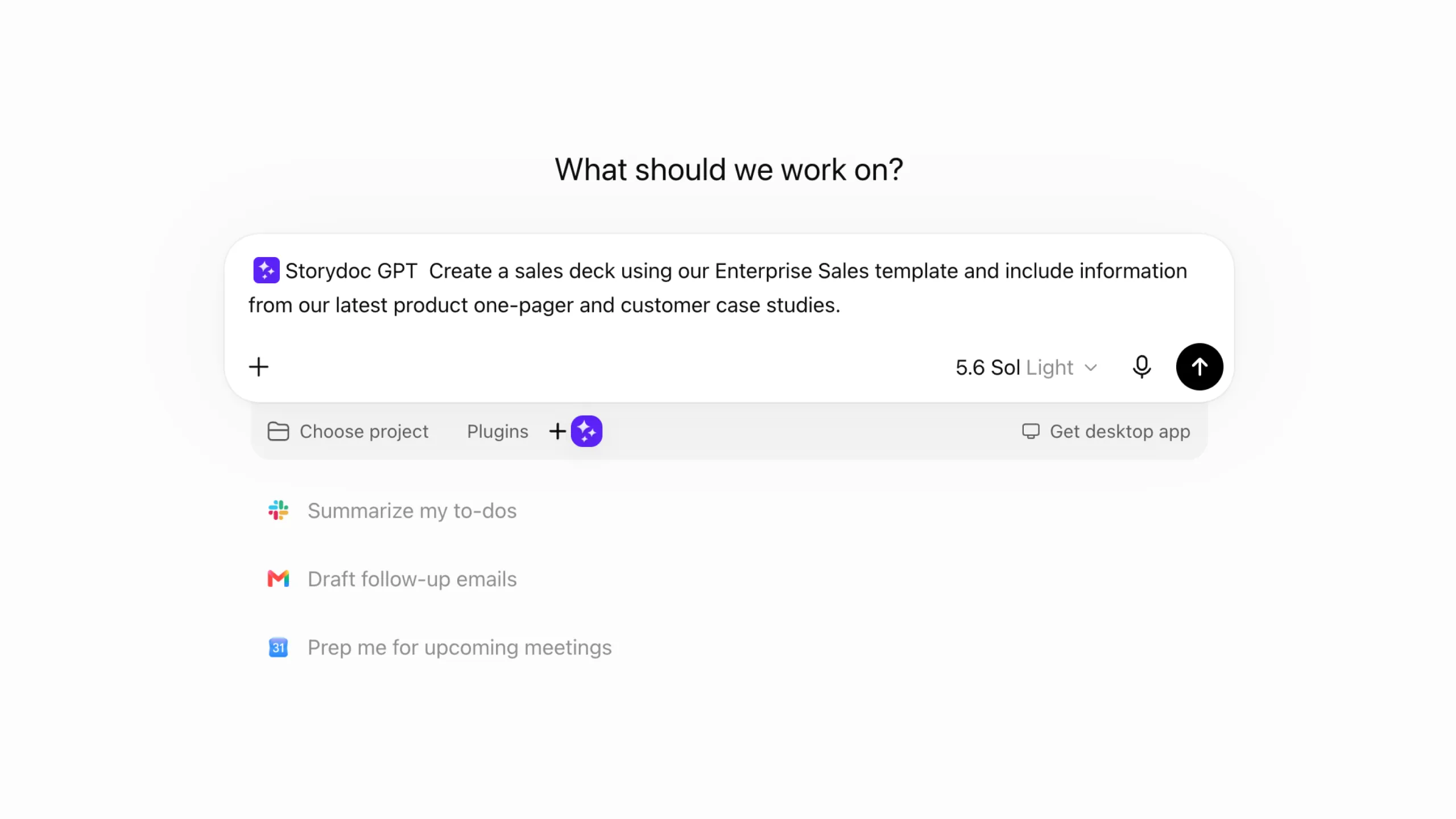
“Create a sales deck using our Enterprise Sales template and include information from our latest product one-pager and customer case studies.”
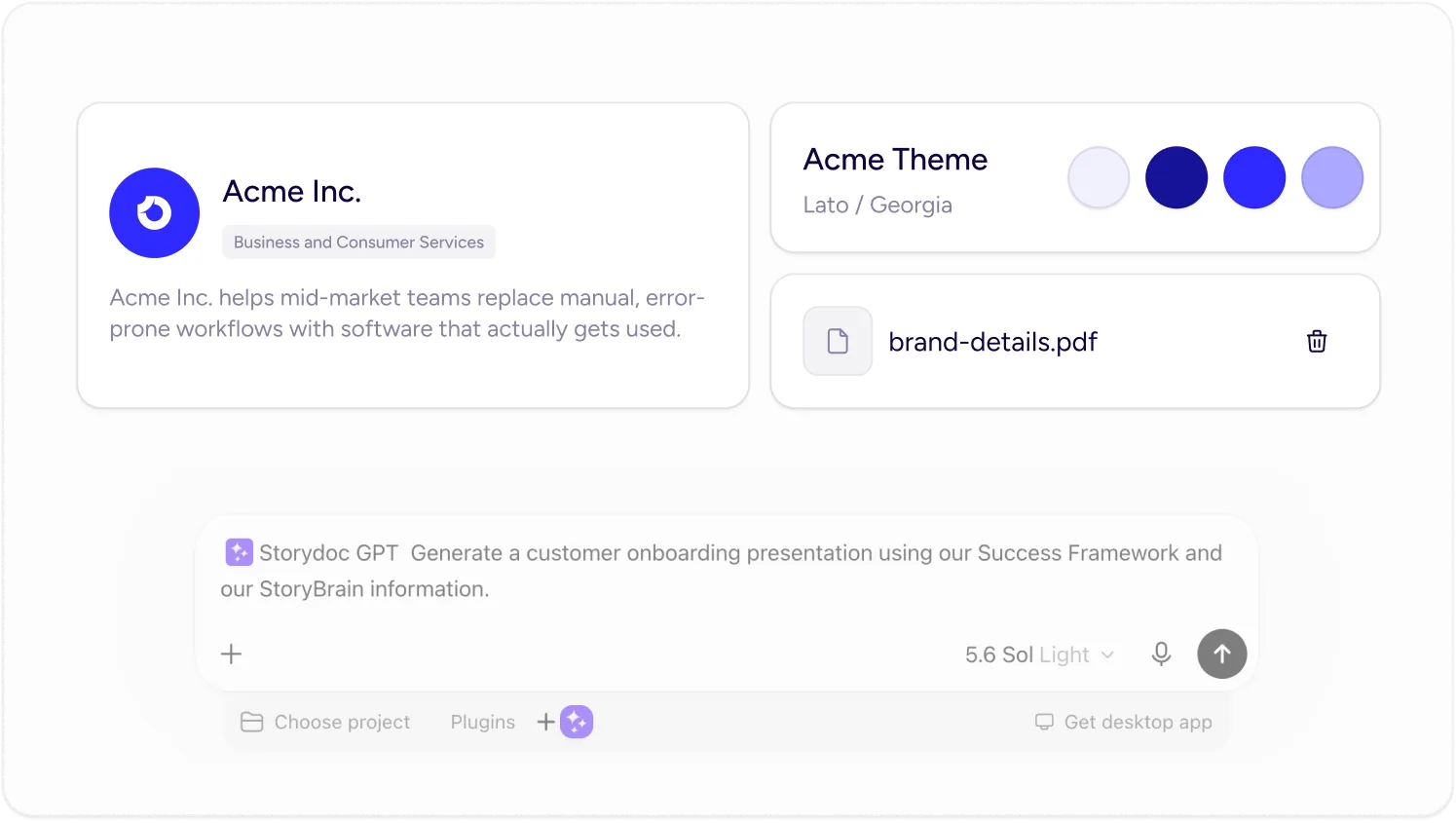
“Generate a customer onboarding presentation using our Success Framework.”
“Create a quarterly business review using our Executive Update template.”
Storydoc preserves your layouts, branding, variables, messaging, and structure, while ChatGPT adapts the content for each customer or use case.
AI is incredibly creative.
That’s not always what you want in customer-facing documents.
Storydoc helps ChatGPT work from your approved messaging, StoryBrain knowledge, product information, and existing Storydocs instead of relying purely on the language model.
That helps prevent:
inconsistent positioning
outdated messaging
off-brand presentations
inaccurate product descriptions
features or services your company doesn’t actually offer
Marketing defines the standards once. Storydoc helps every team follow them.
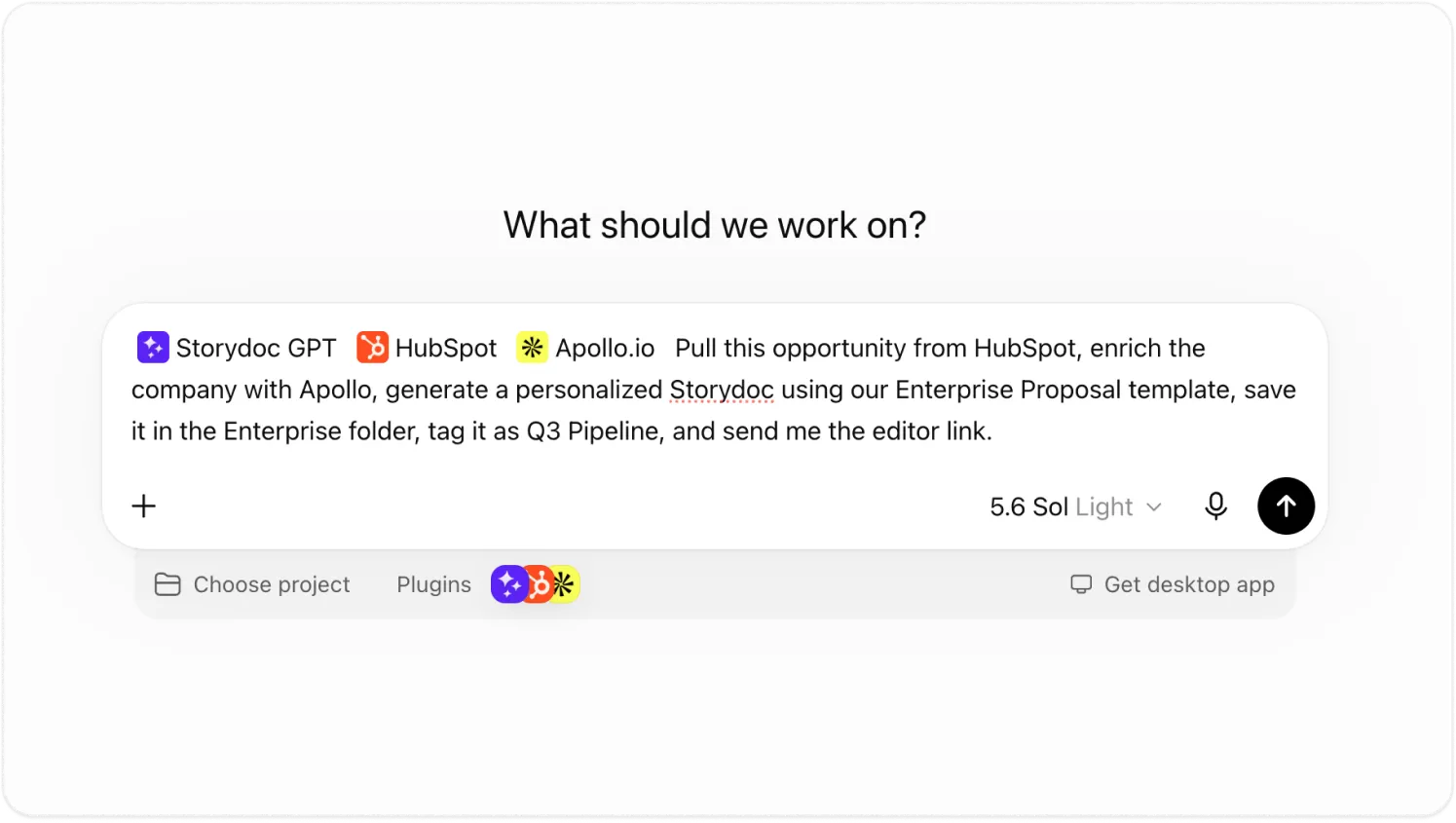
Storydoc doesn’t have to work by itself. ChatGPT can orchestrate complete workflows across your connected tools.
For example:
“Pull this opportunity from HubSpot, enrich the company with Apollo, generate a personalized Storydoc using our Enterprise Proposal template, and send me the editor link.”
“Read this discovery call transcript, summarize the customer’s priorities, and generate a proposal using our Enterprise Sales template.”
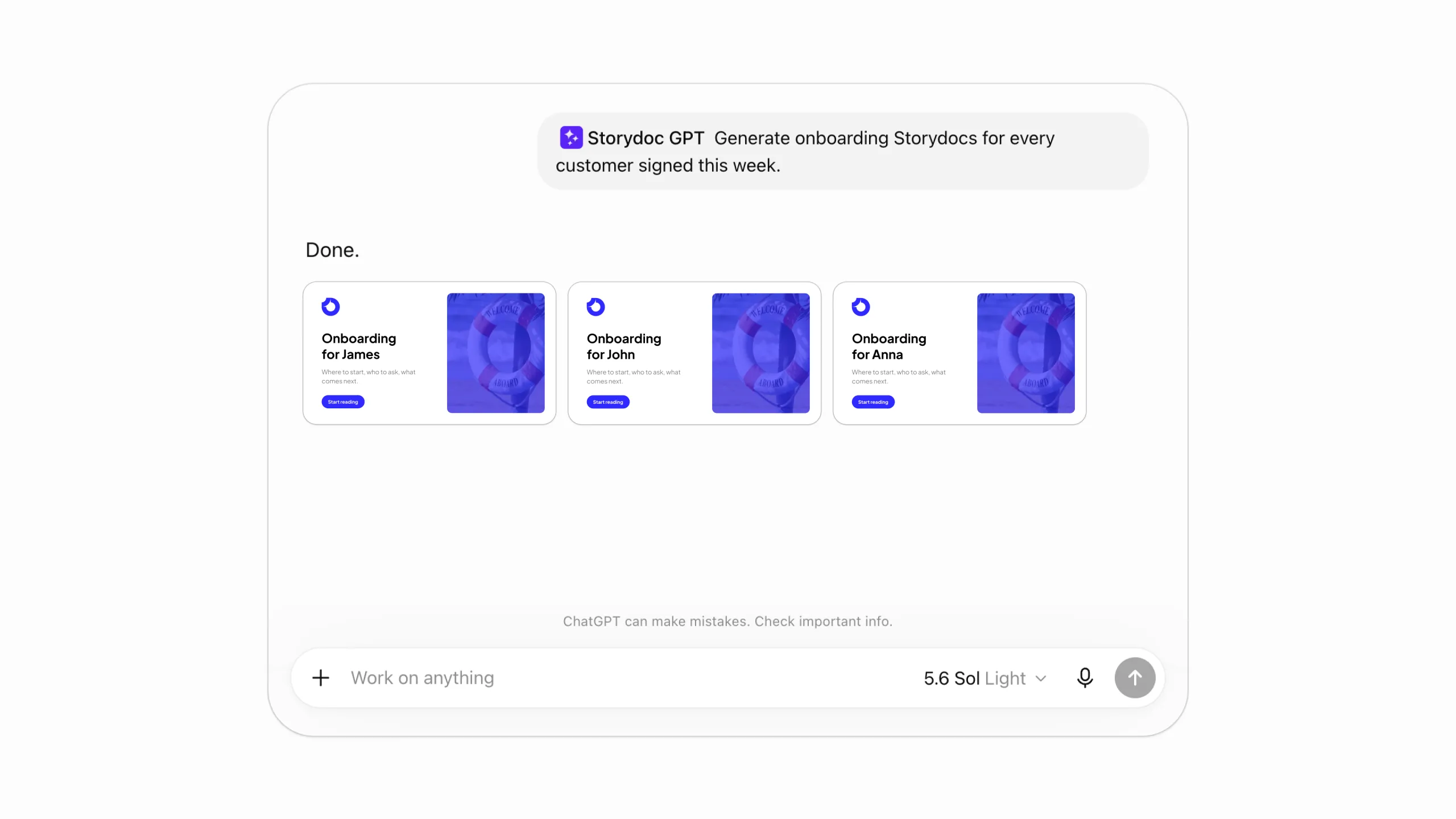
“Generate onboarding presentations for every customer that signed this week.”
Instead of moving information between applications yourself, ChatGPT can coordinate the entire process through a single conversation.
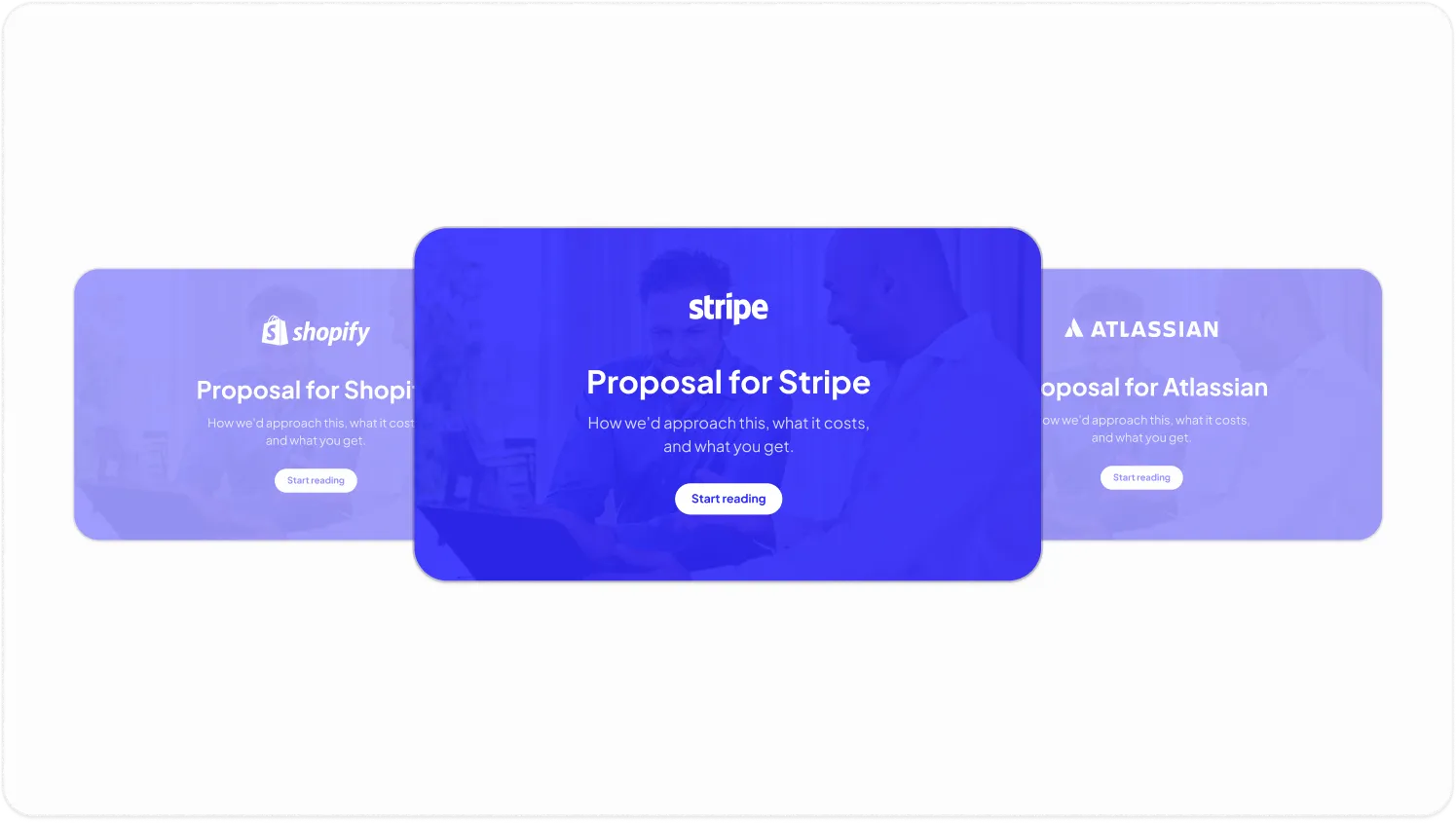
Storydoc separates the elements that should remain consistent – branding, layouts, messaging, approved structures – from the variables that should change, such as company information, pricing, implementation plans, or industry examples.
If required information is missing, ChatGPT can ask for the remaining variables before generating the Storydoc.
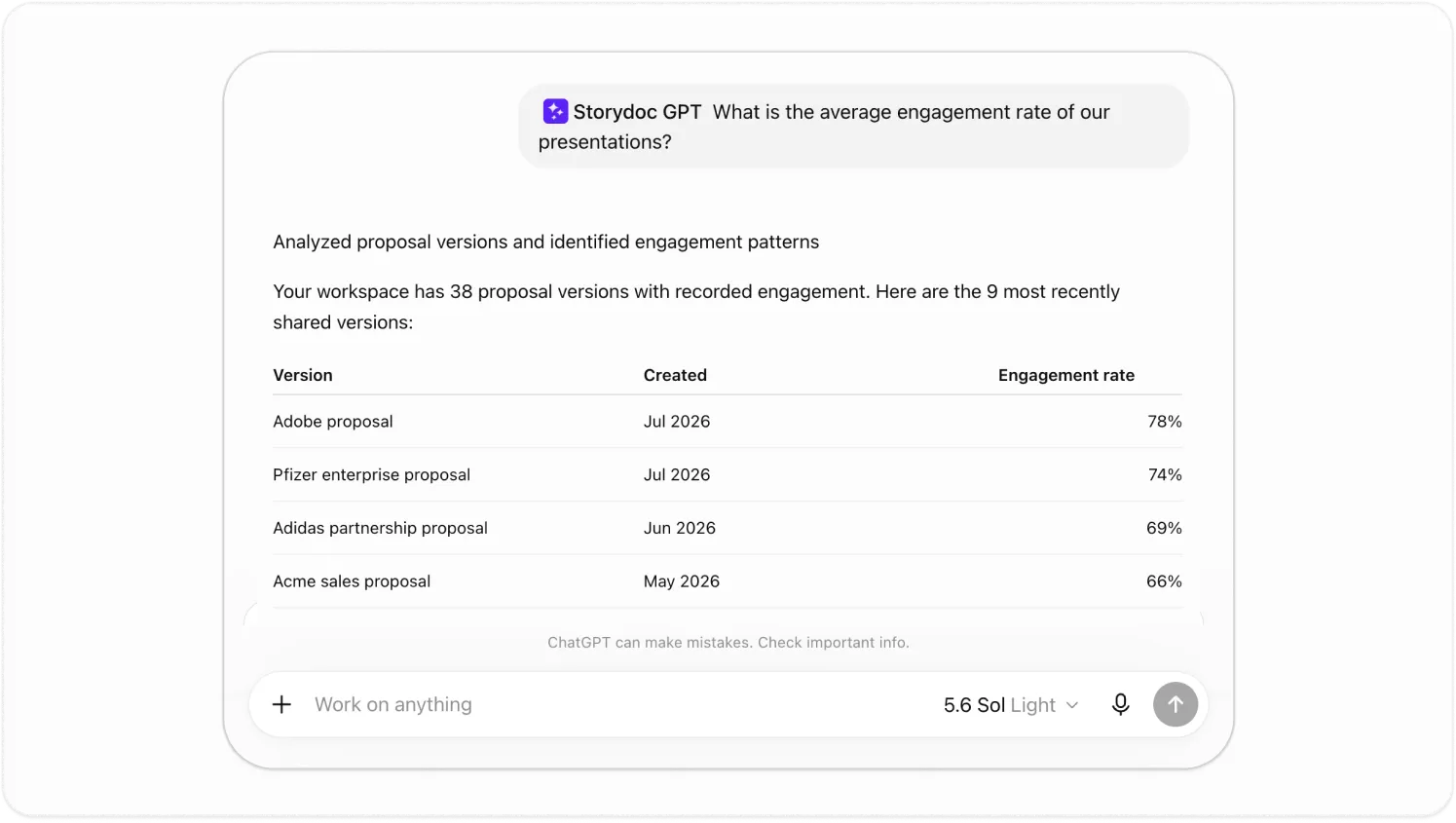
Creating the Storydoc is only the beginning.
Use ChatGPT to ask questions about engagement without opening another dashboard.
For example:
“Which sections of our Enterprise Proposal template for Pfizer have the highest completion rate?”
“What is the average engagement rate for our customer onboarding presentations?”
“Which prospects spent the most time reviewing our pricing section?”
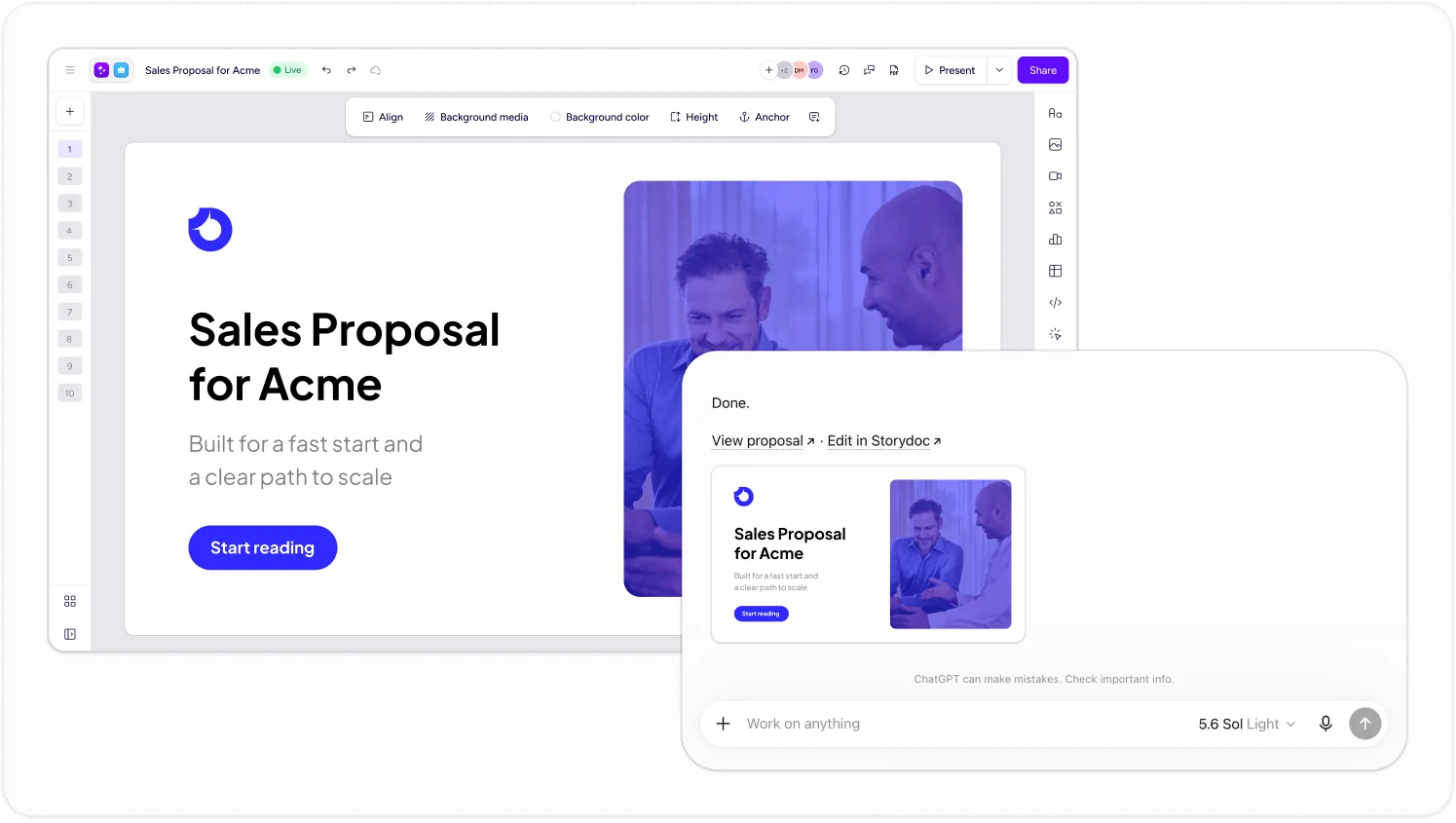
Every Storydoc generated through ChatGPT includes both a live sharing link and an editor link.
If the deck is ready, send it immediately.
If you’d like to review it first, open the Storydoc editor to adjust layouts, refine messaging, collaborate with teammates, or make visual changes before sharing.
AI gets you to the first draft faster, while Storydoc gives you complete control over the final version.
Trusted by top businesses, loved by our users





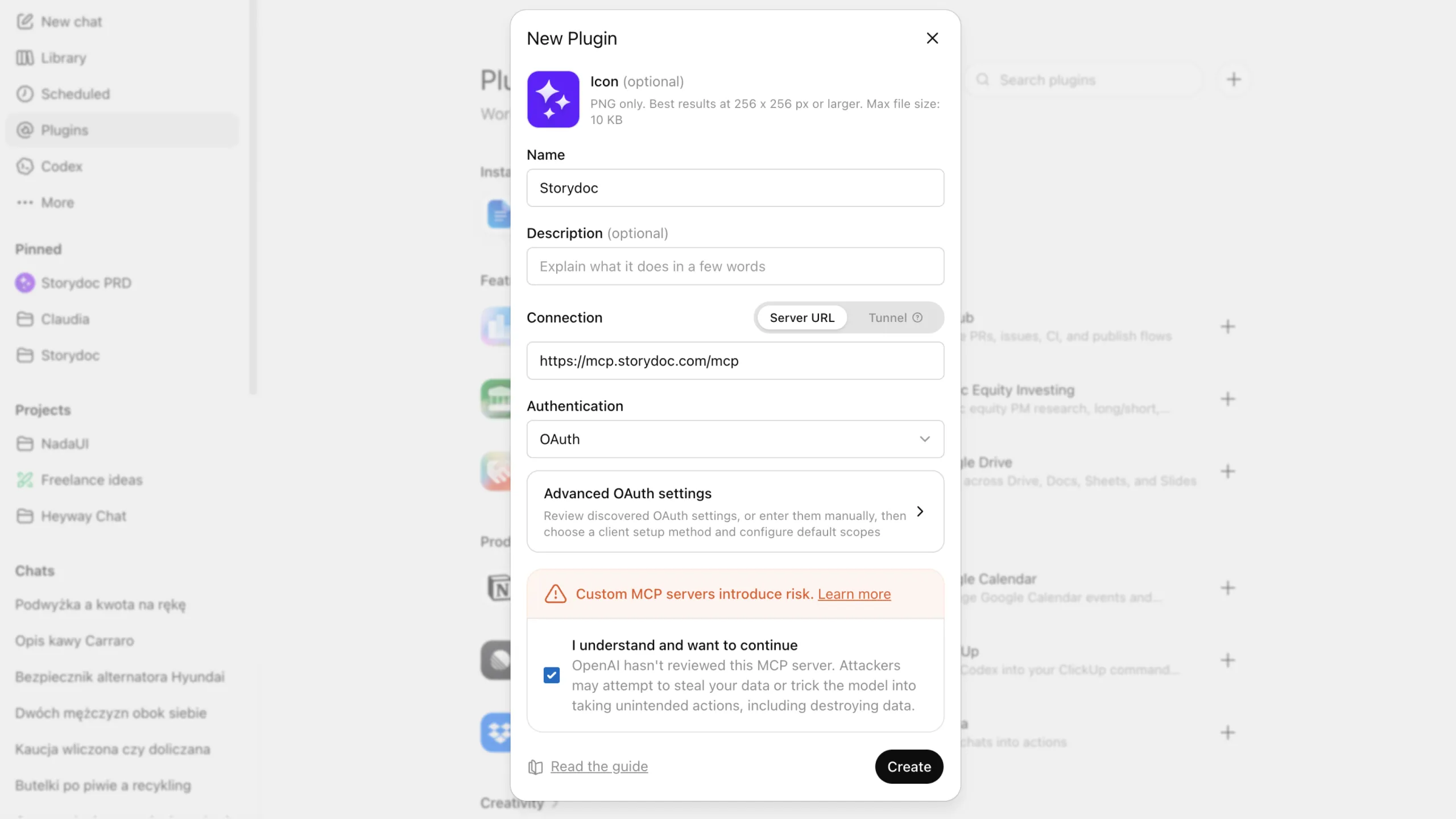
Connect Storydoc to ChatGPT using MCP and securely authorize your Storydoc workspace.
1. Add the Storydoc MCP server
In ChatGPT, go to Settings → Connectors, search for Storydoc, and click Connect.
You can also add it manually as a custom connector using the MCP server URL https://mcp.storydoc.com/mcp with OAuth authentication.
2. Authenticate your Storydoc account
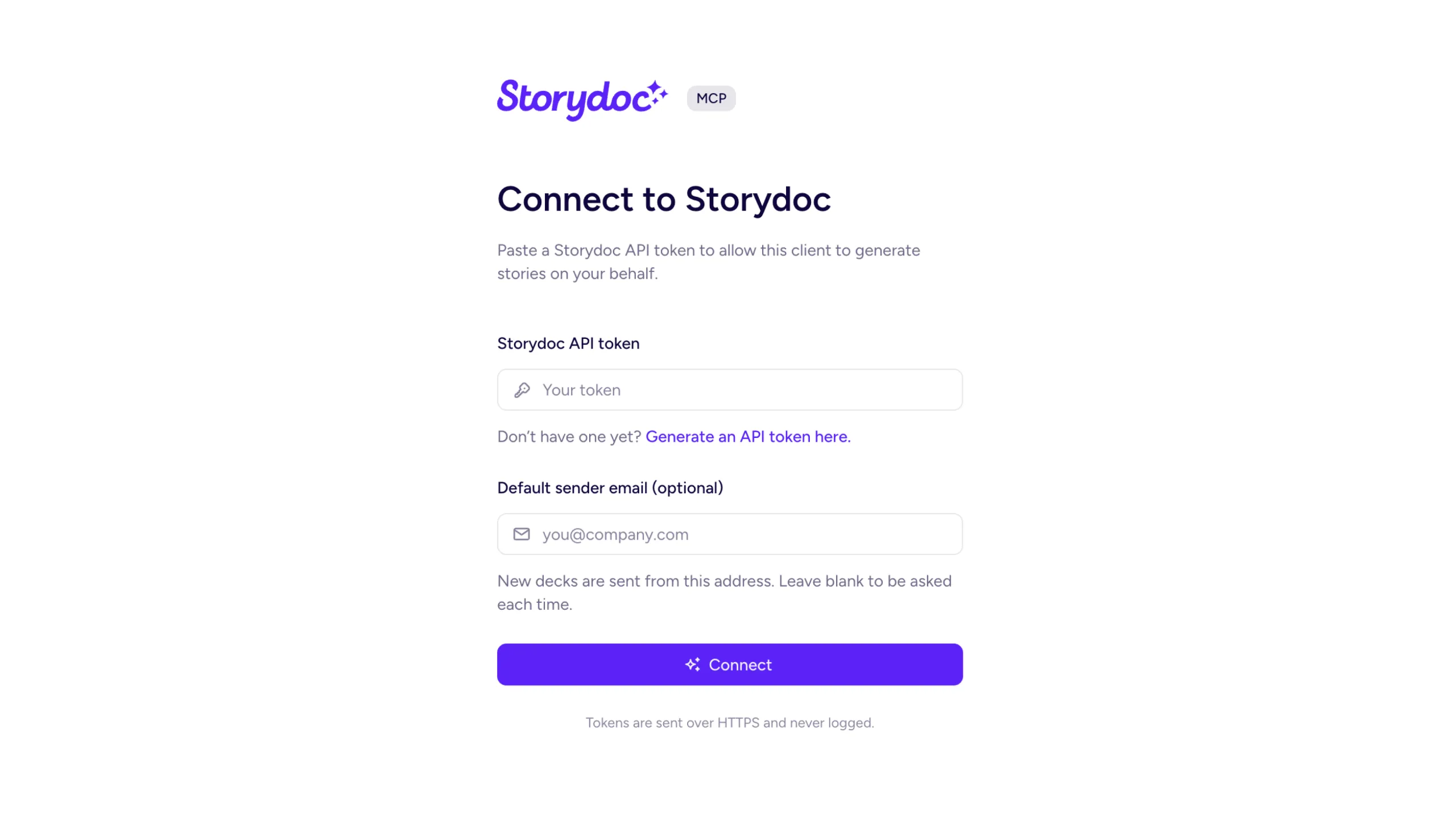
Complete the Storydoc sign-in by pasting your API token when prompted.
You can generate one from:
Profile → Integrations → Automations
3. Start creating Storydocs
Once connected, ChatGPT can:
generate Storydocs
browse templates
create personalized versions
pull analytics
work with your Storydoc workspace
4. Build complete AI workflows
“Create a Storydoc proposal for Salesforce using our Enterprise Sales template.”
“Pull this opportunity from HubSpot and generate a personalized proposal.”
“Find our highest-performing proposal template and create a version for Adobe.”
“Generate onboarding Storydocs for every customer signed this week.”
ChatGPT can combine Storydoc with your other connected MCP tools inside the same workflow.
5. Review, edit, and share
Every generated Storydoc includes both a live sharing link and an editor link.
Share it immediately or continue editing it inside Storydoc before publishing.
Approved templates, StoryBrain knowledge, messaging, layouts, branding, and supporting materials help ChatGPT generate Storydocs your company can confidently share.
Every time ChatGPT regenerates your deck, you’re paying for work you’ve already done. Storydoc lets ChatGPT build on approved templates instead of recreating them from scratch, significantly lowering your token usage.
Storydoc works alongside HubSpot, Apollo, CRMs, and other MCP-compatible tools, allowing ChatGPT to coordinate complete presentation workflows through conversation.
Tailor Storydocs for different prospects, industries, and stakeholders while keeping your messaging, branding, and positioning intact.
Use Storydoc analytics to understand how people engage with your presentations and improve future Storydocs using real viewing data.
ChatGPT generates the draft.
Storydoc gives you a visual editor, collaboration tools, and live sharing links so you decide when it’s ready to send.
Model Context Protocol (MCP) is an open standard that allows ChatGPT to securely connect to external tools like Storydoc and interact with them through natural language.
Any Storydoc plan works – including the free trial.
All Storydoc plans include API access, which is what the MCP is built on. Once you’re in Storydoc, simply generate an API token from Profile → Integrations and use it to connect the MCP to any AI tool.
ChatGPT can generate Storydocs, create personalized versions, browse templates, pull analytics, and work with your other connected business tools as part of the same workflow.
Storydoc gives ChatGPT access to approved templates, branding, StoryBrain knowledge, messaging, existing Storydocs, and company materials. This helps reduce inconsistent branding and inaccurate AI-generated content.
Yes. Storydoc can become part of larger AI workflows alongside HubSpot, Apollo, CRMs, and other MCP-compatible applications.
Yes. Every generated Storydoc includes both a live sharing link and an editor link, allowing you to review, edit, collaborate, and publish whenever you’re ready.
Yes. You can ask ChatGPT about engagement, completion rates, viewer activity, top-performing Storydocs, and other Storydoc analytics directly through conversation.
Yes. You can do it in two ways:
Custom instructions: Add rules that apply to every chat.
Custom GPTs: Build a specialized GPT that combines the Storydoc connector with your own instructions and workflow rules.
Example: Build a Custom GPT called “Sales Proposal Assistant” that always uses your Storydoc proposal template, pulls context from HubSpot, and follows your brand tone.
Yes. Storydoc is ISO 27001 certified and GDPR compliant. Workspace access is authenticated securely using API tokens, and you remain in control of permissions and access.
Still have questions?
Note: The features described on this page are currently in beta status and AI platforms continue to evolve quickly. Availability, setup requirements, and supported functionality may change over time. We’ll keep this page updated as things change.
Create customer-ready Storydocs that stay on-brand, fit into your AI workflows, and remain fully editable whenever you need them.