










How to Write a Film Proposal to Get Funded (+Templates)
Learn how to write a film proposal for funding, including tips on the winning structure of a film proposal and customizable film proposal templates.
Set as Preferred Source
A film proposal is for filmmakers seeking funding, production support, or distribution.
It’s used to pitch a project to investors, studios, grant committees, and production companies. It’s also useful for securing partnerships with distributors or streaming platforms.
A film proposal’s goal is to secure funding, production backing, or distribution by presenting a compelling case for your film.
It proves your project’s artistic and commercial potential while demonstrating feasibility.
Investors want financial viability, grant committees need artistic and social impact, and production companies look for marketability.
Before writing a film proposal, gather essential documents and research.
You’ll need a treatment or synopsis outlining the story, a budget breakdown detailing costs, and a financing plan explaining how you’ll fund the project.
A market analysis helps define your audience and distribution strategy, while a director’s statement clarifies your creative vision.
If applicable, include bios of key team members and letters of intent from cast, crew, or partners.
Having these assets ready ensures your proposal is persuasive, professional, and tailored to the expectations of industry decision-makers.
How to write a film proposal that impresses decision-makers
Your film idea isn’t just competing with a few others – it’s up against hundreds, sometimes thousands, all chasing the same funding or backing.
To stand out, your proposal needs to be more than just good; it has to be unforgettable.
While the exact format may change depending on your audience and goals, the key elements remain the same.
Below, I’ll walk you through everything you need to write a film proposal that grabs attention and convinces decision-makers to bet on your vision.
What is the structure of a film proposal?
- Title slide
- Logline
- Executive summary
- Synopsis
- Moodboard
- Main characters
- Target audience
- Comparable movies
- Production timeline
- Production plan and details
- Distribution strategy
- Budget breakdown
- Financing strategy
- Film crew
- Next steps slide
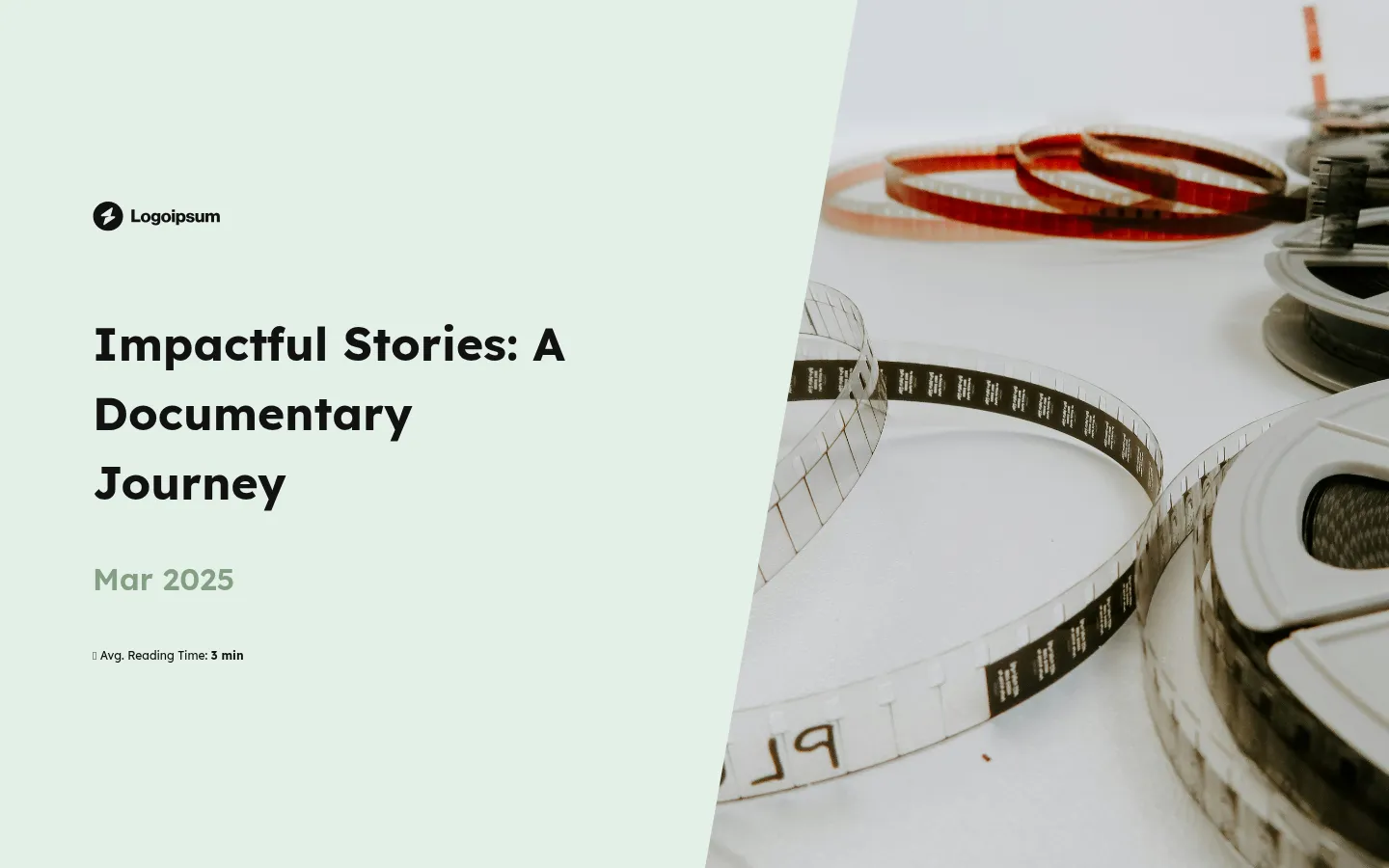
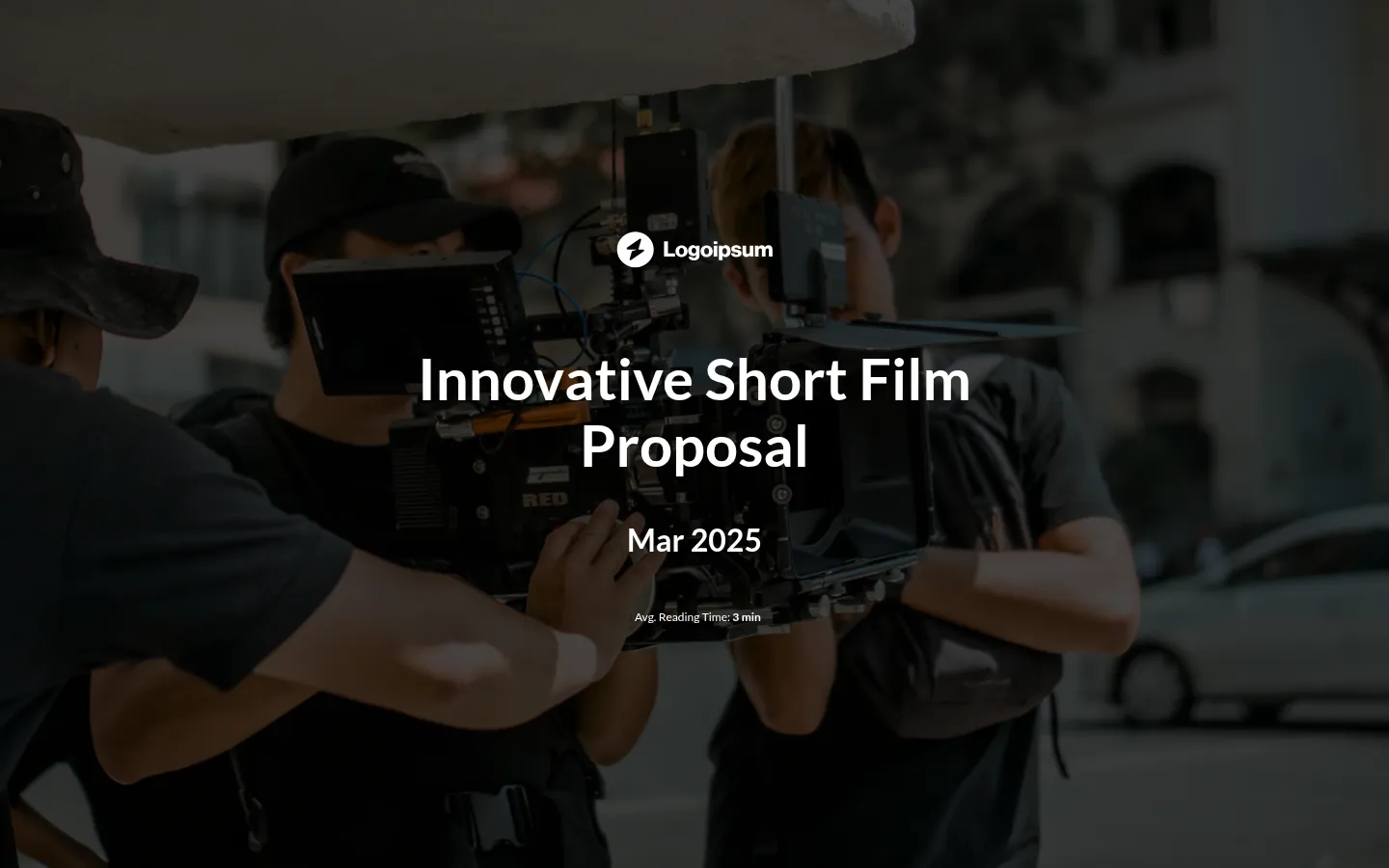
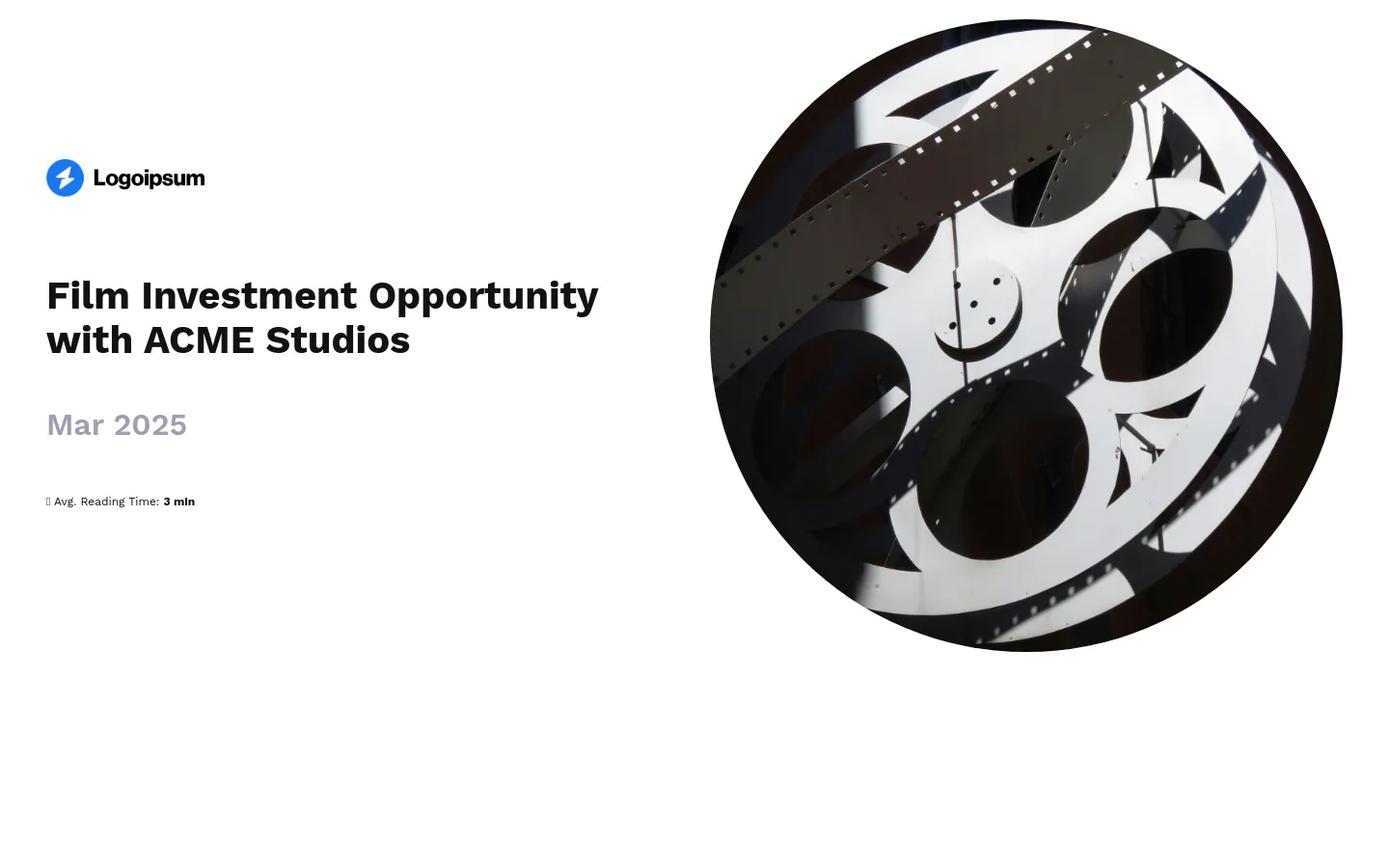
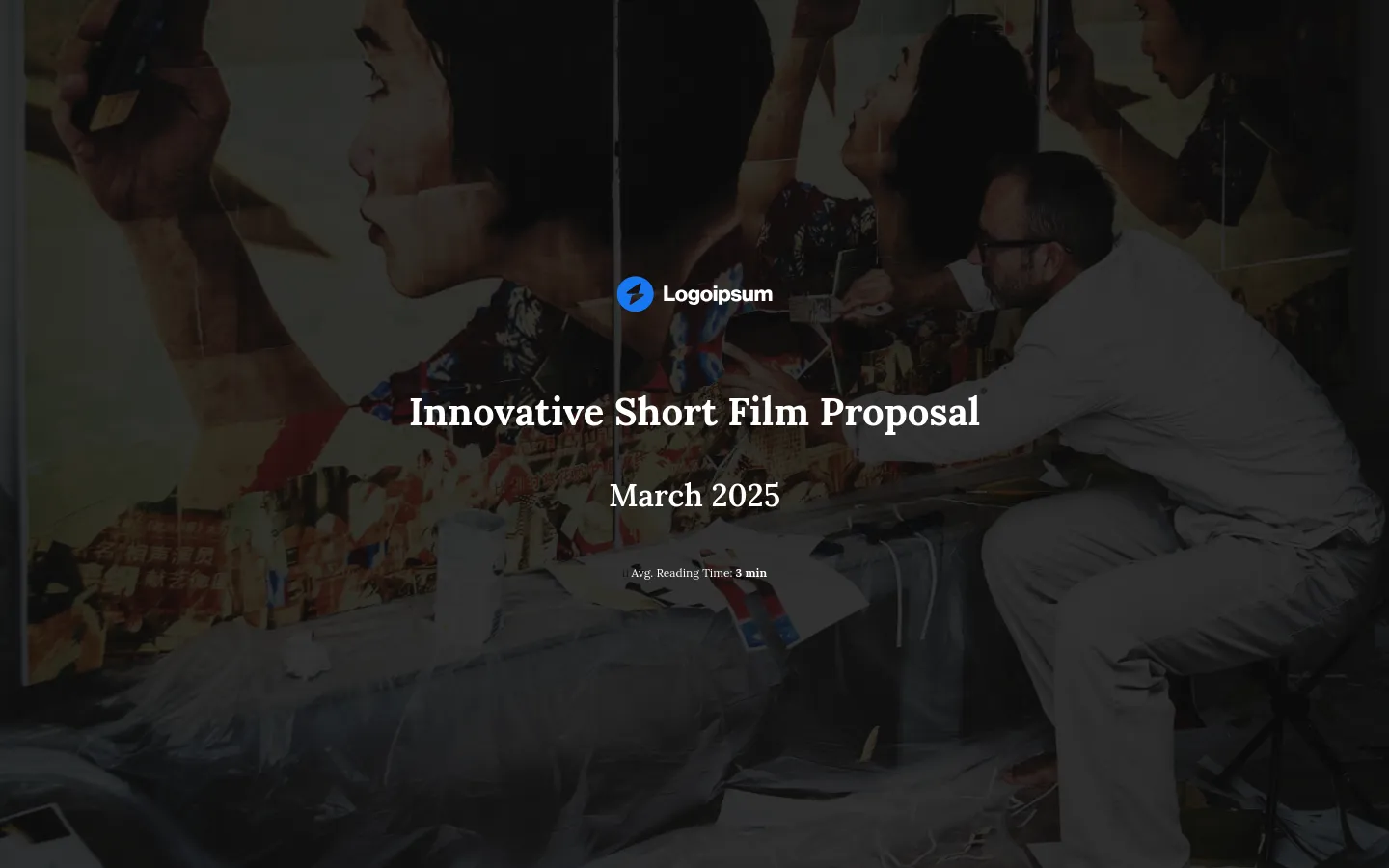
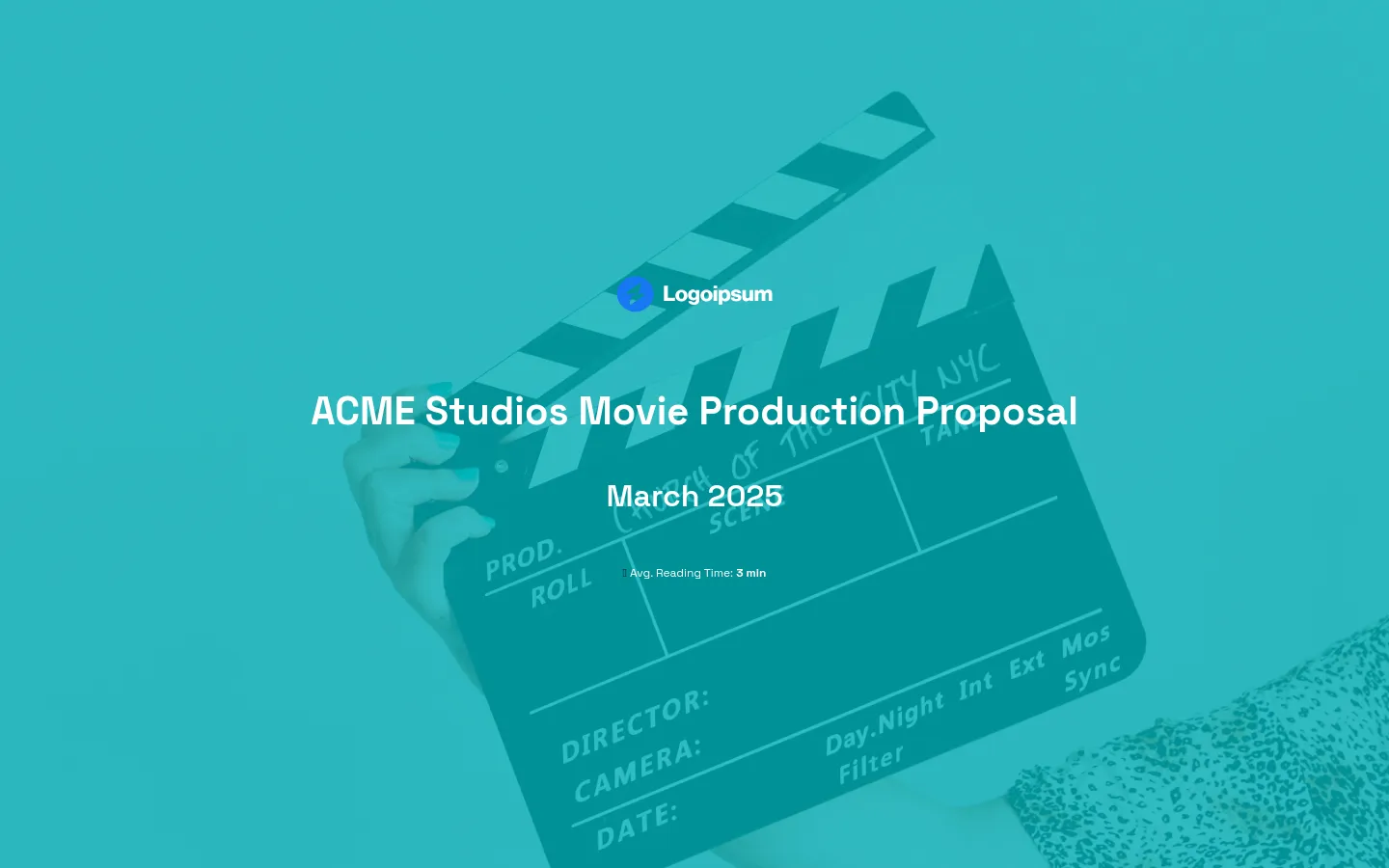
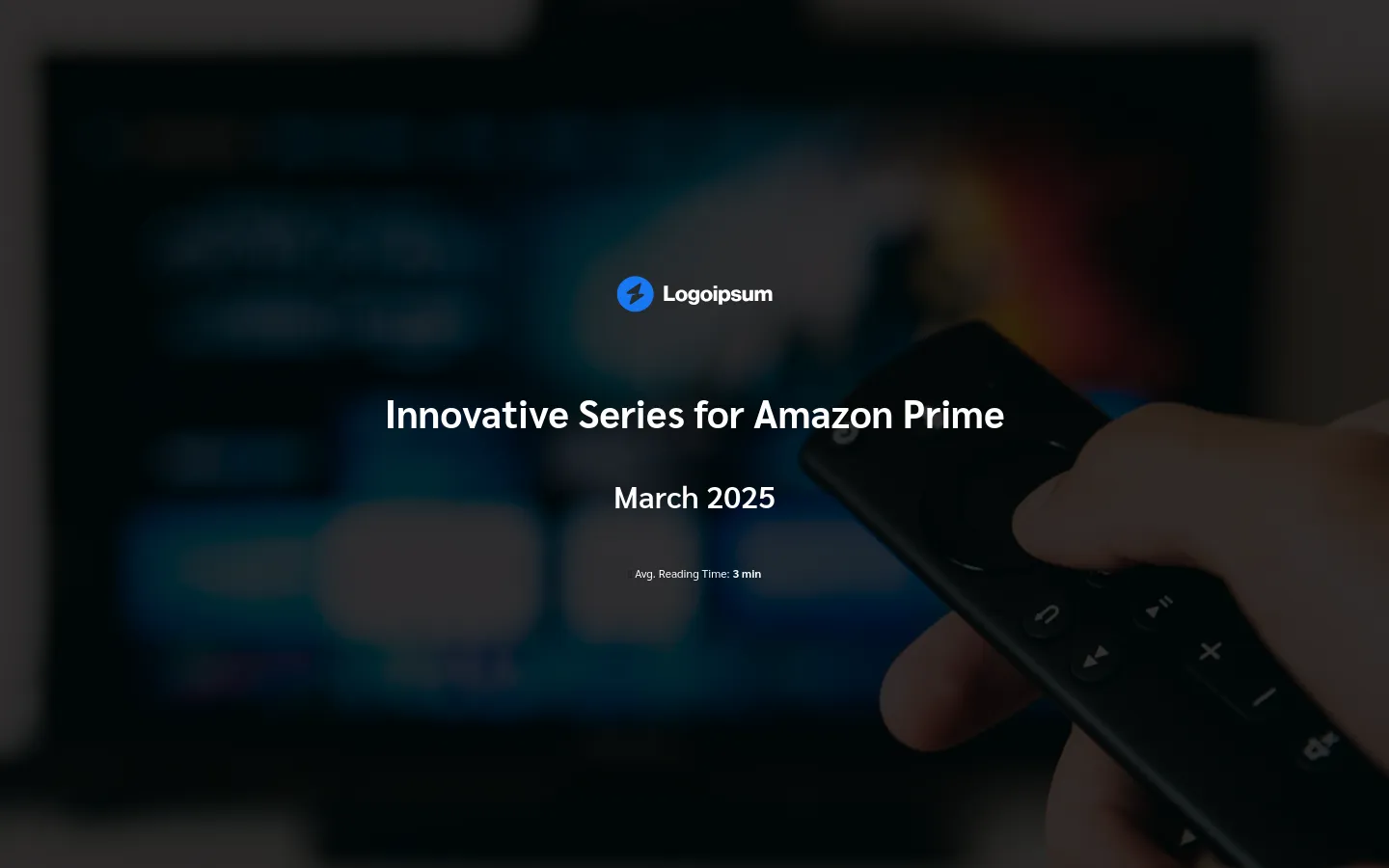
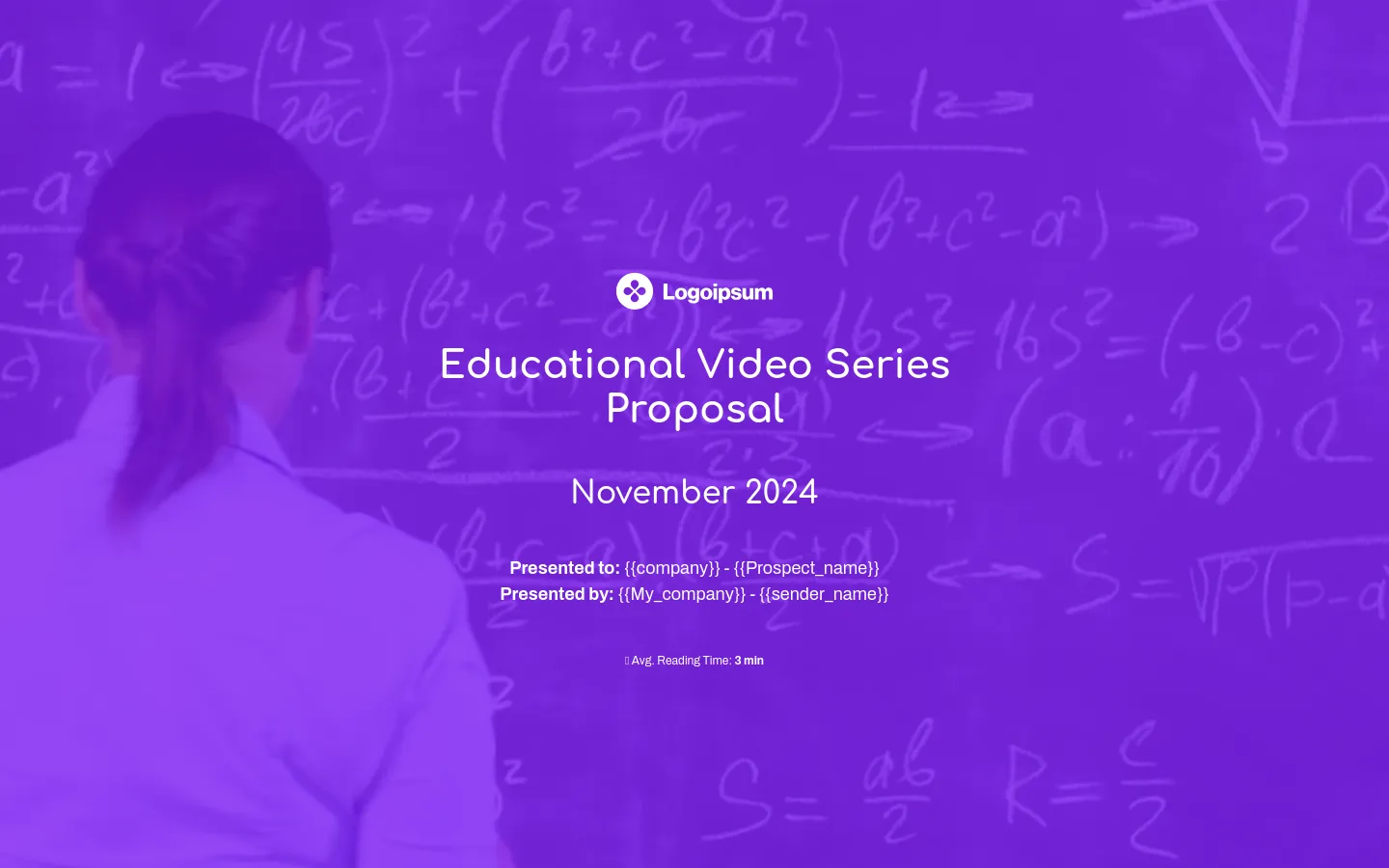
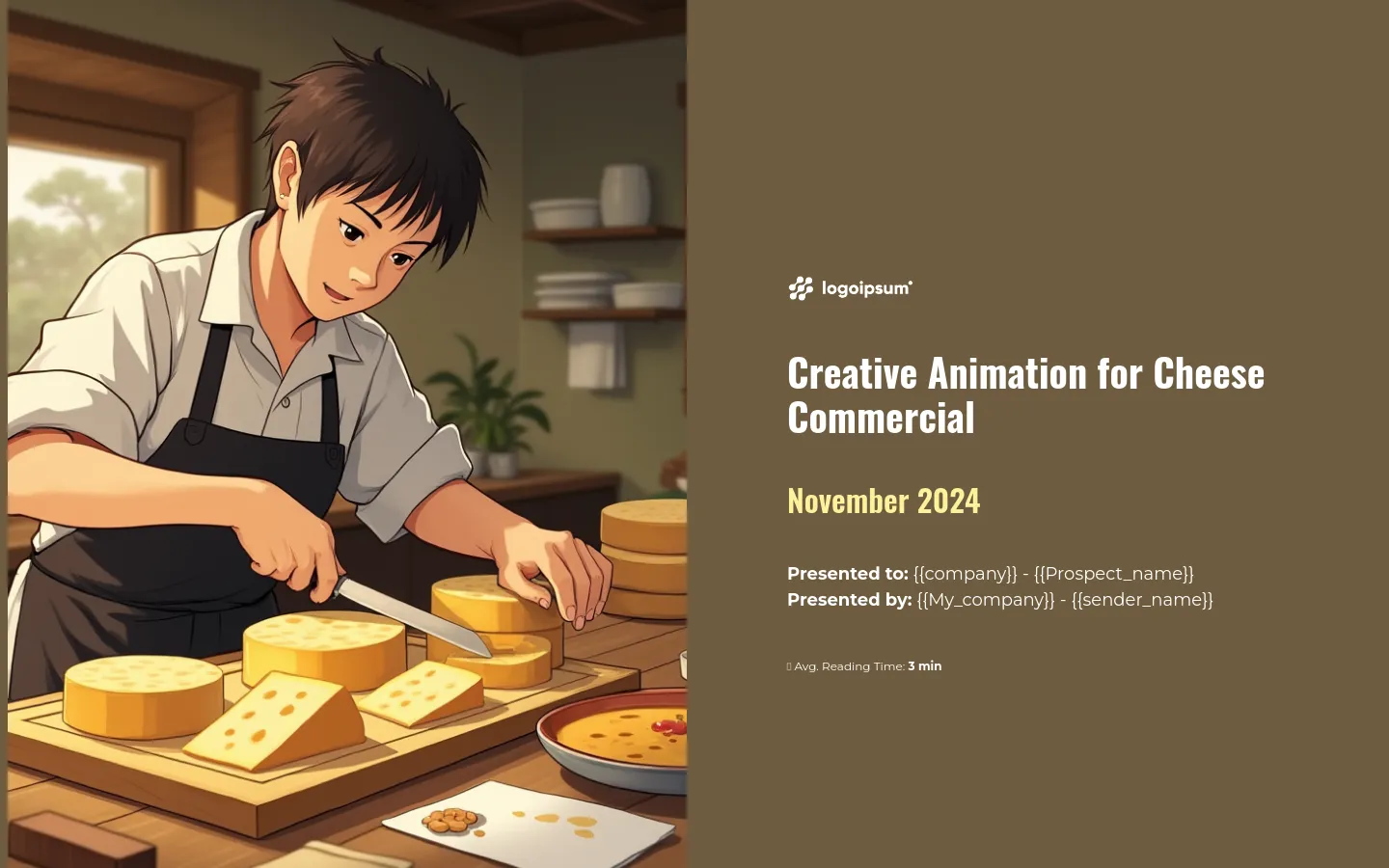
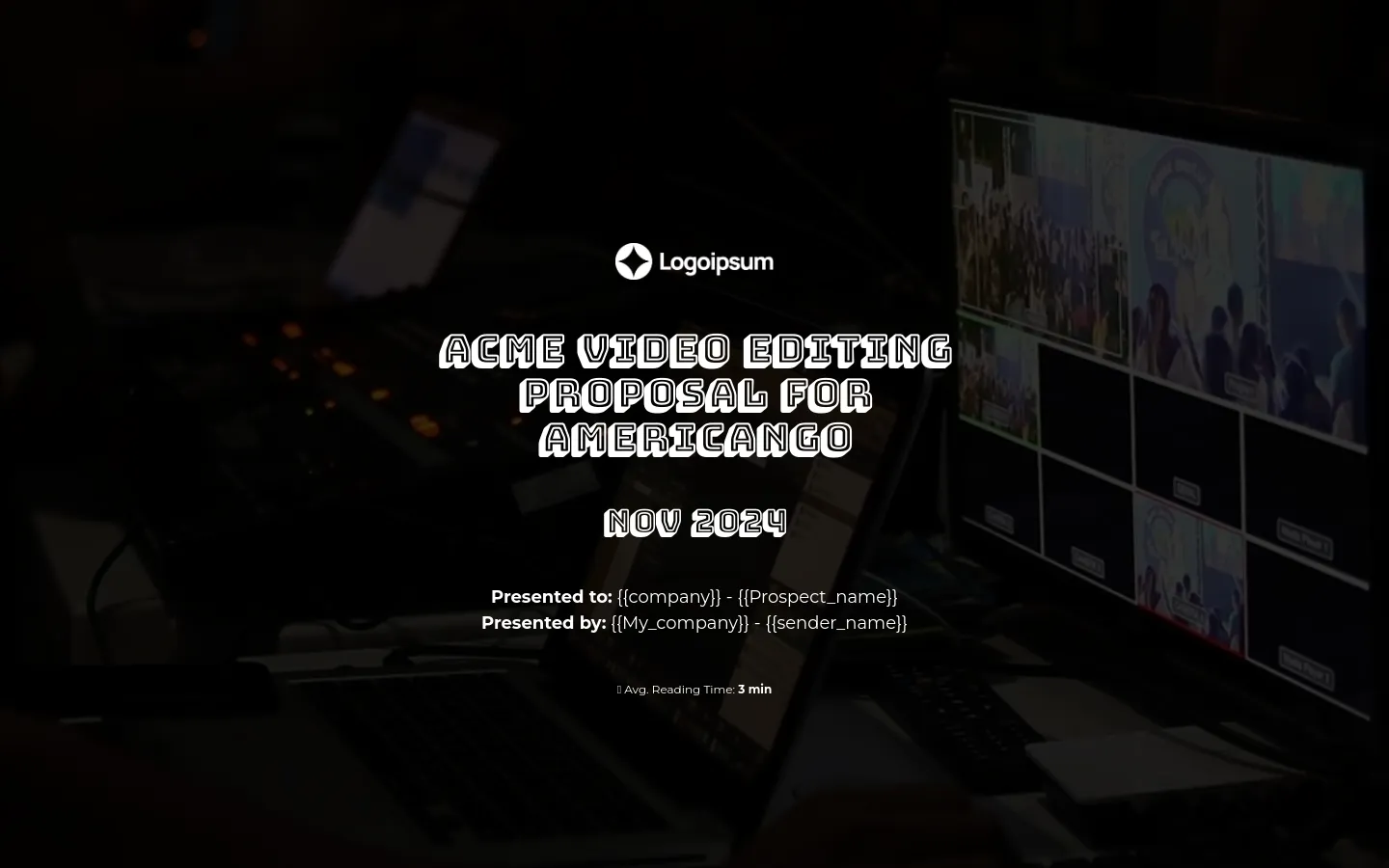
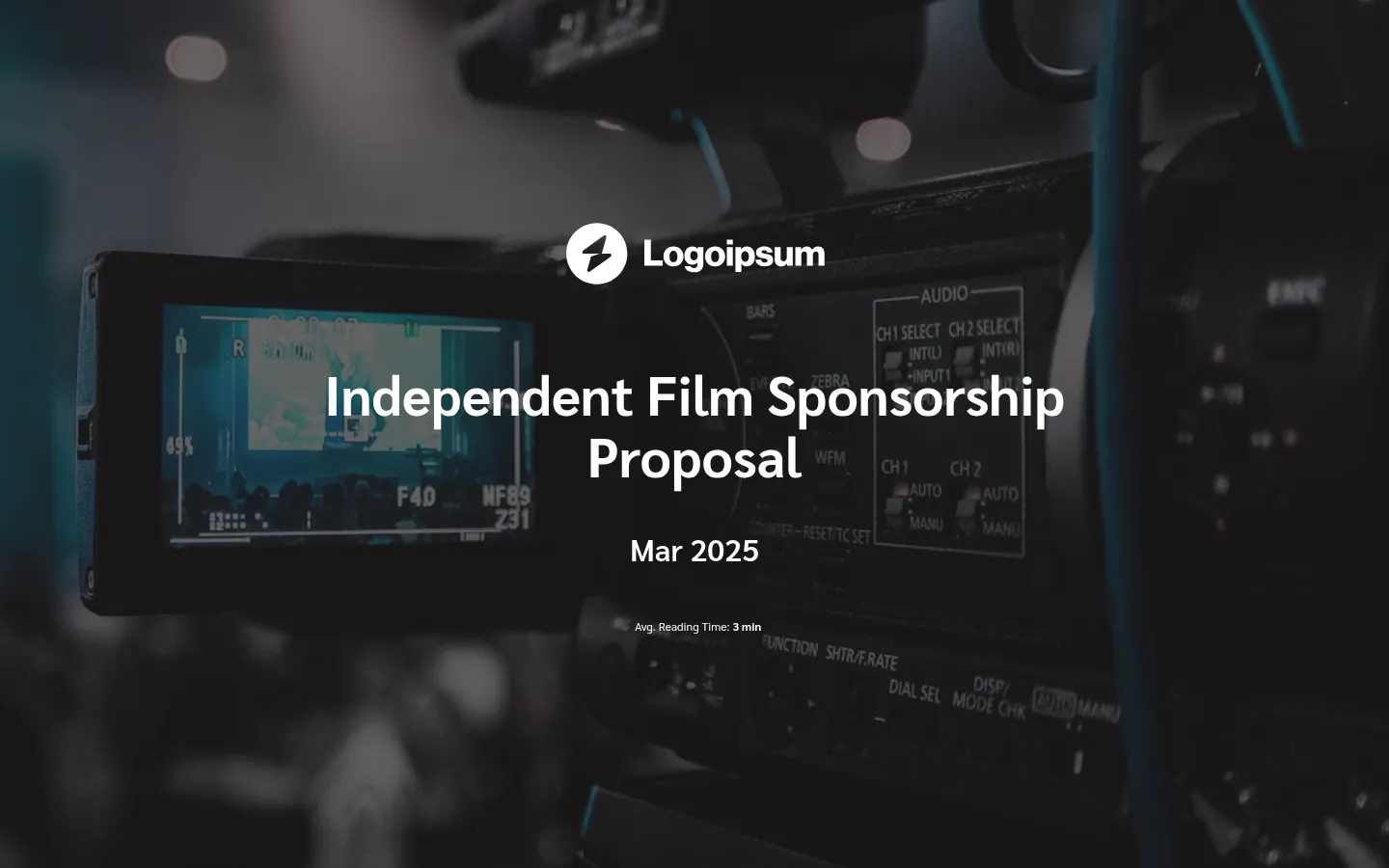
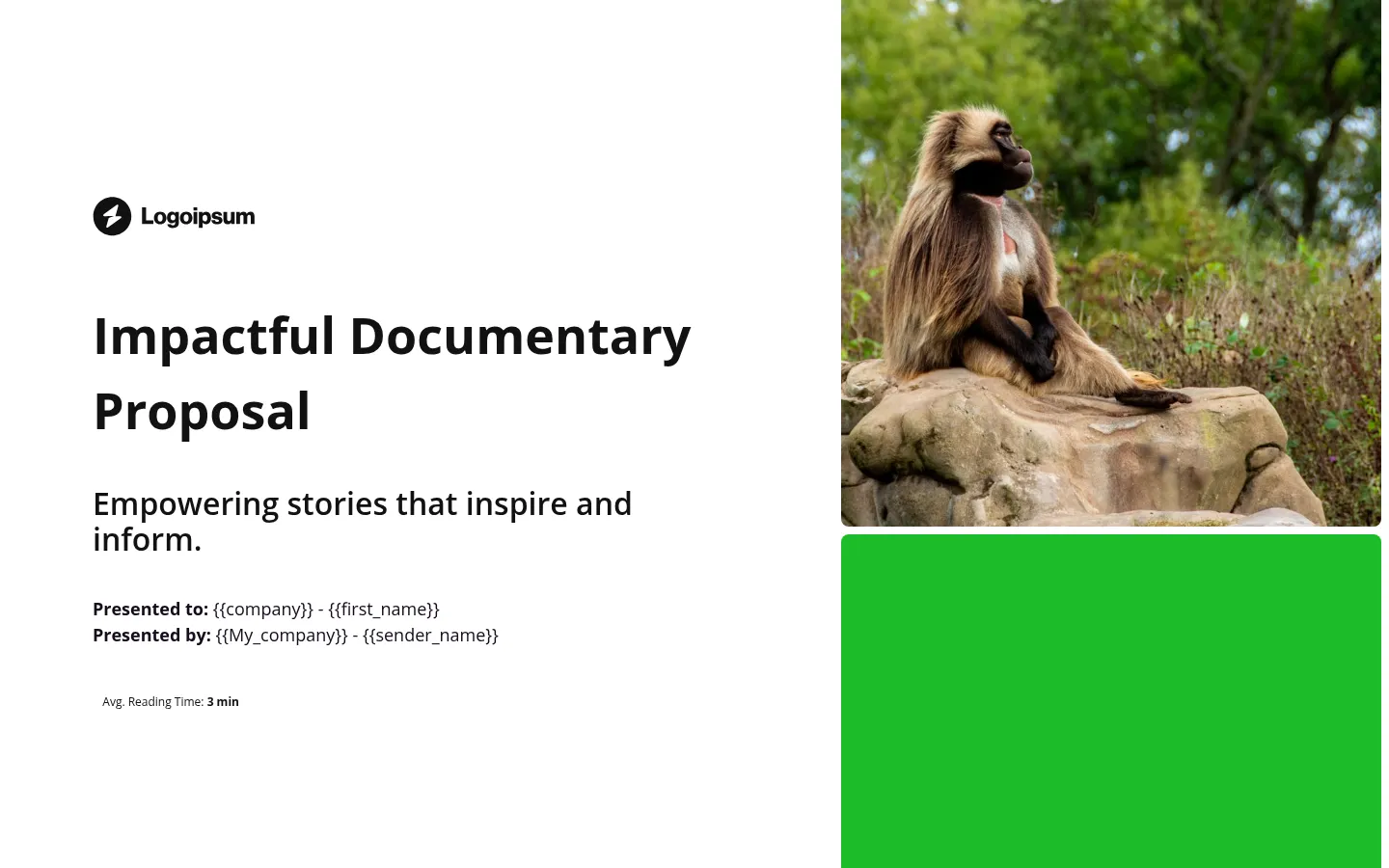
1) Title slide
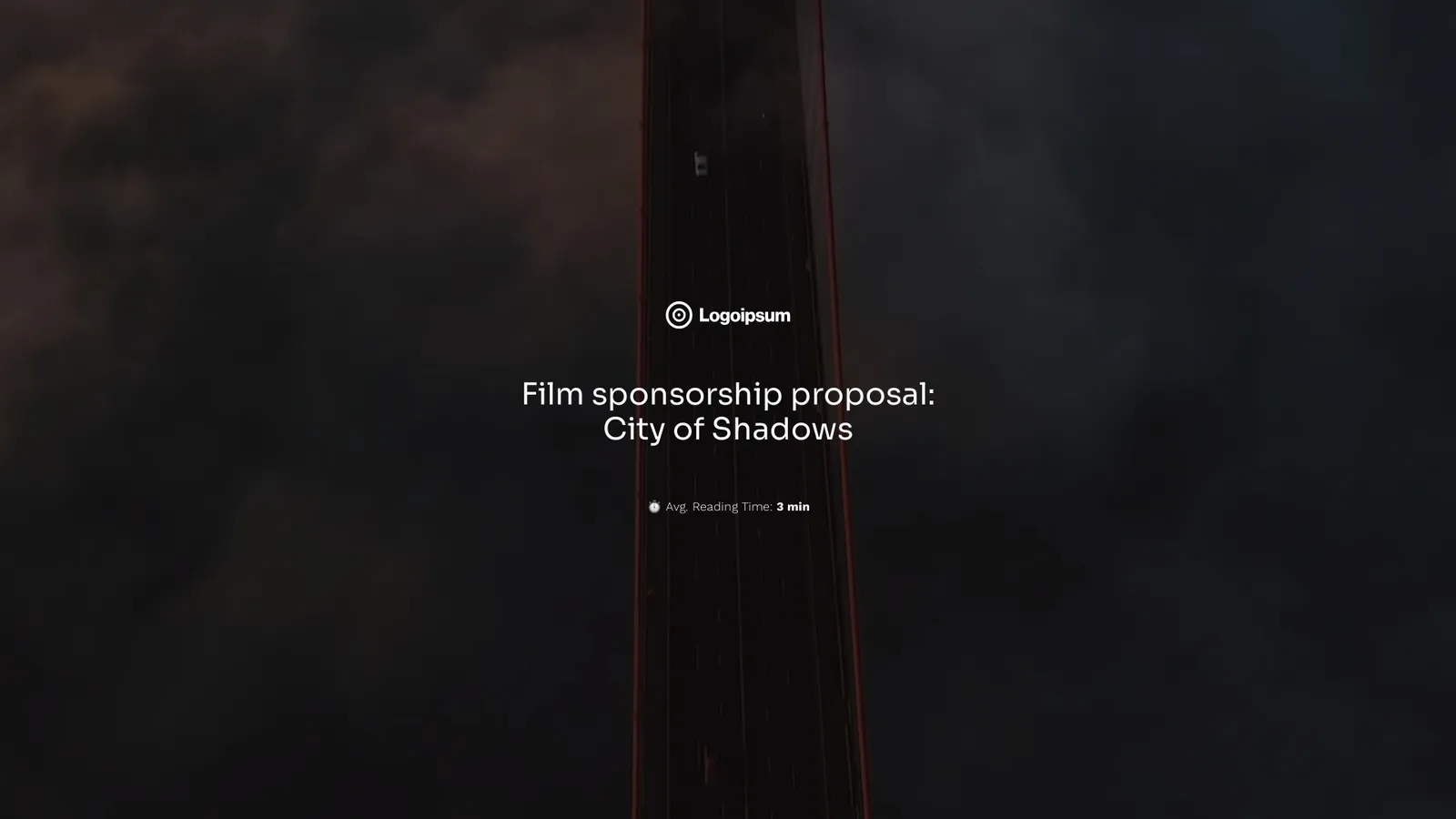
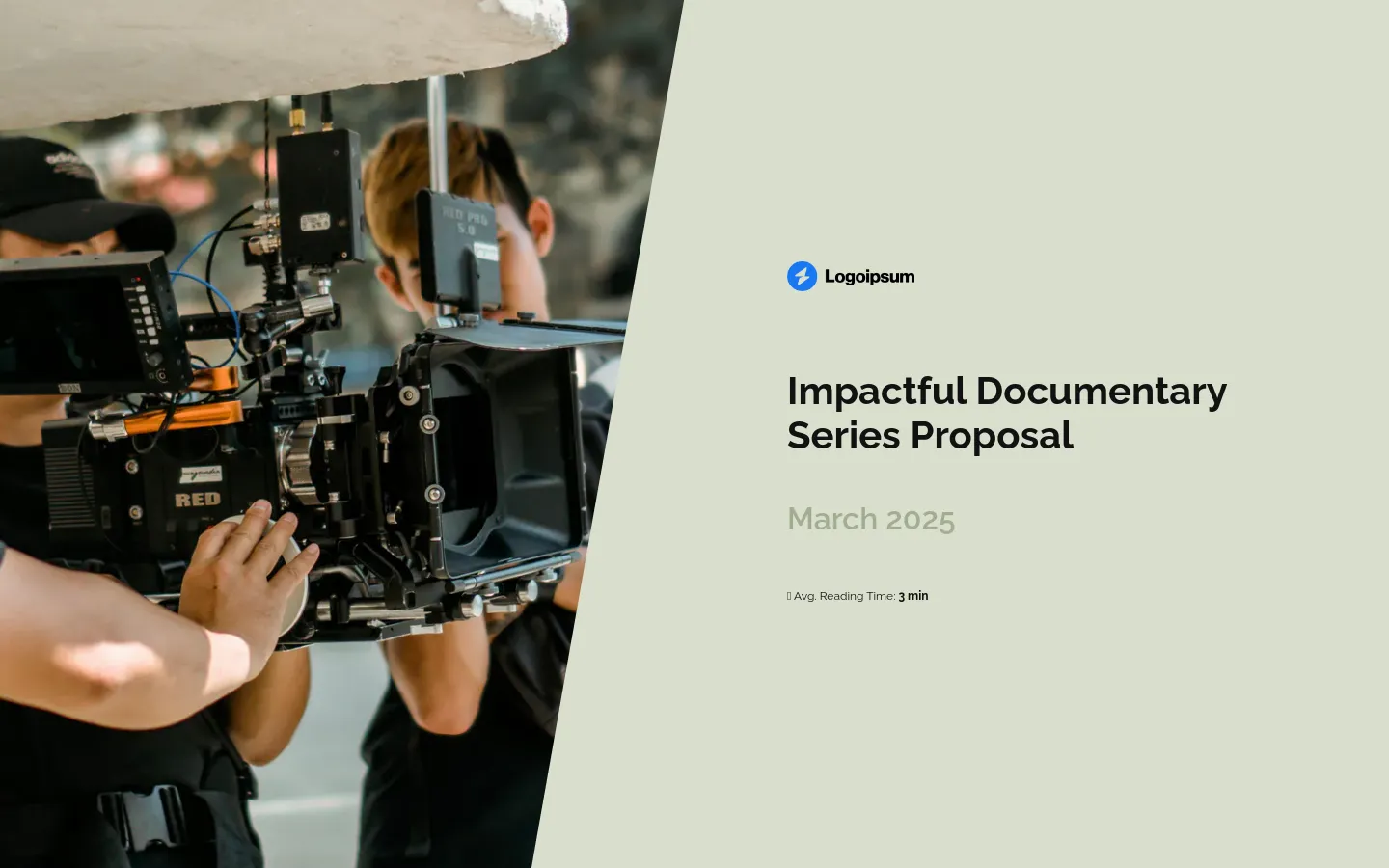
Most decision-makers will judge your proposal in seconds, and the title slide is where they decide whether to keep reading.
A strong title and an eye-catching visual can instantly grab their attention. If possible, include a short video teaser – adding video can increase engagement by 32%, keep investors reading 37% longer, and boost conversions by 17%.
The goal is to create instant intrigue while making it immediately clear what your film is about.
- Film title: Keep it bold, clear, and easy to remember.
- Striking visual: Use a high-quality image or poster-style design that reflects your film’s tone.
- Video teaser (if available): A 15-30 second clip can instantly engage your audience.
- Your name & role: Include the director, writer, or production company to establish credibility.
2) Logline
Your logline is the single most important sentence in your film proposal – it’s the hook that makes decision-makers want to know more.
A great logline introduces the unique setting, protagonist, and central conflict in a single, intriguing sentence. It should be clear, compelling, and leave the reader wanting to see how the story unfolds.
If your logline falls flat, the rest of your proposal may never get read.
- Keep it under 30 words: The best loglines are short and punchy.
- Introduce the protagonist: Make them specific and memorable (e.g., “A washed-up detective…,” “A teenage hacker…”).
- Define the conflict: What’s at stake? What’s the major struggle?
- Set the world: If your setting is unique, include it concisely.
- Make it intriguing: It should raise a question or hint at an unexpected turn.
3) Executive summary
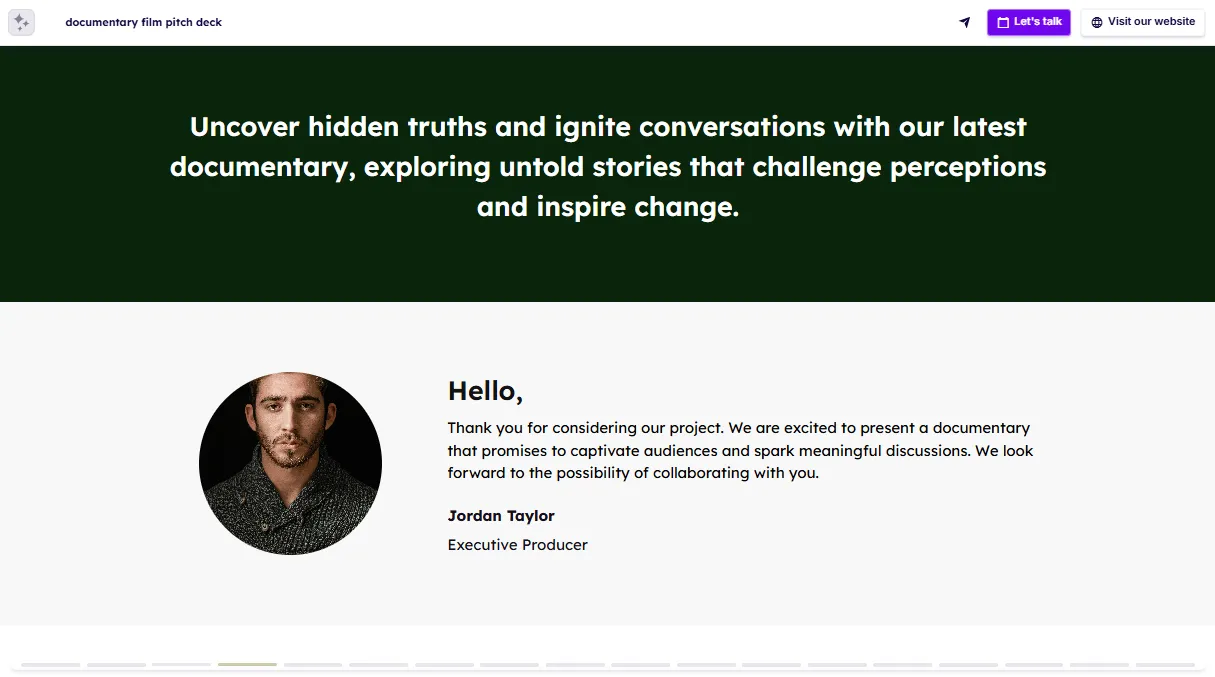
A strong executive summary gives decision-makers a snapshot of your film in seconds.
Before diving into the details, consider adding a personal note from the director – a short paragraph that shares the vision, creative inspiration, or the journey behind the film.
This adds emotional weight and makes your proposal feel more personal and passionate rather than just another project on their desk.
The executive summary itself is all about clarity. It should present the key facts at a glance – things like format, genre, estimated budget, and production timeline.
Investors and producers don’t have time to dig through details right away, so this section should make it easy for them to assess the project’s viability.
- Film format: Is it a feature film, documentary, short film, or series?
- Genre: Drama, thriller, sci-fi, comedy – clarity is key.
- Estimated budget & funding status: Even a rough figure helps investors gauge scope.
- Production timeline: When will filming start? Any key milestones?
4) Synopsis
The synopsis gives a brief narrative overview of the film, outlining the plot, key characters, and emotional journey.
Think of the logline as a movie trailer in text form, while the synopsis is the back-cover blurb that draws people into your story’s world.
A strong synopsis should be concise yet immersive, capturing the essence of your film without bogging down in unnecessary details.
You’re not writing a scene-by-scene breakdown – just enough to make decision-makers feel the tension, stakes, and emotional weight of the story.
- Keep it under 300 words: It should be short enough to hold attention but long enough to convey the core narrative.
- Introduce the protagonist and their goal: Who are we following, and what do they want?
- Establish the central conflict: What obstacle stands in their way?
- Highlight the emotional journey: How does the protagonist evolve through the story?
- Give a sense of resolution (without spoilers if possible): Where does the story take us by the end?
5) Moodboard
A moodboard is where your film’s visual identity starts to take shape. It sets the tone through colour palettes, lighting, cinematography, and reference images that capture the look and feel of your story.
It’s a great way to help decision-makers picture your film before a single frame is shot.
Even quick sketches, mood boards, or stills from other films can go a long way in helping your readers instantly understand the vibe and visual style you’re aiming for.
- Visual inspiration: Reference films, photography, paintings, or any design elements that shape the look of your film.
- Colour palette: The dominant tones that set the mood – warm and nostalgic, cold and dystopian, bold and surreal.
- Set & prop design: The world your characters live in, whether it’s raw and realistic or completely stylized.
- Lighting style: Moody noir shadows or soft golden-hour glow? The way you use light makes a huge difference.
- Camera work & framing: Will you go for precise, wide shots like Kubrick or fast, handheld camerawork for an intense feel?
- Sound & score influences: Will the music be subtle and atmospheric, big and cinematic, or stripped-back and raw?
- Pacing & movement: Will the story unfold slowly with simmering tension, or will it keep the audience on edge with fast, high-energy scenes?
6) Main characters
Characters are the heart of your film. Investors and producers don’t just want a gripping story – they’re looking for characters they genuinely care about, who feel real, layered, and relatable.
When introducing your characters, don’t just list surface-level details. Dive into what makes them tick – their motivations, inner conflicts, and how they’ll evolve throughout your film.
That emotional depth is exactly what helps decision-makers connect deeply with your story.
A smart way to make your characters feel even more vivid is by suggesting actors who naturally fit the roles, helping your readers immediately visualise who these characters could become on screen.
- Name, age, and role: Quickly introduce who they are and their role in your story.
- Core motivation: What’s driving this character deep down? What do they want most?
- Conflict & obstacles: What’s stopping them from getting there – inside themselves or out in the world?
- Emotional journey: How do they change or grow throughout your story?
- Casting ideas: Optional, but it really helps readers visualise your character. Who could you realistically imagine playing this role? However, rather than choosing huge names like Meryl Streep or Leonardo DiCaprio (unless you’ve truly got a shot), focus on talented, up-and-coming actors whose profiles match the size and ambition of your film.
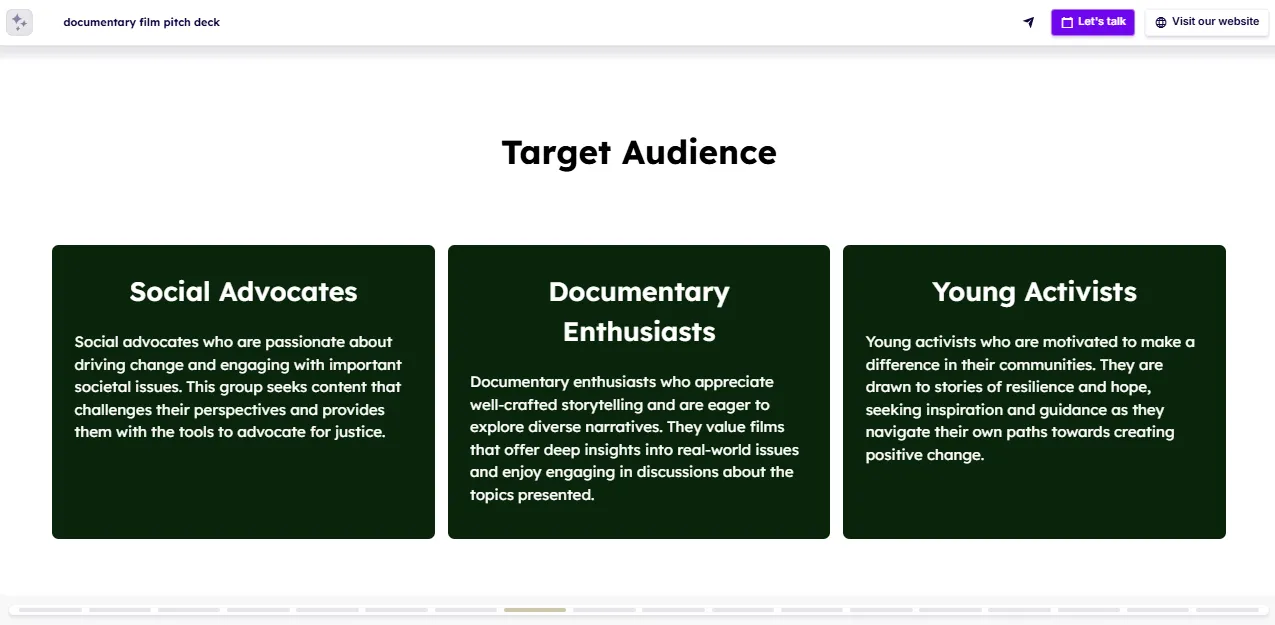
7) Target audience
Investors, distributors, and producers need proof that your film has an audience before they commit. A well-defined target audience helps them gauge financial risk, marketing strategy, and distribution potential.
Instead of just saying, “This film is for horror fans,” show them that “Psychological horror films with slow-burn suspense have surged in popularity, with films like Hereditary and The Witch proving their marketability.”
If you can convince decision-makers that your film has a clear audience ready to engage, you’re giving them a reason to believe in its success.
- Demographics: Who do you picture watching your film? Think about things like age, gender, where they live, and anything else that affects how they choose what to watch.
- Psychographics: What gets your audience excited? What sort of stories, themes, or genres do they genuinely connect with? Are they fans of tense thrillers, quirky indie films, or feel-good rom-coms?
- Similar films & their audiences: What recent movies attracted the kind of audience you’re after? Did those films find success in cinemas, or did people mostly discover them through streaming platforms or film festivals?
- Viewing habits: How does your audience actually watch films? Are they regular cinema-goers, streaming enthusiasts at home, or the kind of people who hunt down unique festival screenings?
- Market trends: Is your film tapping into something that audiences already care about or a trend that’s gaining popularity right now?
8) Comparable movies
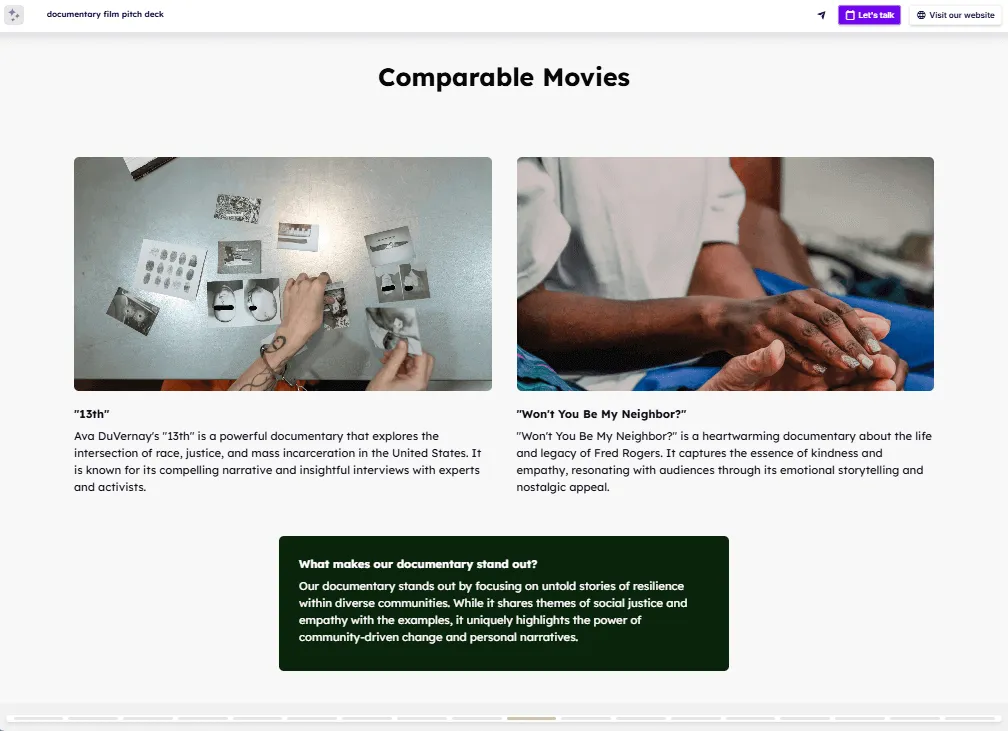
Building on your target audience research, comparable movies de-risk your film for investors – they show that films like yours have found an audience and turned a profit.
But it’s just as important to clarify what makes your film fresh. If decision-makers can see both market potential and originality, they’ll be far more likely to back your project.
- Pick 2-3 relevant films: Choose recent films (preferably from the last 5-10 years) that share key elements with yours – genre, tone, audience, or themes.
- Include performance data: If possible, mention box office numbers, streaming success, or festival wins to prove market demand.
- Highlight similarities and differences: Show how your film taps into the same appeal while offering a fresh perspective.
9) Production timeline
Decision-makers need to know when and how your film will come to life. A production timeline outlines the key stages of development, showing that your project is well-planned and realistic.
It also reassures investors and producers that you understand the logistical side of filmmaking – not just the creative vision.
Be specific but realistic – unexpected delays are common in filmmaking, so your timeline should allow for flexibility.
If your timeline feels chaotic or vague, it raises red flags about whether your film will ever make it past development.
10) Production plan and details
The production plan outlines the logistics of making your film a reality – how long the shoot will take, where it will be filmed, and the size of the cast and crew.
Decision-makers need to see that you’ve mapped out the practical aspects of production and that your plan aligns with the budget and timeline.
This section can be divided into two slides – one focusing on the high-level production plan and another diving into specific details like locations, equipment, and crew.
11) Distribution strategy
A great film means nothing if no one sees it.
A strong distribution strategy makes your film a safer bet for investors and producers. They don’t just want to know how it’ll be made – they want to know how it’ll make money.
If you can clearly show how your film will reach its audience, decision-makers are far more likely to take it seriously.
- Primary distribution channels: Will this be a theatrical release, a streaming deal (Netflix, Amazon, etc.), VOD (iTunes, Google Play), or festival-driven distribution?
- Festival strategy: Are you targeting major festivals (Cannes, Sundance, TIFF) for exposure and potential sales? Or focusing on niche festivals tailored to your genre?
- Theatrical vs. digital balance: If aiming for a theatrical release, how wide will it be? If streaming, what platforms fit your audience best?
- International distribution: Does your film have global appeal? Are there specific regions where it’s more likely to succeed?
- Marketing & promotional plan: How will you build awareness? This could include social media campaigns, press coverage, influencer partnerships, and early teaser releases.
- Target distributors & sales agents: If you already have industry connections or interest from a distributor, mention it here.
12) Budget breakdown
Investors and producers need to see where their money is going, how costs are allocated, and whether the budget aligns with the film’s scale.
A detailed breakdown shows that you’re prepared for the realities of production, including unforeseen expenses that could otherwise derail the project.
- Above-the-line costs: Salaries for key creative personnel – director, producers, lead actors, and screenwriters.
- Below-the-line costs: Crew wages, equipment rentals, set construction, props, wardrobe, hair & makeup, and transportation.
- Post-production expenses: Editing, VFX, color grading, sound mixing, and scoring.
- Marketing & distribution: Festival submissions, promotional campaigns, trailers, and PR.
- Legal & administrative fees: Permits, insurance, union fees, and contracts.
- Contingency fund (typically 10-15% of the total budget): No production goes exactly as planned. Equipment failures, weather delays, reshoots, or talent availability issues can all add costs. A contingency buffer reassures investors that unexpected problems won’t shut down production.
13) Financing strategy
Securing funding is one of the biggest hurdles in filmmaking, and decision-makers want to know how you plan to finance the project and how they’ll get their money back.
This section should clearly outline any funding you’ve already secured, what’s still needed, and your strategy for filling the gap.
It should also show a realistic recoupment plan – how investors will see returns from multiple revenue streams.
- Current funding status: If you’ve already secured partial funding, list the sources (grants, private investors, production company backing, crowdfunding, etc.). If you have commitments pending, mention them.
- Funds still needed: Clearly state how much financing is left to secure and how you plan to raise it.
- Co-production agreements: Partnering with international or regional production companies can help secure additional financing, tax incentives, and distribution opportunities.
- Pre-sales & distribution advances: Have any distributors or streaming platforms shown interest? Pre-selling distribution rights can secure funding before production starts.
- Grants & incentives: If applicable, mention film grants, government incentives, or tax rebates you’re applying for.
- Box office revenue (for theatrical releases)
- Streaming & VOD deals (Netflix, Amazon Prime, Apple TV, etc.)
- International sales (selling distribution rights in different territories)
- TV licensing deals (broadcast networks, cable channels)
- Merchandising & brand partnerships (if applicable)
- Ancillary revenue (special edition DVDs, behind-the-scenes content, soundtrack sales)
14) Film crew
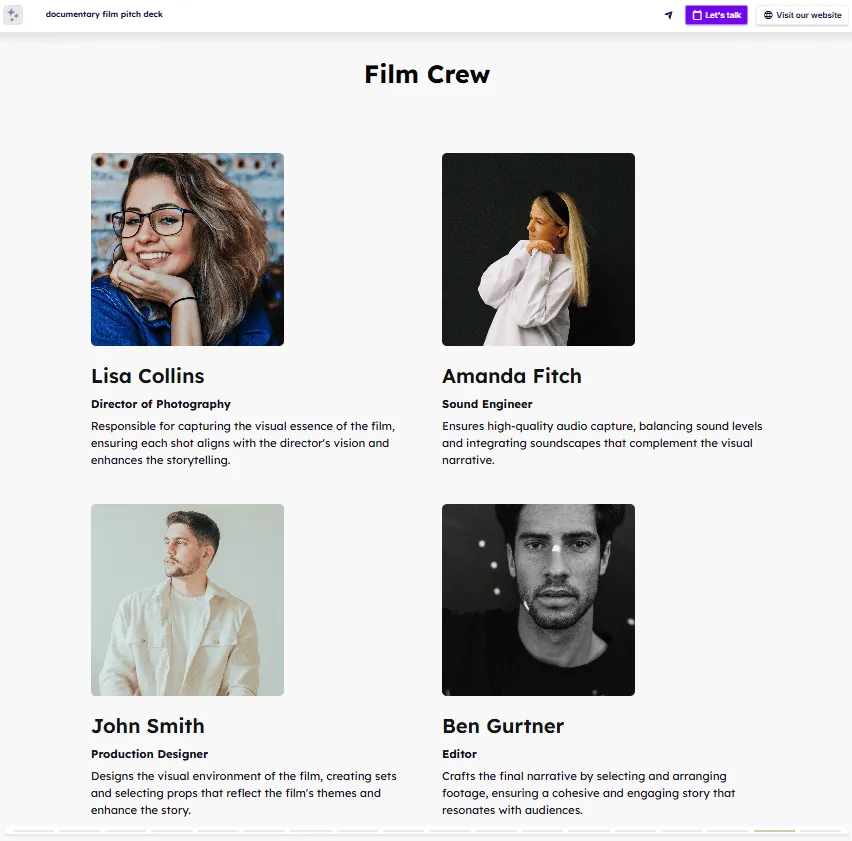
Your film is only as strong as the team behind it. Decision-makers want to know who’s bringing this project to life and whether they have the experience to pull it off.
This section should highlight key crew members, their roles, and their past work to establish credibility.
If you haven’t secured your full team yet, focus on the core leadership – director, producer, cinematographer – and your plan for filling remaining roles.
If your crew includes industry-recognized talent or award-winning professionals, highlight it. If you’re assembling an emerging team, emphasize their fresh perspective and innovative approach.
- Director: Their vision for the film, past projects, and why they’re the right fit.
- Producers: Who’s overseeing production, handling finances, and keeping things on track?
- Cinematographer: How will the film be visually executed? Mention notable past work.
- Editor & post-production team: Key figures in shaping the final product.
- Production designer & art director: If the film has a strong visual identity, emphasize their role.
- Composer & sound designer (if secured): Music and sound are crucial to tone and atmosphere.
15) Next steps slide
The worst thing you can do after presenting your film proposal is leave decision-makers with no clear next step. A vague “Thank you” slide doesn’t move the conversation forward, and simply hoping they’ll reach out isn’t a strategy.
The goal isn’t just to get them to read the deck – it’s to get them to take action.
Clearly outline what you want them to do next and make it as easy as possible. The fewer steps they have to take, the more likely they are to follow through.
- Schedule a follow-up meeting: Embed a calendar link (Calendly, Google Calendar, etc.) for them to book a time.
- Provide direct contact details: Include an email and phone number for immediate discussion.
- Link to social media & website: Give them a way to follow your project, see your portfolio, or engage further.
- Attach a full business plan or financials: If they’re interested in deeper details, make it easy for them to access.

Create your film proposal from a template
Writing a film proposal from scratch is a massive task.
With so many sections to cover, figuring out how to present each one effectively takes time, effort, and trial and error. And even then, there’s no guarantee you’ll get it right.
Instead of starting from zero, use interactive film proposal templates – they’re built around winning structures that have worked for others, removing the guesswork.
All you have to do is plug in your details, and you’ll know you’re putting your best foot forward with a proposal that’s clear, engaging, and designed to impress decision-makers.
Just grab one.