



Writing a Partnership Proposal (Examples & Templates)
Learn to write a proposal for a partnership to land the perfect deal. See business partnership proposal examples and get templates for different use cases.
Set as Preferred Source
How to write a business partnership proposal?
A successful business partnership proposal needs to be clear, valuable for both sides, and structured in a way that makes it easy for potential partners to say “yes.”
In this section, I’ll walk you through what to include and how to structure your proposal to make it impossible to ignore.
What is the best partnership proposal format?
- Title slide
- Cover letter
- Company overview
- Partnership overview
- Target audience
- Key benefits
- Key success metrics
- Partnership details
- Deliverables
- Project timeline
- Financial projections
- Optional: Case studies
- Terms and Conditions
- Contact slide
1) Title slide
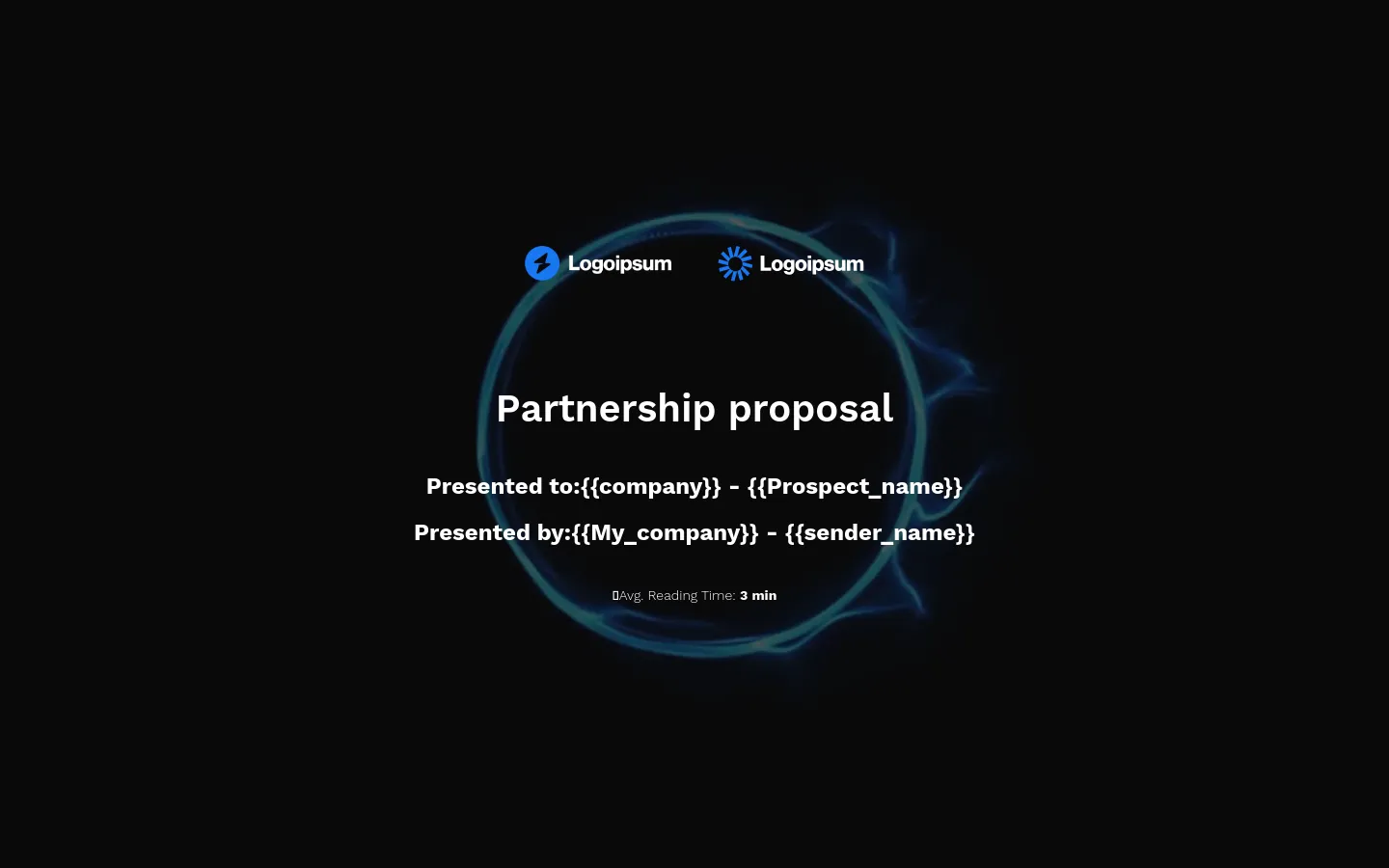
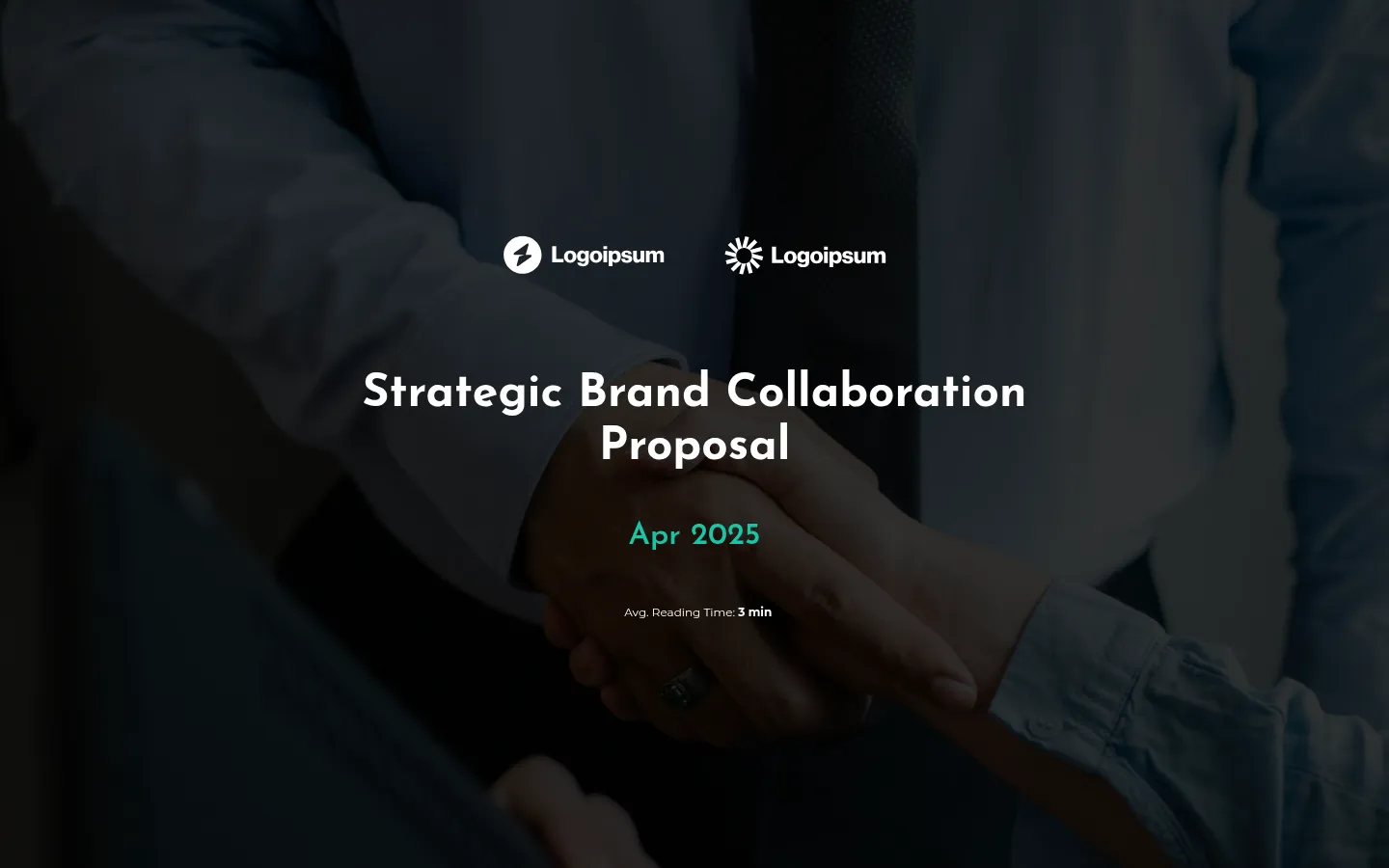
Start your partnership proposal by showing it isn’t just another file in their inbox. Make it personal and collaborative—place both company logos side by side, along with the names and the title of the proposal.
Keep the design sharp and uncluttered; you want it to look professional without feeling stiff. This slide should immediately say, “This is about us working together.”
People make decisions in seconds—don’t waste those moments with something generic. A well-thought-out title slide makes them want to see what’s next.
2) Cover letter
The partnership proposal letter slide is your chance to prove this proposal was made for them—not copy-pasted from a template.
Lose the generic lines like, “We are excited about the opportunity to partner with your esteemed company.” It comes off as bland and forgettable.
Instead, get specific—talk about their challenges or goals and show how this partnership can really help them.
Mention the value both companies bring to the table. If you’ve already had discussions, use this to reinforce why this partnership makes sense now.
Keep it short—if you need more space, tuck details under “read more.” The goal is to make them care, fast. If they’re not hooked here, they may not bother with the rest.
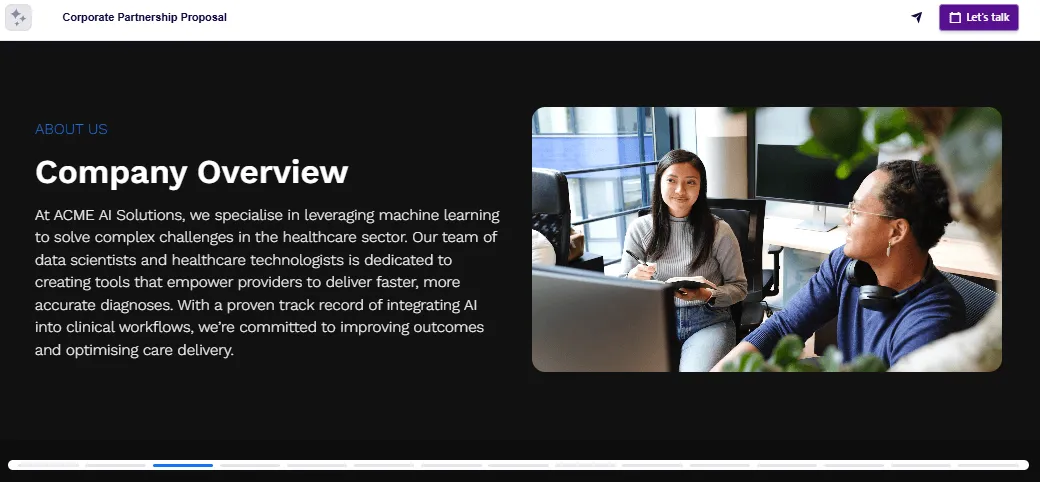
3) Company overview
On the company overview slide, avoid a generic “about us” spiel. Don’t assume they know who you are or expect them to Google you.
Give them a concise, focused snapshot of your business that answers one key question: Why does this partnership make sense?
Highlight what makes you a valuable partner—maybe it’s your infrastructure, your expertise in a specific field, or your ability to complement their operations.
If you share a similar audience or goals, emphasize how working together amplifies impact.
For example, “Our deep expertise in [area] paired with your [strength] creates a clear path to [specific goal].” This isn’t just about you; it’s about why you together is a winning combination.
4) Partnership overview
This is your chance to show you’ve done your homework.
Understanding your prospective partner’s pain points, goals, and challenges lets you present your approach in a way that proves how working together can solve their problems and open up new opportunities.
This also isn’t the place for vague promises or a self-centered pitch—it’s about clearly showing how this partnership benefits both sides.
Make it personal. Reference their vision, values, or recent initiatives to show you understand them. The key here is balance: focus equally on what you bring and how it aligns with what they need.
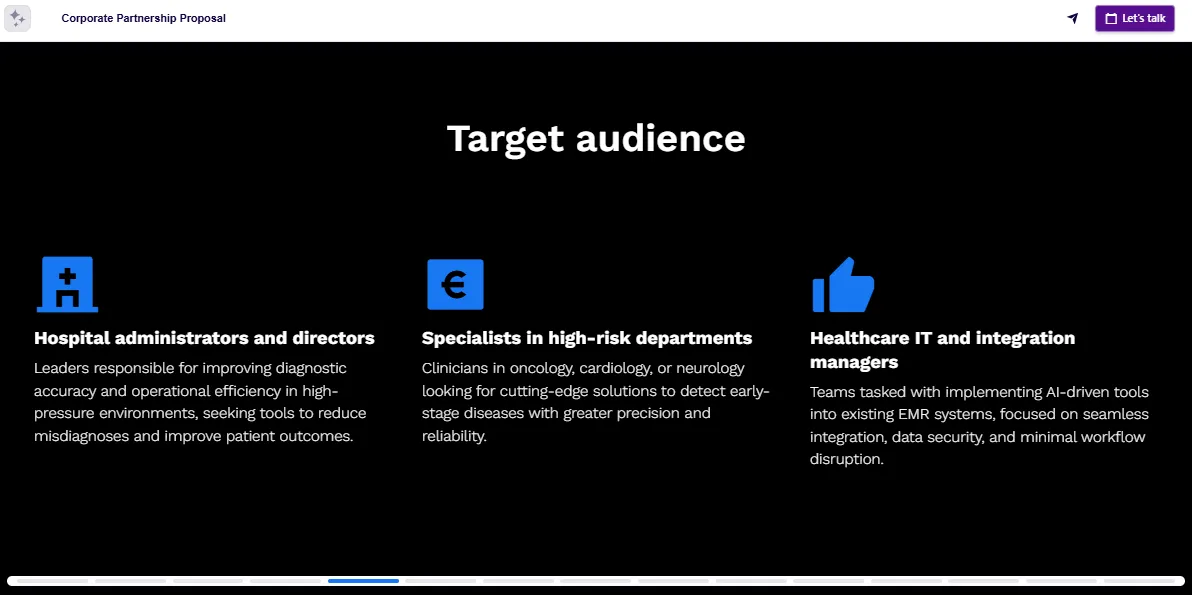
5) Target audience
Next up, prove this partnership has real-world impact. Don’t gloss over the target audience with vague terms like “millennials” or “businesses”—that’s lazy and forgettable.
Be specific and thoughtful. Who are you really trying to help here? Show that you understand the people or companies your partner cares about.
Show where your audiences align or complement each other. If they target SMEs and you focus on B2B solutions, highlight how that fits.
Make it clear how this partnership will make life better for your shared audience—whether it’s through smarter solutions, faster results, or more value.
If possible, use data to reinforce your understanding of the audience. For instance, “80% of your customers identify [X] as a key challenge, which our partnership directly addresses.”
6) Key benefits
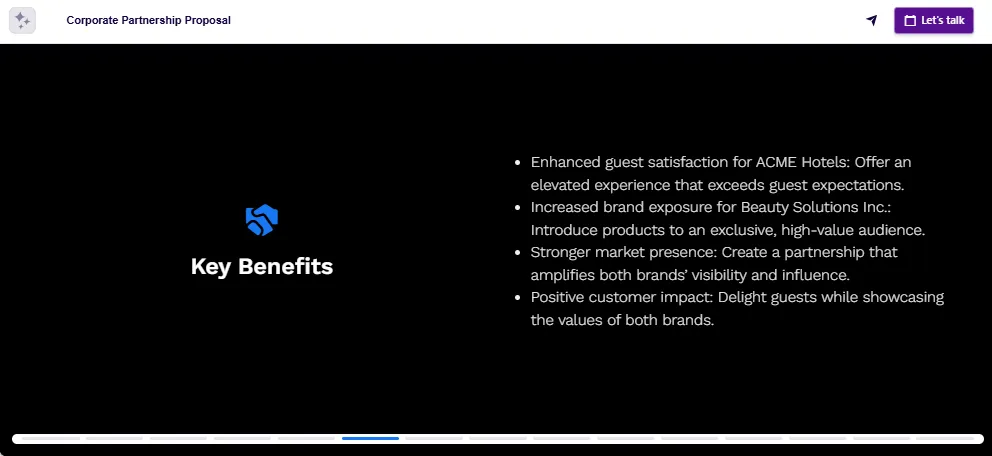
This is one of the most important sections of your partnership proposal—it’s your chance to show why this collaboration is a win for both sides.
First things first: this isn’t about bragging rights. If you’re only talking about how amazing your company is, you’re missing the point.
Decision-makers want to know what’s in it for them: expanded market reach, faster innovation, cost savings, or access to resources they currently lack. If you don’t tie the benefits back to their goals or pain points, it’ll feel one-sided.
Stick to realistic, tangible benefits. If you exaggerate or promise the moon, you’ll lose credibility.
7) Key success metrics
After you present the benefits, decision-makers need to see the numbers that back them up. This section is all about measurable results—specific goals your partnership can deliver.
Forget fluffy metrics like “better engagement.” Instead, tie your measurements directly to their objectives. For example, a 15% increase in sales, 30% faster product development, or 20K new customers acquired.
These metrics make your proposal concrete and actionable. They show you’re not just throwing around vague ideas but have a clear plan for tracking success.
And don’t go overboard. Too many metrics can confuse things. Stick to the ones that matter most to your partner. Ultimately, this section is about building confidence—they’ll know exactly what to expect if they say “yes.”
8) Partnership details
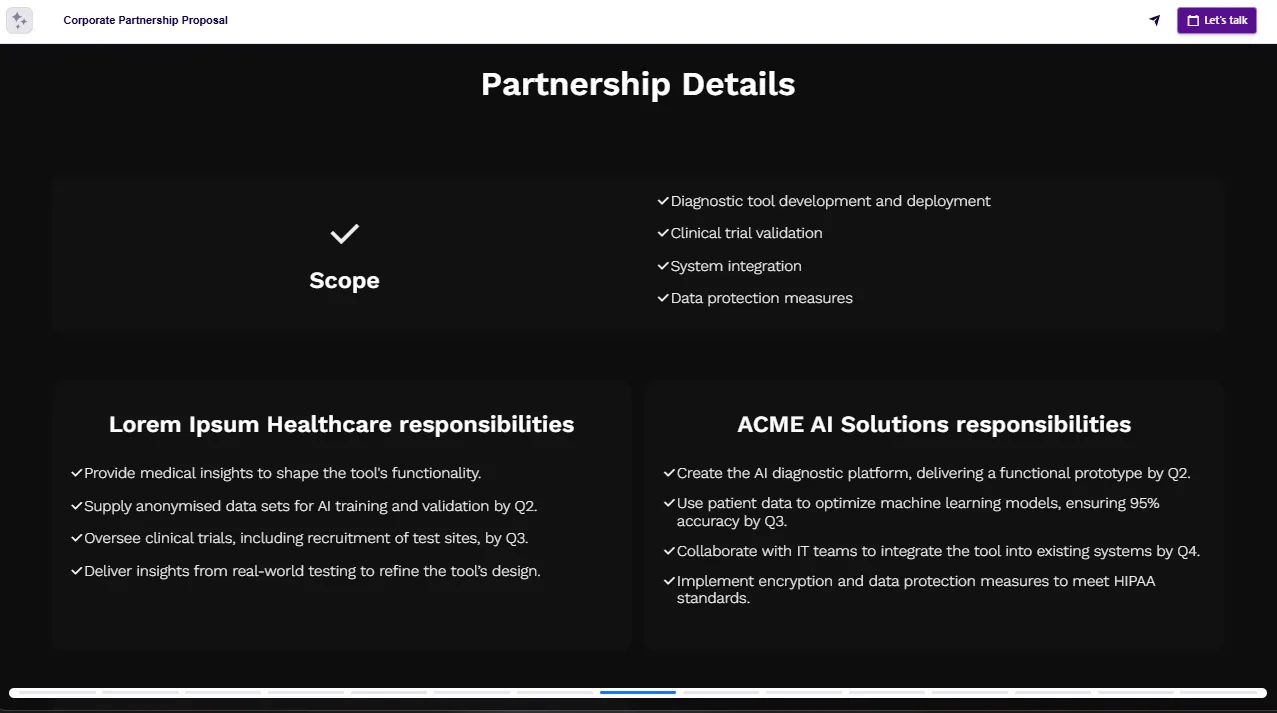
Vagueness kills partnerships. Lay out exactly what this collaboration involves: Are you co-developing a product? Sharing resources? Entering a new market together?
Avoid overly broad statements like “improving innovation”—be specific about the scope and each side’s contributions.
Align responsibilities with each party’s strengths. For instance, if you excel at R&D and they have a killer sales team, leverage that division of expertise.
If there’s overlap in roles or responsibilities, clarify how you’ll handle it. For instance: “Both teams will collaborate on market research, with weekly syncs to ensure alignment.”
Remember that partnerships are dynamic. Build in room for adjustments as you learn and grow together, but start with a solid foundation of agreed-upon roles.
9) Deliverables
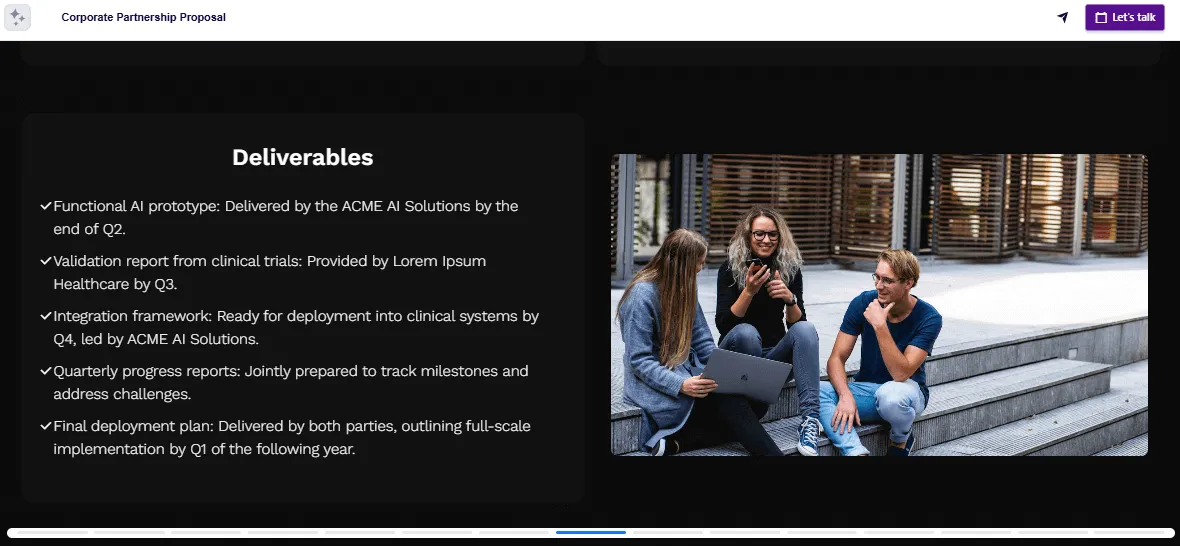
Ambiguity leads to misunderstandings. Define each deliverable clearly—what it is and when it’s due.
For example, instead of “develop the product,” say “create a fully functional prototype by [date], including X, Y, and Z features.”
And don’t make people work harder than they need to. Tables, timelines, or charts can make this slide easier to digest.
If your deliverables aren’t crystal clear and actionable, you risk leaving your partner wondering if you’ve really thought this through.
10) Project timeline
The project timeline slide shows you’ve thought beyond the “big idea” and into execution. It helps your partner see exactly what’s happening, when, and how it all fits together.
This isn’t a day-by-day project plan, but it shouldn’t be so vague it’s meaningless.
Highlight major milestones and phases of the partnership—things like product development, testing, launch, and evaluation. Use dates or clear timeframes like “Q1 2026” to set expectations.
Make sure to reflect both sides’ contributions. For example, “Our team will deliver a working prototype by Q2, and your team will provide user feedback by Q3.”
11) Financial projections
Not every collaboration needs financial projections. If your partnership is focused on knowledge-sharing, innovation, or joint development without immediate revenue ties, you can skip this slide.
However, if the partnership involves cost-sharing or profit-sharing, this is where you clarify the numbers.
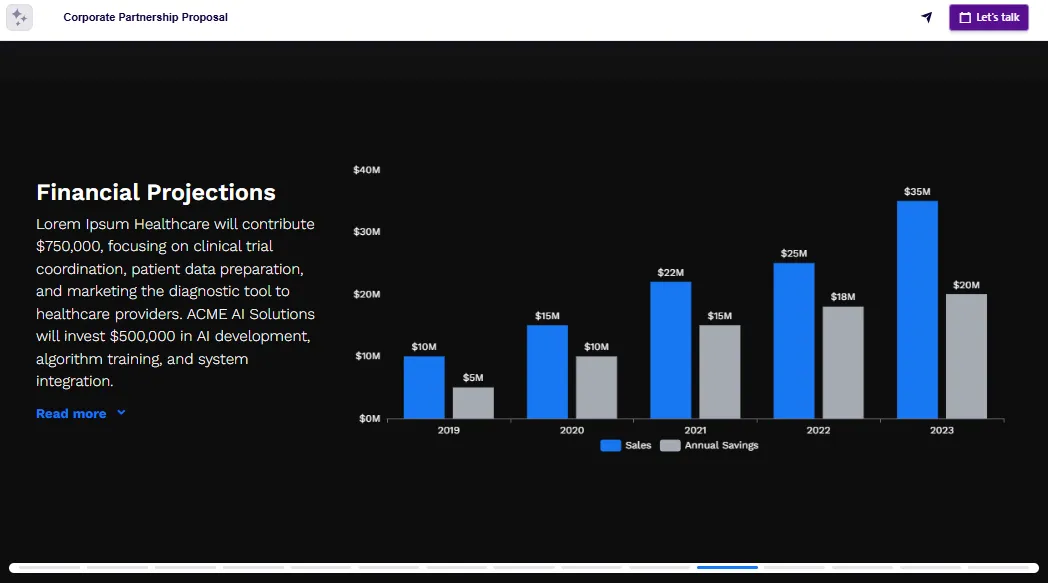
If both parties are putting in money, outline exactly who contributes what. For example, “Your team will cover $100,000 for production, and we’ll invest $50,000 in marketing and distribution.”
Financial projections should clearly communicate ROI. For instance: “We estimate $500,000 in joint revenue within the first year, with profits split 60/40 in line with initial investments.”
Don’t inflate the numbers to make the proposal look better. Overly optimistic projections can damage your credibility and the partnership if expectations aren’t met. Use realistic, data-backed figures.
12) Optional: Case studies
The case studies slide is optional but incredibly valuable if you’ve partnered with other companies before. It’s your chance to show you can deliver without coming across as overly boastful—let the results and partnerships speak for themselves.
Include case studies that align with the type of partnership you’re proposing. Highlight collaborations that demonstrate success in similar industries, challenges, or goals.
Show clear outcomes, like increased revenue, reduced costs, or successful product launches. For example: “Partnered with [Company] to co-develop [Product], resulting in a 35% market share increase within a year.”
Stick to a couple of key examples and present them visually with graphs, before-and-after stats, or quick quotes from previous partners. This keeps it engaging without overloading your audience.
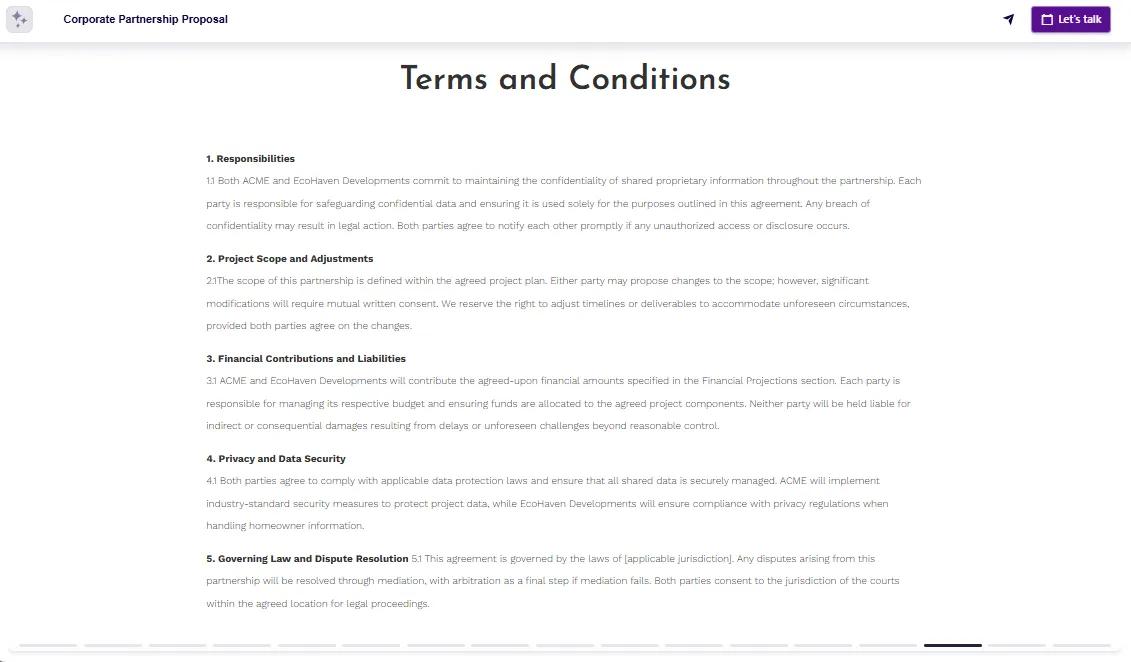
13) Terms and Conditions
The terms and conditions slide is where you set the stage for a fair and clear partnership. Keep it simple—lay out the key points of your agreement without drowning anyone in legal jargon.
- If you’re co-developing a product, spell out how intellectual property (IP) will be managed.
- If money is involved, outline how costs and profits will be divided.
- If the partnership involves exclusivity—such as not partnering with competitors during the project—include those terms.
- Include any essential legal safeguards, like confidentiality, liability limits, or termination terms.
If you want this deck to double as a contract, make life easier for everyone by including a legally binding e-signature. This eliminates the back-and-forth with printing and scanning documents.
14) Contact slide
Instead of slapping a generic “Thank you” slide right at the end of your partnership proposal, guide potential partners on what happens next.
If this isn’t a binding contract, spell out exactly what you need from them: “Review the proposal and provide feedback by [date],” or “Let’s schedule a follow-up to finalize details.”
The more actionable it is, the easier it will be for them to take the next step.
And don’t make them hunt for your details. Include your contact info—email, phone, whatever works—or better yet, embed a calendar link to book a meeting instantly.
Partnership proposal examples that catch the eye of top partners
Now that you’ve nailed down how to create your proposal slide by slide, it’s time to see these principles in action.
In this section, we’ll explore examples of business partnership proposals across different industries, showing exactly how to make your pitch stand out and win over top partners.
Co-development business partnership proposal
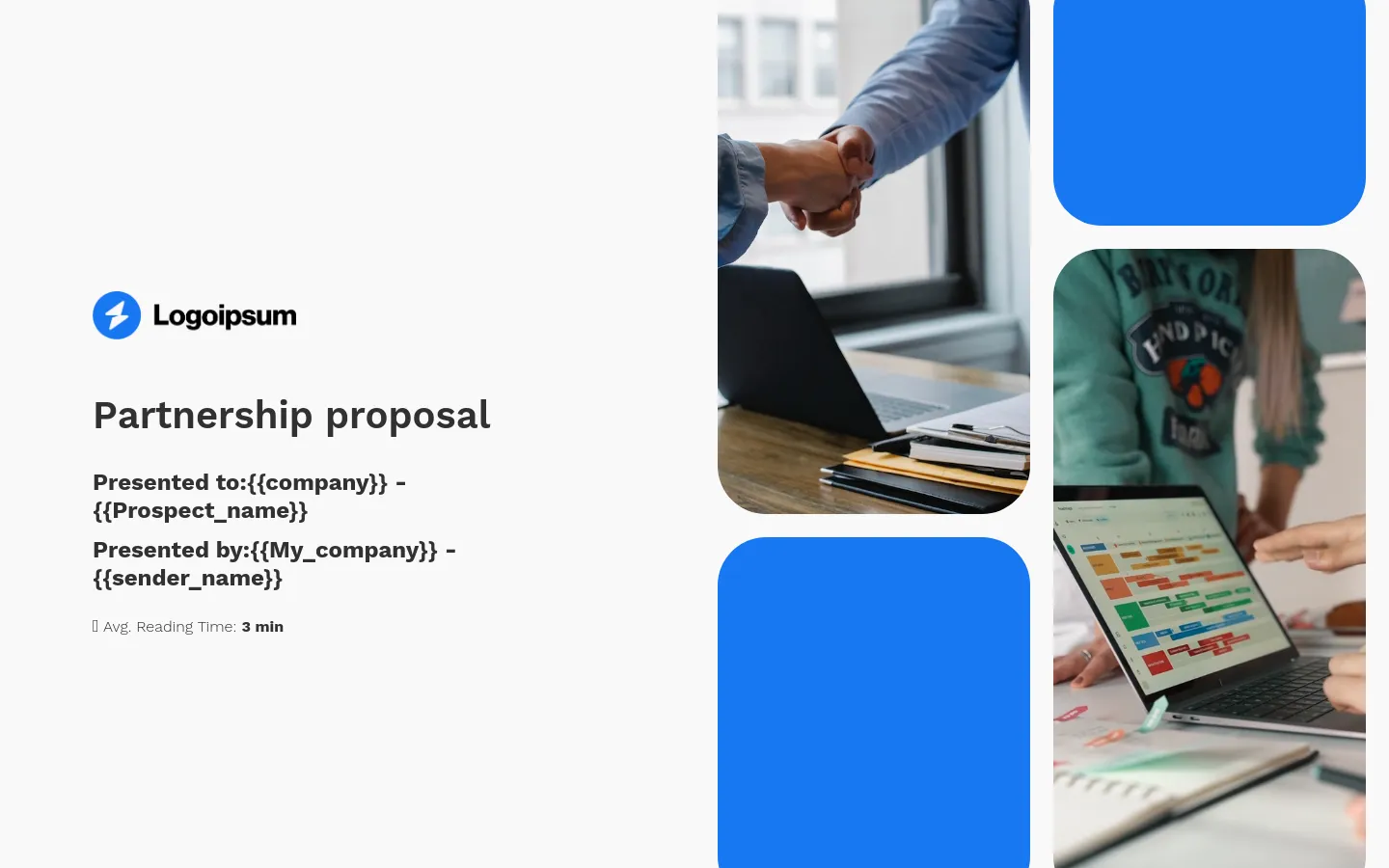
I love how this co-development partnership proposal starts off with a personal touch—two logos side by side and tags to fill in your name, your recipient’s name, and both companies’ details. It’s such a great way to set the tone for collaboration.
The responsibilities and benefits for each side are laid out so clearly, making it easy to see exactly who’s doing what and what’s in it for everyone.
If you want to make it complete, just add a terms and conditions slide to tie everything together.
Scroll to preview
Real estate business partnership proposal
What really stands out in this real estate partnership proposal is how it nails the financial projections—clear, realistic, and easy to follow.
It also does a fantastic job explaining why this partnership is a win-win, breaking down the benefits for both sides without overcomplicating things.
The terms and conditions slide is a real highlight too, covering all the nitty-gritty details of construction projects.
If I could tweak one thing, I’d add a portfolio link or visuals from past projects to really show off what’s possible.
Scroll to preview
Business partnership proposal for a tech company
What I really appreciate about this business partnership proposal is how it strikes the perfect balance between text and numbers. In industries as complex as tech and finance, that’s no small feat.
It doesn’t overwhelm you with every detail either—extra content is neatly tucked away under “read more” buttons or in grayed-out sections, keeping your attention exactly where it needs to be.
It’s clean, focused, and so easy to follow—exactly what a proposal like this should be.
Scroll to preview
Joint venture business partnership proposal
What’s great about this partnership proposal is its flexibility—you can make it as complex or as straightforward as you need.
The legally binding e-signature option is perfect for sealing the deal in those final stages of negotiations.
But if you’re not quite there yet, you can skip that and stick with the next steps slide, which lays out exactly what you want the partner to do.
The embedded calendar at the end is one of my favorite features. It’s such a smart way to make connecting as seamless as possible.
Scroll to preview
Business tie up proposal
What I like about this business tie up proposal is that it covers all the essentials—a clear overview, mutual benefits, and success metrics that make it easy to understand the value for both sides.
If the focus of the collaboration is more cost-driven, adding a detailed breakdown of expenses associated with the partnership could make it even stronger.
Alternatively, including a risk mitigation plan would be a smart addition to address potential challenges like delivery delays or seasonal bottlenecks.
It’s a solid starting point that can be tailored to the specifics of the partnership.
Scroll to preview
Fashion partnership proposal
This partnership proposal between a fashion design company and a sustainable textile manufacturer is such an inspiring use case—especially for anyone passionate about fashion, like me!
I loved the embedded links to case studies, which free up valuable space in the deck while still providing all the context you need.
The target audience analysis is spot-on, clearly identifying who this collaboration is speaking to.
The only thing I’d add is more visuals—fashion is such a visually driven industry, and adding mood boards, fabric samples, or concept sketches would take this proposal to the next level.

Scroll to preview
Partnership and collaboration proposal templates
Most decks out there apply a cookie-cutter format that doesn’t adapt to your partner’s specific needs—a fast track to the rejection pile. Creating one that actually stands out and resonates often takes hours you don’t have.
Interactive partnership proposal templates solve this by following a structure designed for deeper collaborations like joint ventures or product co-development.
You just plug in your information, personalize it where needed, and know it’s built to work.
Just grab one.