




















Standout SaaS Pitch Deck Examples (& How to Build One)
Discover successful SaaS pitch deck examples usable as templates. Learn what slides to include in a SaaS pitch deck and how to build one from scratch.
Set as Preferred Source
Investors typically spend just 10-20 seconds reviewing each pitch deck. If yours doesn’t grab their attention immediately with the right details, they’ll quickly move on to the next one.
Considering how many pitches they get on a daily basis, investors can afford to be picky.
But there’s good news—you can make your pitch deck stand out. We’ve analyzed over 100,000 presentation sessions to figure out what really works.
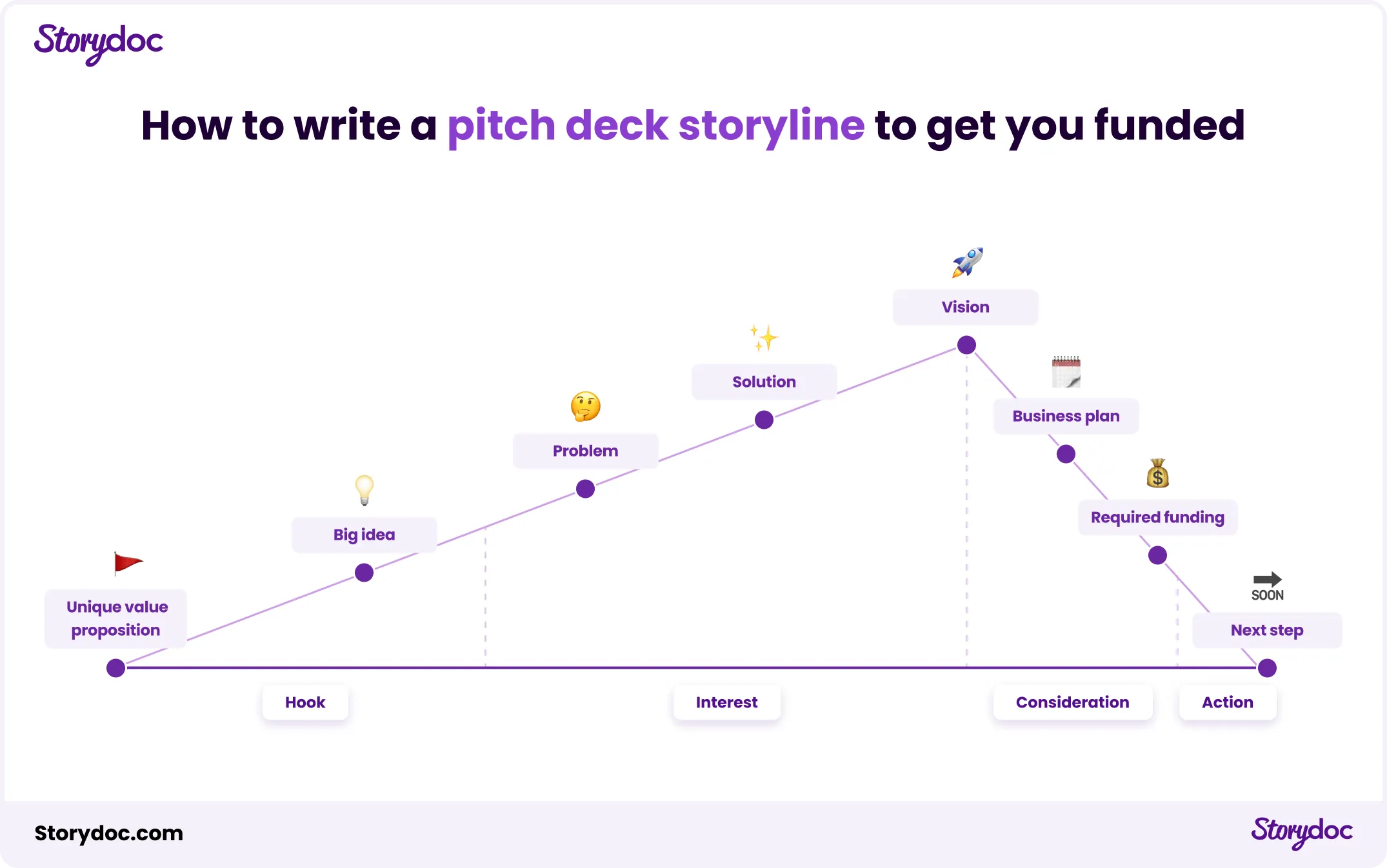
What did we find? A successful pitch deck includes 12 crucial slides. Keep reading for a detailed guide on how to create a pitch deck that catches the eye and secures funding.
What to include in a SaaS pitch deck?
- Title slide (Visual hook): Open with a compelling visual and your company name to grab attention immediately.
- Introduction (Unique Value Proposition): Clearly articulate what sets your product apart right from the start.
- Problem (Audience pain points): Describe the issues your potential customers are experiencing, emphasizing the gap your product fills.
- Solution (Unique offering): Highlight the unique aspects of your product that solve these problems better than anyone else’s.
- Market size and opportunity: Discuss the current market size and growth potential, explaining why now is the perfect time to launch.
- Business and revenue model (How you’ll make money): Describe how your business will generate revenue and the expected financial growth over time.
- Traction and validation (Proof it works): Show off any milestones, user feedback, or metrics that validate your product’s market fit and demand.
- Marketing/Growth strategy: Lay out your plan for attracting and retaining customers, detailing both digital and traditional marketing tactics. Work with a go-to market strategist if necessary.
- Team: Highlight the skills and past achievements of your team members that make them ideal to drive this project forward.
- Financials: Provide an overview of your financial health and future financial projections, underscoring your business’s sustainability and growth potential.
- Investment and use of funds (The ask): Detail the specific amount of capital you’re seeking and how it will be strategically used to grow key areas of the business, like development, marketing, and staffing.
- Next steps slide (Call to Action): This slide encourages investors to discuss potential partnerships, offering a clear path for how they can get involved and support the venture.
Read on for a breakdown of how to build a SaaS pitch deck slide by slide.
SaaS pitch deck examples that get you funded
Now that you know the 12 slides you should include in your SaaS pitch deck, it’s time to see the winning format in action.
I’ve picked out a mix of different SaaS pitch decks – actual decks by some of our clients, remakes of some famous SaaS pitch decks, as well as customizable examples.
All of them follow a proven structure, so you can apply the same one to your presentation.
Interactive investment deck example by AdUnify
First, I chose this investment deck from AdUnify because it really captures almost everything investors look for.
I say “almost” because we had to leave out the company’s financials and funding requests for privacy reasons. But it still serves as a solid example of what goes into a successful SaaS pitch deck.
It does a great job with the problem-solution framework, and I particularly like how it breaks down the market analysis into 3 clear segments. This isn’t a typical approach, but it makes the information super easy to digest.
I also really like how the business model and competition slides are set up with clickable tabs.
This is especially handy if you’re not familiar with the industry, making it easy to see why the problem being addressed is significant and needs solving.

Scroll to preview
Dropbox pitch deck (Interactive remake of the original)
Before Dropbox became a big name in software, they raised a $1.2 million seed round led by Sequoia Capital with this very deck. We took that deck and added some interactive elements to make it even better.
I really love the slide that tackles the questions: “Why now?” and “Why better?” It makes Dropbox’s value crystal clear to investors.
But my favorite slide is definitely the product demo. We’ve enhanced it by including a narrator slide.
Now, as you scroll through, each screenshot of the interface comes with a clear description of its features. No wonder why the investors jumped on board!

Scroll to preview
Tinder pitch deck
You might love or hate the app, but you have to admit their pitch deck is absolutely brilliant.
It grabbed my attention right from the start with their slogan: “The dating game: It starts with a swipe.” Back then, that approach was revolutionary, even though it seems pretty standard now.
I also appreciate how the deck avoids overwhelming you with unnecessary details or dense data. Instead, it uses presentation storytelling to clearly lay out the problem and the solution.
We’ve taken it a step further by embedding a video within the deck that demonstrates how the app works.
This method is simple, yet incredibly effective.

Scroll to preview
Slack startup company intro for investors
This SaaS pitch deck is a bit different because it’s perfect for when investors want a brief introduction before getting into the nitty-gritty.
It includes a video that shows how the app works, saving both time and space. The deck also features clear data visualizations to quickly share key statistics.
Best of all, all the charts and graphs update automatically, so there’s no need to manually keep them current.
At the end of the deck, there are several smart CTA buttons. These let investors either visit your website to learn more or schedule a follow-up meeting right away.
Scroll to preview
Cannasoft medical cannabis pitch deck
This is easily one of my favorite SaaS pitch decks I’ve ever come across. There, I’ve said it.
While the text-heavy slides could be made a bit easier on the eyes, the financials slides are an absolute masterclass in clarity and presentation.
The financial forecast table might seem a bit dense at first. However, this deck smartly uses highlighting to draw attention exactly where it’s needed, while also providing helpful context on the side.
The roadmap slide is another standout for me—the use of a runner’s positions and stages in a race as a metaphor is absolutely brilliant.
If I were an investor, I’d want to get involved right away.

Scroll to preview
Invest pitch deck
I chose this deck because it’s beautifully simple yet covers all the key points.
It starts by setting the stage with the company’s vision and the problem it aims to solve, inviting investors to join them on this transformative journey.
Then, as the deck moves into the solution, proven results, and market opportunities, it taps into the investors’ fear of missing out if they don’t get on board.
This strategy proves incredibly effective in securing the necessary funding.

Scroll to preview
Crypto startup pitch deck
I really love this SaaS pitch deck for a fictional crypto platform because it has everything you need for your presentation.
What’s great is how easy it is to personalize. Just by entering your URL, the deck automatically integrates your branding elements. This also applies to adding logos from previous partners—simply enter their URLs and you’re all set.
Once your deck is out in the world, you can open the analytics panel to track who’s viewed your deck, how long they spent on each slide, and where they dropped off.
This feature is incredibly useful for tweaking your approach to maximize its impact.

Scroll to preview
For more examples, check out our posts containing startup pitch deck examples and our interactive versions of famous pitch deck examples to steal from.
How do you build a SaaS pitch deck?
No matter if you’re just starting out with a pre-seed round or you’re gearing up for Series A funding, the structure and tips I’m about to share can really improve your chances of success.
Here’s how to build your SaaS pitch deck slide by slide.
1) Title slide
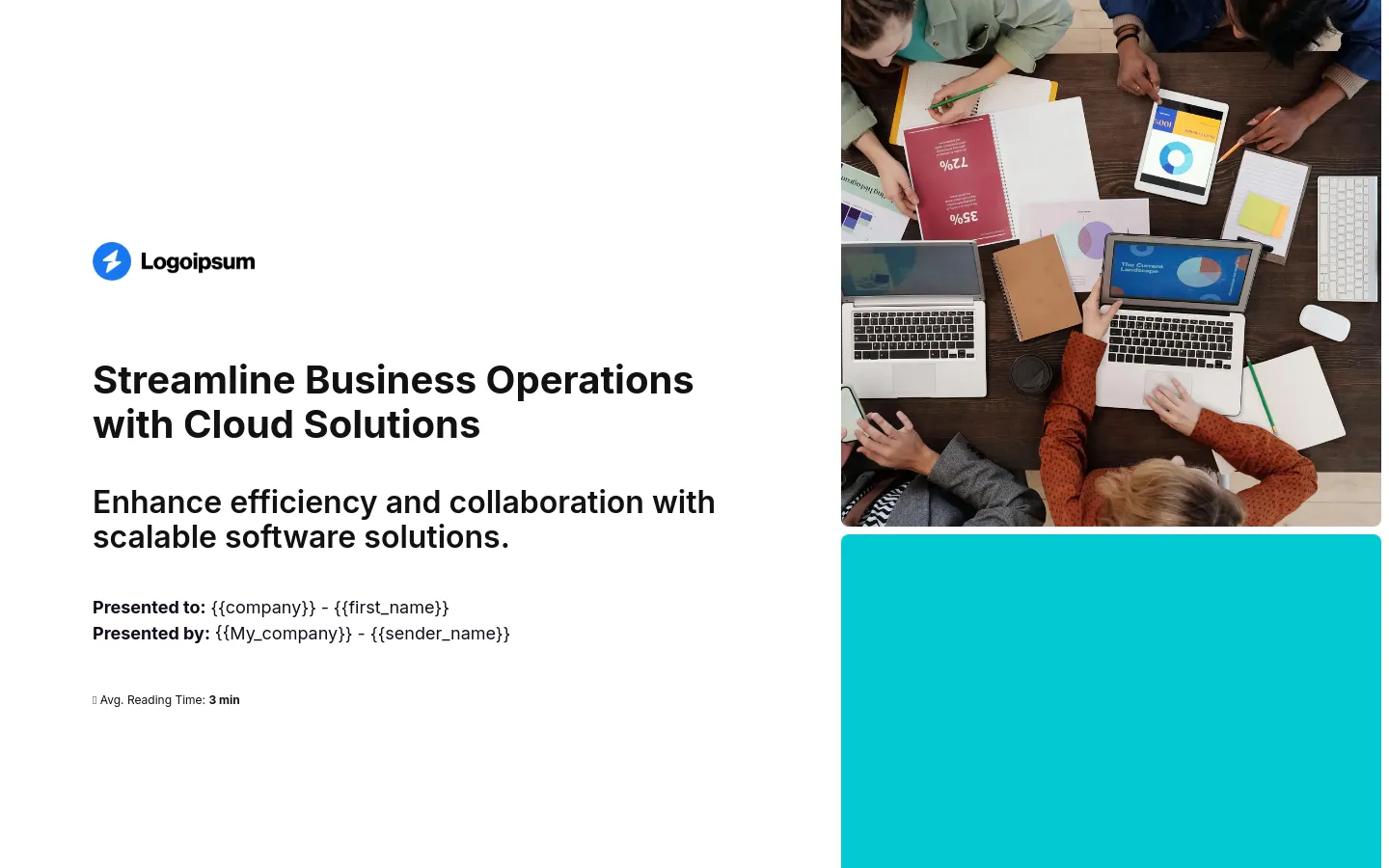
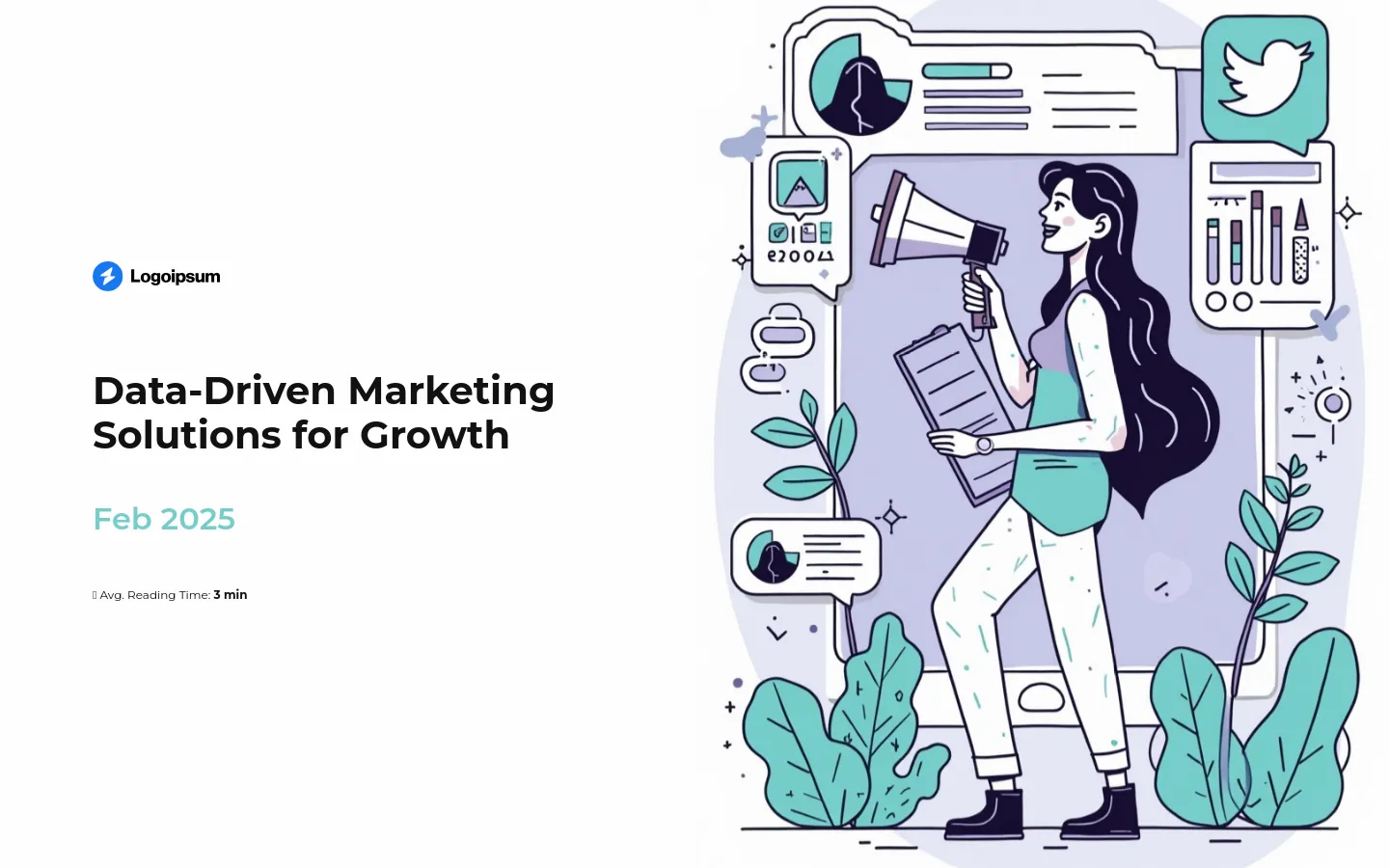
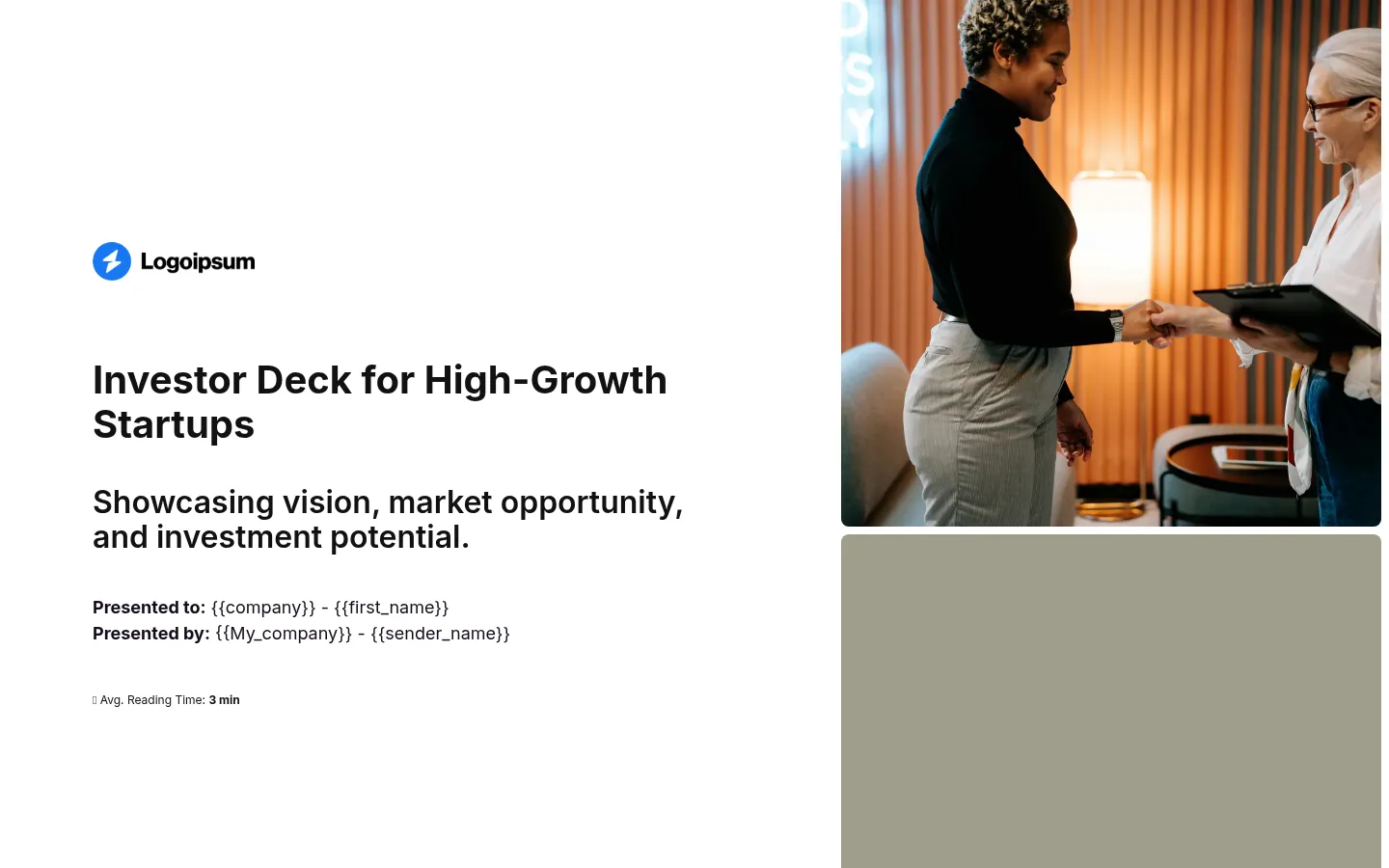
For your title slide, think of it as the front cover of your pitch—it’s important for making a strong first impression. Use a light animation to draw attention to your title, but keep it simple so it doesn’t distract from your main message.
Add a clear, high-quality image or a short video of your product in use. This immediately highlights what’s special about your product and helps your pitch stand out.
Ensure your title clearly conveys what your business is about, ideally in 16 words or less, to quickly grab the investor’s interest.
Title slide example:
2) Introduction (Unique Value Proposition)
Think of your introduction slide as a quick summary of your pitch. Investors often decide within the first few seconds if they’ll keep listening, so make this part count.
Start with what makes your product unique. Briefly explain how it stands out from bigger competitors and clearly state who your customers are and what needs your product meets.
Also, consider showing a short, engaging video that gives an overview of your product or service. This can communicate your message clearly and keep your audience interested without overwhelming them with too much text.
Example of an introduction slide:
3) Problem
In the problem section of your pitch deck, point out the big market gap that your product fills. Talk about how serious this problem is and whether it’s something customers would actually pay to solve.
Use a real-life story to make this more relatable, showing the common issues customers face and why your product is crucial.
This story will help illustrate just how necessary your product is, showing clearly how it addresses real problems and what kind of positive changes it brings.
4) Solution
In this section, clearly explain how your product solves problems and makes life better for your customers. Keep in mind that investors usually aren’t interested in technical details.
Use clear, concise language and brief, straightforward sentences to keep your message easy to understand. Enhance your explanation with visuals like product demos or screenshots.
Also, break your solution into simple parts—outline a process step by step, break down complex tech into basic ideas, or show a user journey in clear stages.
Solution slide example:
5) Market size and opportunity
For your market size and opportunity slide, emphasize the potential and strategic positioning in your target market—this slide is key to showing the profitability potential of your startup.
Cover the competitive landscape by asking how many competitors exist, your odds of success, potential revenue, and if your idea is innovative enough to stand out.
Reflect on your industry’s growth and its future potential. Use charts, graphs, and infographics to present your data in a way that’s both easy to understand and visually engaging.
Example of a market size slide:
6) Business and revenue model
On your business and revenue model slide, start by outlining how your product or service will make money.
Are your main revenue streams direct, like one-time purchases or subscriptions, or indirect through ads and affiliate partnerships, or maybe a mix of both?
Discuss whether your product is a high-end premium offering or priced competitively for a wider market. If you have tiered pricing, detail what each tier offers.
Also, share any proof from market tests that customers are willing to pay your prices, which helps reassure investors and lower perceived risks.
Example of a business and revenue model slide:
7) Traction and validation slide
In the traction and validation section, start by showing off some key metrics that demonstrate your business’s growth—things like profit margins, how much you’re selling, or how often customers come back.
These figures really show how well your business is doing and how much it can grow.
Next, share your plans with a roadmap that details the milestones you plan to reach with the investment. This is your chance to show investors your strategy and how their funding will help push your business to the next level.
Traction and validation slide example:
8) Marketing/Growth strategy
In the marketing and growth strategy section, clearly lay out how you plan to grow your business. Start by identifying the marketing channels you’ll use to attract new customers, explaining why these channels are ideal for your business model.
Whether you’re using inbound methods like PPC, SEO, or social media marketing, or outbound tactics like sales calls or emails, be clear about your choices.
Also, include the expected costs and ROI for these channels, and highlight how your marketing strategy sets you apart from competitors, underscoring your unique approach to success.
Growth strategy slide example:
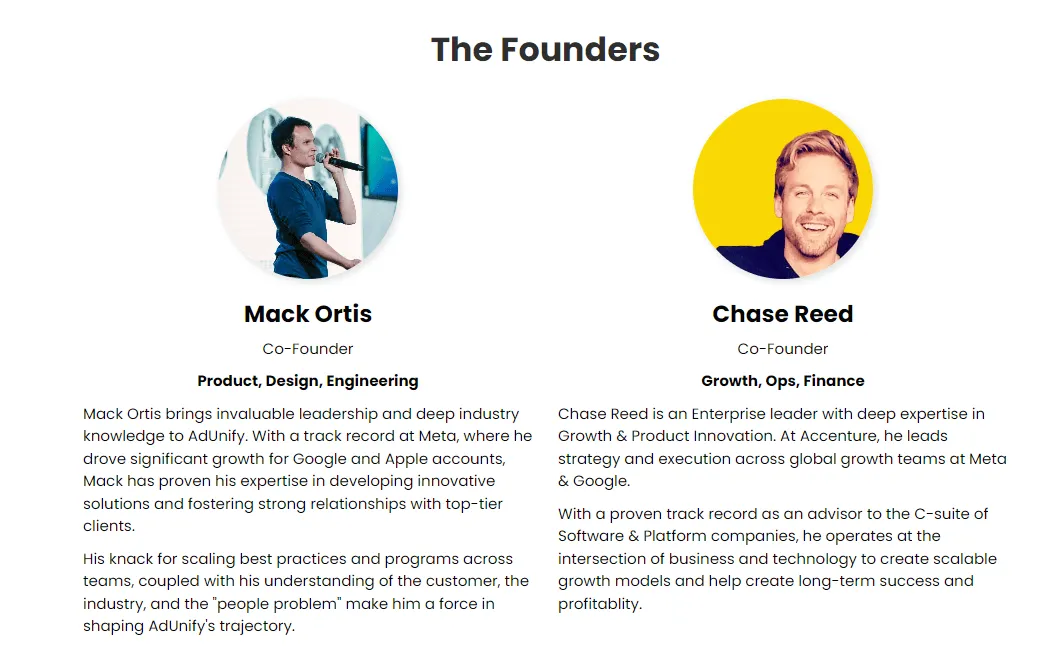
9) Team
On the “Team” slide, focus on showcasing the strengths and relevant experiences of your key team members. Briefly highlight their qualifications and past achievements that directly contribute to their roles in your company.
Include a short bio under each team member’s photo, outlining crucial skills and experiences that are vital for scaling your business.
This approach reassures investors that your team has the capability and expertise necessary to execute your business plan successfully.
Team slide example:
10) Financials
In this section of your SaaS pitch deck, you should provide a clear picture of your company’s financial health and future expectations. Include 3 years of financial projections, such as income statements, sales forecasts, and cash flow statements.
Investors will be looking to see if your business is moving in the right direction and if your financial predictions are reasonable and achievable.
Be ambitious with your projections, but keep them realistic—investors will know if they’re too good to be true. This honesty will help build trust and show that you’re serious about your business’s potential.
Great example of a financials slide:
11) Investment and use of funds
Many founders focus so much on crafting their pitch they forget to actually ask for money. Make sure you clearly state how much funding you need and explain precisely how you plan to use it.
Break down the allocation of funds into clear categories like development, marketing, and operations, and explain what milestones these investments will help you hit.
This transparency helps investors see how their contribution will drive value and accelerate your company’s growth.
Example of the ask slide:
12) Next steps slide
On your next steps slide, steer clear of ending with just a “Thank you.” Remember, investors see lots of pitches every day, and if they close your deck, they might not look at it again.
Be clear about what you want them to do next. One effective approach is to embed your calendar, allowing them to easily schedule a follow-up meeting right then and there.
This direct call to action can help maintain their interest and move the conversation forward.
Next steps slide example:
Where to find SaaS pitch deck templates?
Building a SaaS pitch deck can be incredibly time-consuming and stressful. And with so much riding on this one presentation, failure isn’t an option.
Customizable SaaS pitch deck templates are designed based on a proven structure and incorporate all the best practices I’ve discussed in this blog post.
So, even if you’re not completely familiar with the underlying principles, you can confidently choose a template and trust that it works.
Try one out and see the difference for yourself.